
Mobile Waterless Toilet
A mobile waterless toilet is a toilet facility that does not require external water, electricity, or sewage connections and can be moved as a whole to fixed or temporary locations.
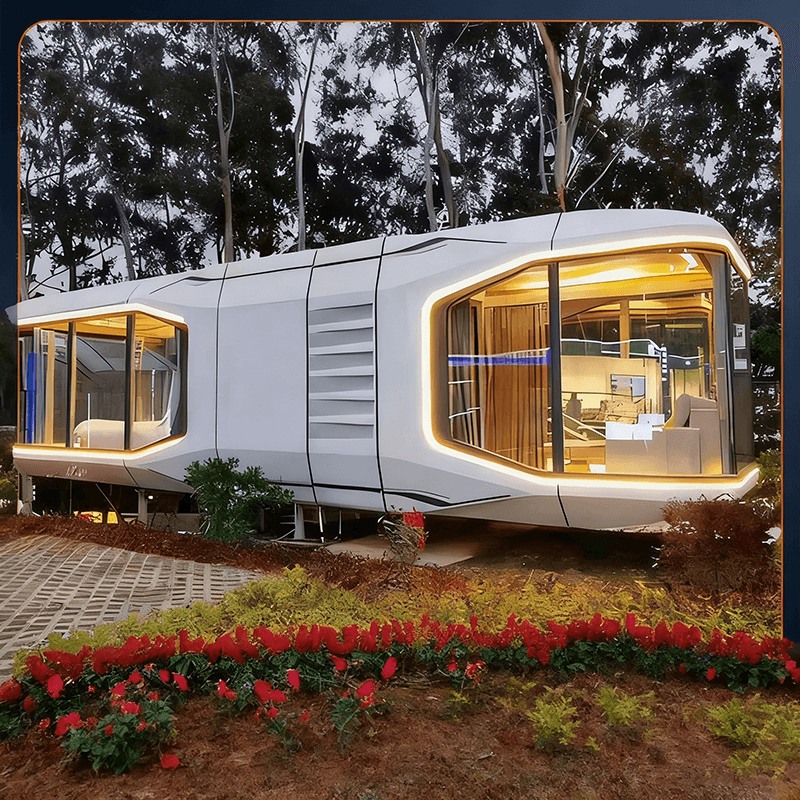
Materials and Structure It comes in a variety of materials, with full 304 stainless steel being a common choice. It is equipped with a packaged squatting pan and a fecal storage tank, allowing normal use without water or electricity. Structurally, it typically consists of modules such as a fecal and sewage storage tank (or disposal unit), floor, sanitary ware, walls, washing facilities, water tank, roof, and a mobile unit. Some models adopt ecological degradation technology, achieving zero sewage discharge and zero pollution through microbial decomposition; while the dry-packaged type uses a sealed fecal storage tank for regular cleaning to prevent sewage leakage.
Sewage Treatment Methods Based on technology, mobile waterless toilets can be mainly divided into two categories:
- Dry-packaged type: It collects excreta in a sealed fecal storage tank, which is then regularly transported and treated by special vehicles. The entire process does not require water for flushing, making it suitable for water-scarce environments.
- Ecological degradation type: It utilizes microbial decomposition technology to convert excreta into harmless substances (such as carbon dioxide and water), enabling on-site treatment without the need for external sewage discharge, offering superior environmental performance.
Core Advantages
- Mobility: Its modular design supports overall lifting or towing, allowing for rapid deployment to stations, docks, tourist attractions, large construction sites, and other locations to meet temporary or long-term needs.
- Strong adaptability: It does not require external water, electricity, or sewage pipelines, making it suitable for remote areas lacking water, electricity, and municipal infrastructure, as well as emergency scenarios (such as disaster relief).
- Environmental protection and energy conservation: Its zero-sewage design reduces environmental pollution, and the ecological degradation type can even achieve resource recycling.
- Reusability: Its main structure is durable and can be disassembled and relocated multiple times, reducing long-term usage costs.
Typical Application Scenarios These include densely populated public places (such as squares and commercial streets), newly built residential areas, villa areas, and water- and electricity-scarce wild environments (such as large construction sites and tourist attractions). For example, in 2023, the Lanzhou Yellow River Scenic Area effectively solved the problem of tourists' toilet needs and protected the Yellow River's ecology by installing mobile toilets.



