
Mobile Waterless Toilet
A mobile waterless toilet is a toilet facility that does not require an external water source and uses ecological degradation technology to achieve zero sewage discharge and zero pollution, suitable for places lacking water and electricity or sewage discharge conditions.
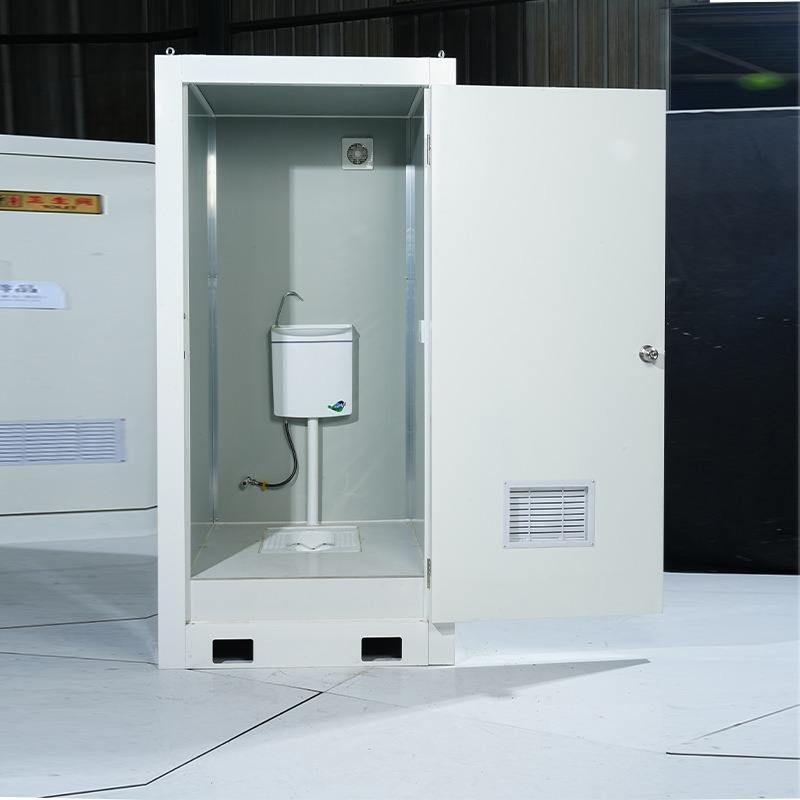
Technical Principles and Core Features
The core of a mobile waterless toilet lies in ecological degradation technology, which processes feces through microbial decomposition or physical adsorption without the need for water flushing, thus preventing sewage discharge at the source. Its design features include:
- Large Capacity and Self-Sustaining: It can accommodate thousands of uses in a single cycle and is equipped with a built-in water tank (for minimal cleaning or hand washing), eliminating reliance on external water supply systems.
- Zero Sewage Discharge and Environmental Protection: Feces are converted into harmless substances (such as organic fertilizer) after treatment, achieving zero pollution discharge and meeting ecological and environmental protection requirements.
- Modular Structure: Composed of fecal sewage storage tanks (or disposal units), floor slabs, sanitary fixtures, walls, water tanks, roofs, and mobile units, each component can be flexibly disassembled and combined for easy transportation and rapid deployment.
Classification and Suitable Scenarios
Mobile toilets can be classified into various types based on sewage treatment methods, with waterless suction-type being a typical representative of waterless toilets:
- Waterless Suction-Type: Collects feces through vacuum suction or negative pressure technology, stores them in sealed tanks, and periodically transports them for treatment by specialized vehicles. It is suitable for arid regions, temporary events (such as music festivals, construction sites), or ecologically sensitive areas.
- Dry Packing Type: Uses biodegradable film bags to directly pack feces without water or chemicals, making it suitable for remote areas or emergency scenarios without water and electricity infrastructure.
Advantages and Limitations
Advantages:
- Resource Conservation: Eliminates the need for external water sources and sewage pipelines, reducing infrastructure investment.
- High Flexibility: Mobile and combinable, adapting to short-term or temporary needs.
- Environmentally Friendly: Zero pollution discharge, reducing the risk of soil and water pollution.
Limitations:
- Capacity Limitations: Requires regular cleaning of storage tanks, with higher maintenance costs in high-frequency usage scenarios.
- Technology Dependence: The efficiency of ecological degradation is affected by environmental factors such as temperature and humidity, and auxiliary treatment may be required under extreme conditions.
Application Examples
Mobile waterless toilets have been widely used in water-scarce areas (such as desert scenic spots), temporary events (such as disaster relief, large-scale exhibitions), and ecological protection projects (such as nature reserves), serving as an important supplementary solution to traditional toilets.



