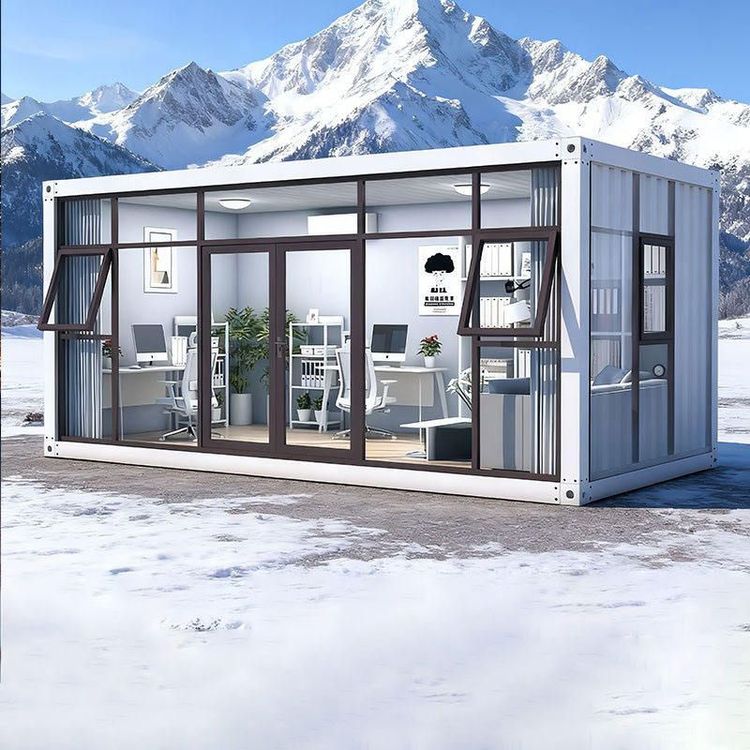
Mobile Tourism Toilet
Mobile tourism toilets are sanitary facilities specifically designed for tourism scenarios, featuring mobility, modularity, and ease of transportation. They can be flexibly deployed in public places such as scenic spots and campsites, and support multiple uses.

I. Core Advantages
The core characteristics of mobile tourism toilets lie in their mobility and flexibility. For example, foldable mobile toilets, through optimized structural design (e.g., a height of only 36 inches), can be quickly folded and easily transported to target locations by vehicles, significantly reducing deployment costs. Additionally, their modular design allows for the combination of different numbers of toilet stalls according to needs. For instance, the four-stall mobile toilet launched by Dezhou Hongtu Metal Products Co., Ltd., measuring 4 meters in length and 2.3 meters in width, features a pointed roof design and insulated metal carved panel exterior walls. It not only adapts to the scenic spot environment but also maintains stable internal temperatures in low-temperature conditions, with a cost of less than 20,000 yuan, highlighting its excellent cost-effectiveness.
II. Structural Composition and Classification
Mobile toilets typically consist of fecal sewage storage tanks (or disposal units), floor slabs, sanitary fixtures, walls, washing equipment, water tanks, roofs, and mobility devices, among other parts. Based on structural form, they can be classified as:
- Single-unit mobile toilets: Designed as independent units, suitable for scenarios with limited space or temporary needs;
- Composite-structure mobile toilets: Composed of multiple modules, they can be expanded into multi-stall, multi-functional areas (e.g., management rooms, barrier-free facilities).
Based on mobility method:
- Lifting and handling types: Rely on lifting equipment or manual handling, suitable for short-distance, low-frequency moves;
- Powered and towed types: Equipped with power systems or connectable to towing vehicles, they support long-distance, high-frequency deployments.
Based on sewage treatment method:
- Water-flush and waterless suction types: Flush feces with water from tanks or treat it through vacuum suction, requiring regular cleaning of storage tanks;
- Recirculating water-flush types: Purify sewage using biodegradation or physical filtration technologies to achieve water resource recycling;
- Dry-pack types: Collect feces in biodegradable bags, requiring no water source, suitable for water-scarce or ecologically sensitive areas.
III. Application Scenarios
Mobile tourism toilets are widely used in scenic spots, campsites, and temporary event venues, among others. Their rapid deployment capabilities effectively alleviate toilet pressure during peak periods while avoiding the long construction cycles and high costs associated with traditional fixed toilets. For example, during holidays or large-scale events, powered mobile toilets can be quickly transported to crowded areas by towing vehicles and removed after the event, reducing resource idleness.