
Mobile Toilets on the Go
Mobile toilets on the go generally refer to portable toilets, which are facilities that can be moved as a whole and provide public restroom services. The following provides an introduction from aspects such as applicable locations, structural components, classifications, and usage-related questions:
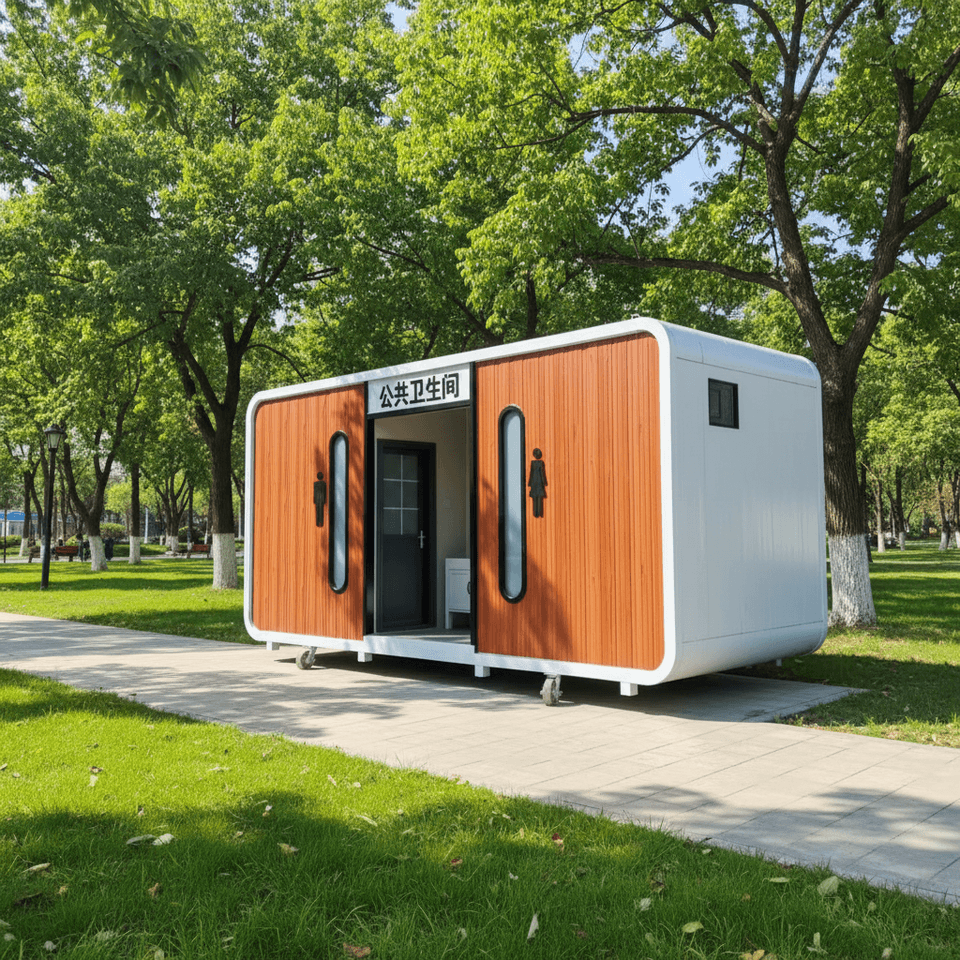
Applicable Locations: Portable toilets are suitable for a variety of locations. For example, at transportation hubs like train stations and docks where there is a high volume of passenger traffic, they can meet the restroom needs of a large number of travelers. At tourist attractions with numerous visitors, portable toilets can be flexibly placed to solve the problem of visitors' restroom access. In densely populated public places and bustling commercial streets with heavy foot traffic, portable toilets can promptly supplement sanitary facilities and enhance the level of public services.
Structural Components: They are generally composed of multiple parts. The fecal sewage storage tank (or fecal sewage treatment device) is used to collect and treat fecal sewage. The floor provides a stable standing and moving space. Sanitary fixtures such as toilets or squat pans are the directly used parts. Walls serve to separate and protect privacy. Washing equipment facilitates user cleaning. Water tanks supply water for flushing. The roof provides shelter from wind and rain. The mobile device enables the entire toilet to be moved.
Classification Situations: According to structural form, they can be divided into single-structure portable toilets and composite-structure portable toilets. Single-structure ones are relatively simple and independent, while composite-structure ones may have richer functions and more complex structures. According to the method of movement, they can be classified as lifting and handling-type portable toilets, and powered and trailer-type portable toilets. Different movement methods are suitable for different transportation and placement scenarios. According to sewage treatment methods, they can be divided into water-flush and waterless suction-type portable toilets. Water-flush types have better cleaning effects, while waterless suction types are more water-saving. Recirculating water-flush portable toilets can recycle water. Dry-packing portable toilets pack and treat feces without using water.
Usage Questions: Some netizens who went on a summer road trip saw portable public toilets on the road and raised the question, 'Can they be stopped at will?' In fact, portable toilets are usually placed at fixed or temporarily needed locations and cannot be stopped and used randomly on the road. They have specific placement locations and usage regulations. In addition, there have been humorous cases of a woman driving a portable toilet on the highway, but these are special exceptions. Under normal circumstances, portable toilets should be transported and placed according to the prescribed methods.



