
Mobile Toilets on High-Speed Trains
The toilets on high-speed trains are not mobile toilets, but rather fixed sanitary facilities installed within the train carriages, featuring diverse designs and intelligent management. The following provides an introduction from the aspects of types, locations, status inquiries, and special designs:
I. Diverse Types to Meet Different Needs
High-speed train toilets come in three types: squat-style, sit-style, and accessible toilets. The squat-style adopts a traditional design, suitable for passengers accustomed to traditional toilet habits; the sit-style is equipped with disposable seat covers to enhance hygiene; the accessible toilet is designed for special groups, featuring electrically controlled doors (operated by buttons, no pushing or pulling required), Braille signs (to assist visually impaired individuals in locating), baby changing tables (with straps to prevent falls), adjustable rotating handrails, tilted observation windows (for easy external viewing of the interior), and buzzers (for one-touch assistance in emergencies). These designs reflect the humanization and inclusiveness of high-speed train services.
II. Fixed Locations with Clear Signage
High-speed train toilets are typically located at the end of each carriage (except for dining cars), facilitating quick access for passengers. A red-green indicator cover is installed beside the door lock: green indicates unoccupied, and red indicates occupied, providing an intuitive display of usage status. Additionally, the display screen at the head of the carriage shows the toilet status with a green human icon (unoccupied) or a red icon (occupied) in real-time. Passengers can also scan the railway travel code on the armrest of the seat to view the toilet layout map for the entire train in the 'Train Information'-'Facilities' section, further optimizing the user experience.
III. Special Settings in Accessible Toilets
Accessible toilets are generally located in Carriage 4, and key trains (such as long-distance or high-passenger-volume trains) will have them in both Carriage 4 and Carriage 12. Their designs, including electrically controlled doors, Braille signs, and emergency call systems, ensure safe and convenient use for disabled individuals, the elderly, and passengers with infants. For example, the straps on the baby changing table can secure the infant to prevent falls; the tilted observation window protects privacy while allowing external personnel to quickly confirm internal safety.
IV. Fundamental Differences from Mobile Toilets
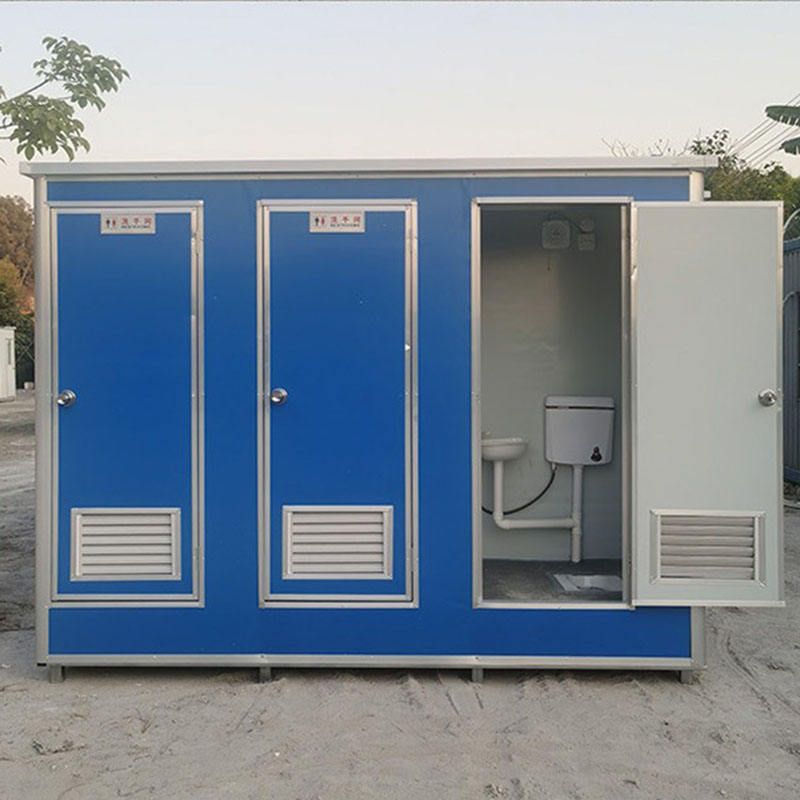
Mobile toilets refer to sanitary facilities that can be moved as a whole and are temporarily or permanently installed in places such as stations, docks, and tourist attractions, offering flexibility. In contrast, high-speed train toilets are an integral part of the train's fixed configuration, closely integrated with the carriage structure and immovable. Their design focuses more on space utilization, hygiene management, and passenger comfort.



