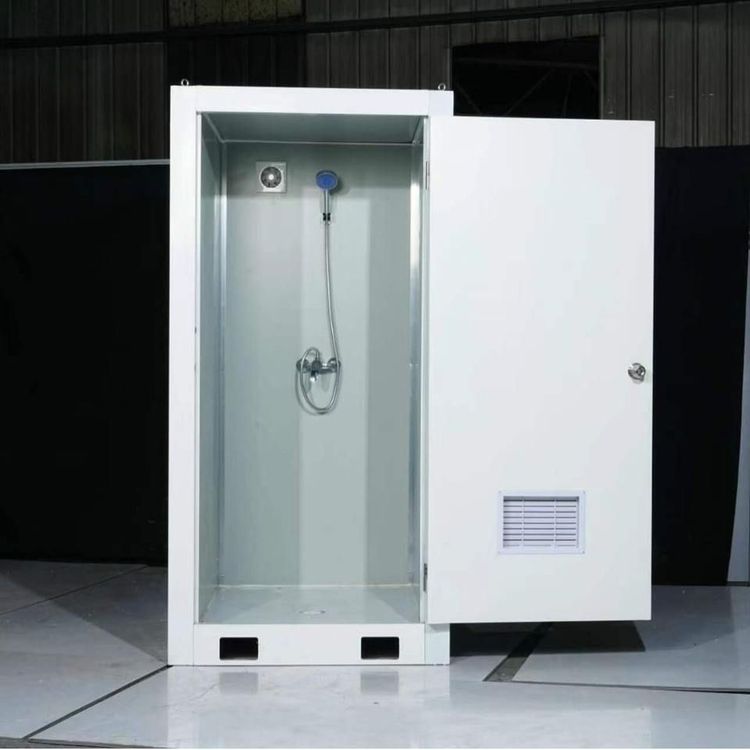
Mobile Toilets in the Middle East
The application scenarios of mobile toilets in the Middle East mainly include military emergency response and infrastructure supplementation in specific illegal areas.
Military Emergency Scenarios: Mobile toilets play a crucial role in military operations in the Middle East, particularly in addressing sudden facility failures. For example, in February 2026, during a mission, the USS Ford aircraft carrier experienced a sewage system failure that paralyzed nearly 90% of its toilets, directly affecting the normal lives of over 4,600 sailors on board. To swiftly resolve this crisis, Greece urgently transported 150 mobile toilets to Souda Bay on Crete Island and transferred them to the aircraft carrier's deck via helicopter, alleviating the toilet needs of the crew. This case demonstrates that mobile toilets, due to their flexible deployment and rapid installation capabilities, have become an important supplement to military equipment for responding to sudden public health incidents, especially in maritime or remote areas, where they can effectively maintain basic living conditions for personnel and avoid cascading problems caused by facility failures.
Infrastructure Supplementation in Specific Illegal Areas: In some illegal or poorly managed regions in the Middle East, mobile toilets are used to fill gaps in infrastructure, often accompanied by harsh living conditions. For instance, the Dubai fraud park, lacking legal planning and infrastructure, was once exposed for using mobile toilets as the primary excretion facilities. In such scenarios, the 'abnormal demand' for mobile toilets reflects the reliance of illegal areas on low-cost, temporary solutions. However, their sanitary conditions are usually extremely poor, lacking sewage treatment systems, and prone to causing disease transmission and environmental pollution. This application contrasts sharply with military scenarios, highlighting the differentiated functions of mobile toilets in different social environments—the former being an emergency support tool, while the latter becoming a 'survival symbol' of illegal activities.
In summary, the application scenarios of mobile toilets in the Middle East are dual-faceted: on the one hand, they serve military emergency needs, reflecting their technological value; on the other hand, they are exposed in illegal areas, indicating a lack of social governance. In the future, with the advancement of urbanization and the increasing demand for public safety in the Middle East, the standardized application of mobile toilets may become an important direction for improving people's livelihoods and responding to emergencies.