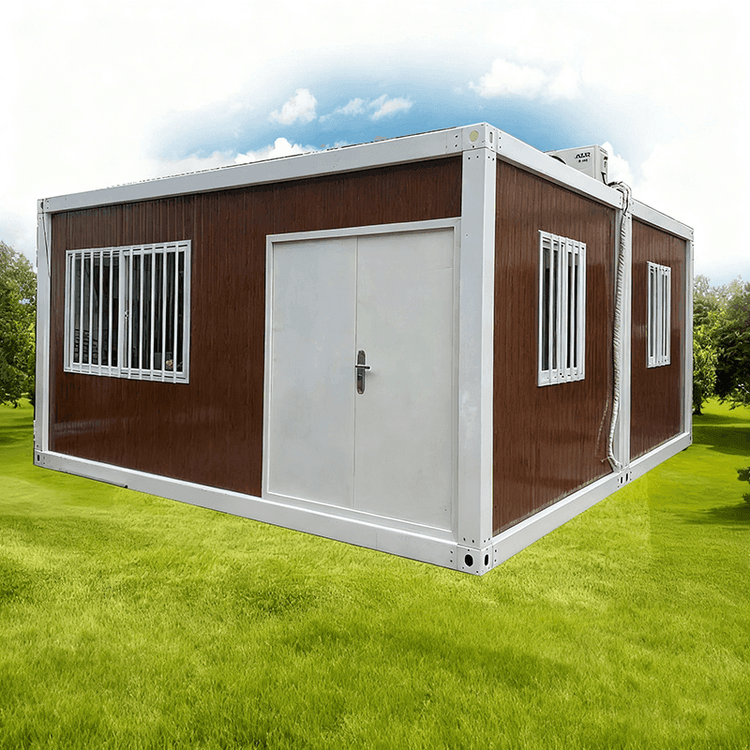
Mobile Toilets as a Landscape Feature
Mobile toilets have become a unique landscape feature in smart cities and scenic spots, combining functionality with aesthetic value.

In smart cities, the evolution of mobile toilets reflects the deep integration of technology and environmental protection. Early rudimentary wooden structures have been replaced by eco-friendly materials such as fiberglass, polyethylene, and stainless steel, forming independent sanitary units. These materials are not only durable and easy to clean but also support the integration of functions like automatic flushing, hand washing, and hand drying. Some high-end models are even equipped with intelligent monitoring systems that provide real-time feedback on usage status and maintenance needs. Their modular design allows for flexible deployment in urban streets, parks, transportation hubs, and other areas, making them the "capillaries" of urban management. This not only alleviates the issue of uneven distribution of public toilets but also enhances the city's image through technological design.
In scenic spots, mobile toilets have undergone a transformation from mere "facilities" to "landscape features" through landscape aesthetic design. Taking the Qingzhigu landscape-customized mobile toilets as an example, their design adheres to three principles:
- Shape adaptation to the scenic area's style: Natural scenic areas adopt soft, flowing designs that mimic mountain and river forms; cultural and historical scenic areas incorporate traditional Chinese landscaping aesthetics, such as upturned eaves and lattice window patterns; while trendy leisure scenic areas use minimalist, luxurious geometric shapes that align with modern aesthetics.
- Immersive experience through color and texture: The principle of "borrowing scenery for color matching and blending with the scenery for material selection" is followed. For instance, wood grain textures and green hues are used in forest scenic areas, while sandy colors and rough textures are employed in desert scenic areas, ensuring the toilets blend seamlessly with their surroundings.
- Detail craftsmanship to enhance quality: Rounded edges are used on equipment to avoid safety hazards, and integrated seamless splicing technology is applied to exterior walls to improve waterproofing and reduce visual abruptness.
Additionally, mobile toilets with dopamine-inspired color schemes use high-saturation colors (such as bright yellow and lake blue) to attract tourists' attention, becoming popular photo spots in scenic areas and further reinforcing their landscape attributes. This design philosophy of "coexistence of facilities and scenery, functionality and aesthetics" not only enhances the tourist experience but also drives the transformation of scenic spots from "sightseeing-oriented" to "experience-oriented."
The evolution of mobile toilets essentially represents a shift in public facility design from a "utility-oriented" to a "human-oriented" approach, driven by the deep integration of technology empowerment, cultural fusion, and user experience.