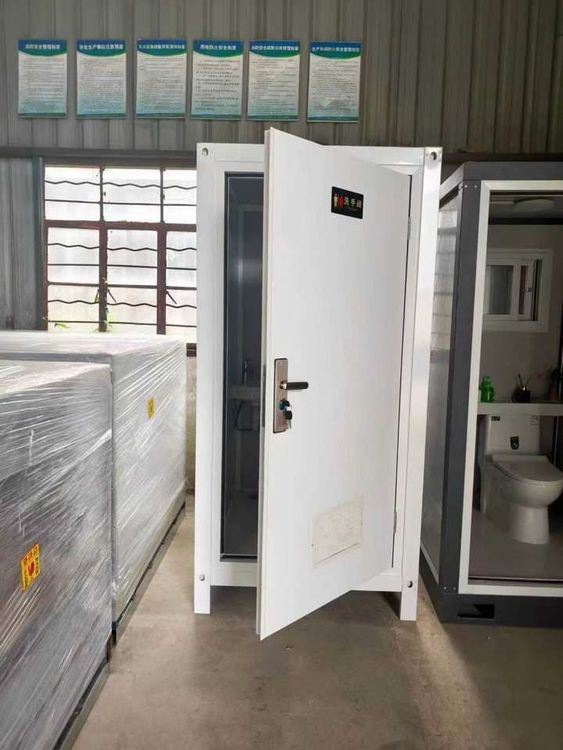
Mobile Toilet Without Septic Tank
Not all mobile toilets are equipped with septic tanks; the presence of a septic tank depends on their type and design. Here is an overview of the septic tank configurations for different types of mobile toilets:

1. Standalone Mobile Toilets
These toilets are typically designed as complete sanitary units with built-in fixed septic tanks. The septic tank is integrated with the toilet body, allowing for immediate use upon placement without the need for additional pipe connections or external treatment equipment. The septic tank treats waste through physical sedimentation and microbial decomposition, making it suitable for long-term fixed use in scenarios such as tourist attractions and construction sites.
2. Temporary Public Toilets or Vehicle-Mounted Toilets
These toilets usually do not have fixed septic tanks and instead use movable waste storage tanks or biodegradation devices. Waste is collected through pipes into the storage tanks and periodically transported by specialized vehicles to treatment stations for centralized processing. Some vehicle-mounted toilets use biodegradation technology (such as adding microbial agents) to accelerate waste decomposition, reducing the frequency of storage tank cleaning and making them suitable for short-term events or emergency scenarios.
3. Waterless Flush Mobile Toilets
These toilets do not require septic tanks or storage tanks at all. Instead, they use biodegradable plastic bags to directly collect waste. After use, the plastic bag automatically seals and falls into a storage box, which can be replaced periodically. This design avoids water consumption and sewage discharge, making it suitable for water-scarce areas or scenarios with strict environmental requirements, such as outdoor music festivals and disaster relief efforts.
4. Portable Mobile Restrooms
Some portable mobile restrooms adopt a “waste tank + water tank” design, relying neither on septic tanks nor external connections. The waste tank stores waste, while the water tank provides flushing water. A closed circulation system reduces odors and leakage risks. These toilets are compact and mobile, suitable for temporary construction sites and home yards.
Summary: The choice of septic tank configuration for mobile toilets should be based on the usage scenario, environmental requirements, and resource conditions. Fixed septic tanks are suitable for long-term use, while waste storage tanks and biodegradation devices are ideal for short-term or mobile scenarios. Waterless flush and waste tank designs further expand the applicability of mobile toilets.