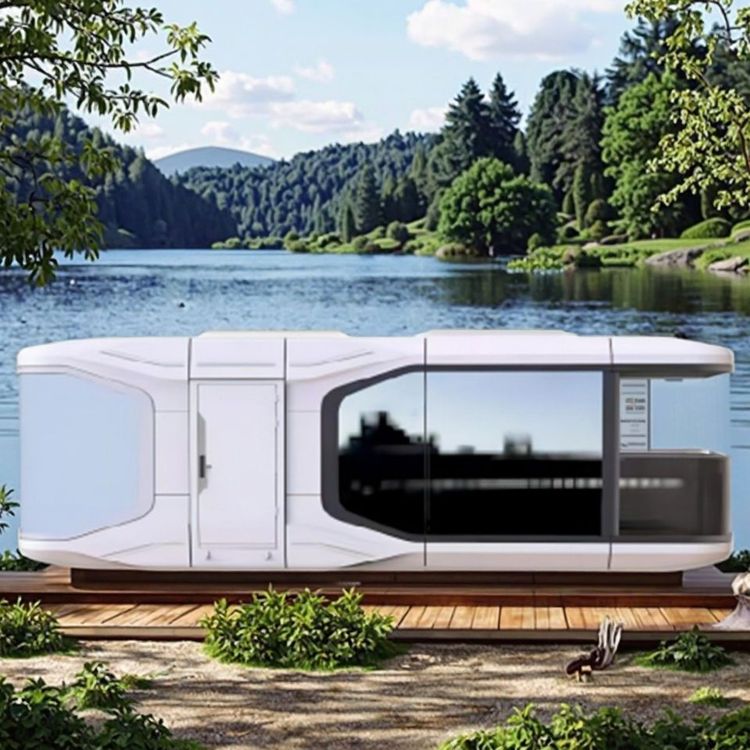
Mobile Toilet with Window for Family
A mobile toilet with a window for family is a sanitary facility that features ventilation and moisture-proof functions, with diverse structures and flexible mobility. The following introduces it from several aspects: window features, overall composition, structural forms, mobility methods, and sewage treatment methods.

Window Features: Some mobile toilets with windows for families are equipped with special plastic-steel inward-opening windows for mobile toilets. These windows use frosted glass. Frosted glass not only protects the privacy of users but also allows soft light to penetrate into the room, avoiding discomfort caused by direct strong light. At the same time, the plastic-steel inward-opening windows have moisture-proof and ventilation functions. In humid environments, they can effectively prevent the windows from deforming or being damaged due to moisture, ensuring the normal use of the windows. Good ventilation performance can promptly expel odors from the toilet, keeping the air fresh and enhancing the user experience.
Overall Composition: Mobile toilets are generally composed of multiple parts. The fecal sewage storage tank (or fecal sewage treatment device) is used to collect and treat fecal sewage. The floor provides a stable standing and activity space for users. Sanitary fixtures such as toilets and squat pans meet basic excretion needs. The walls serve to divide the space and protect privacy. The washing equipment facilitates users in performing cleaning activities such as hand washing. The water tank provides water for flushing and other operations. The roof protects against wind and rain. The mobile device enables the toilet to be easily moved and placed.
Structural Forms: According to structural forms, they can be divided into single-structure mobile toilets and composite-structure mobile toilets. Single-structure mobile toilets have a relatively simple structure, usually being an independent whole, and are relatively convenient to install and move. Composite-structure mobile toilets are composed of multiple parts and may have advantages in terms of function or space utilization.
Mobility Methods: According to mobility methods, they can be divided into hoisting and handling mobile toilets and powered and towed mobile toilets. Hoisting and handling mobile toilets require the use of equipment such as cranes for movement and placement. Powered and towed mobile toilets can be moved by vehicle traction or their own power, offering higher flexibility.
Sewage Treatment Methods: According to sewage treatment methods, they can be divided into water-flushing and non-water-flushing suction-type mobile toilets, circulating water-flushing mobile toilets, and dry-packing mobile toilets. Water-flushing and non-water-flushing suction-type mobile toilets treat fecal sewage through water flushing or suction. Circulating water-flushing mobile toilets recycle and reuse the water after use, saving water resources. Dry-packing mobile toilets pack the feces with special packaging materials, requiring no water.