
Mobile Toilet with Urinal Installation
The installation of urinals in mobile toilets is usually related to barrier-free design, gender-friendly facility planning, or renovation oversights, and can be divided into the following three scenarios:
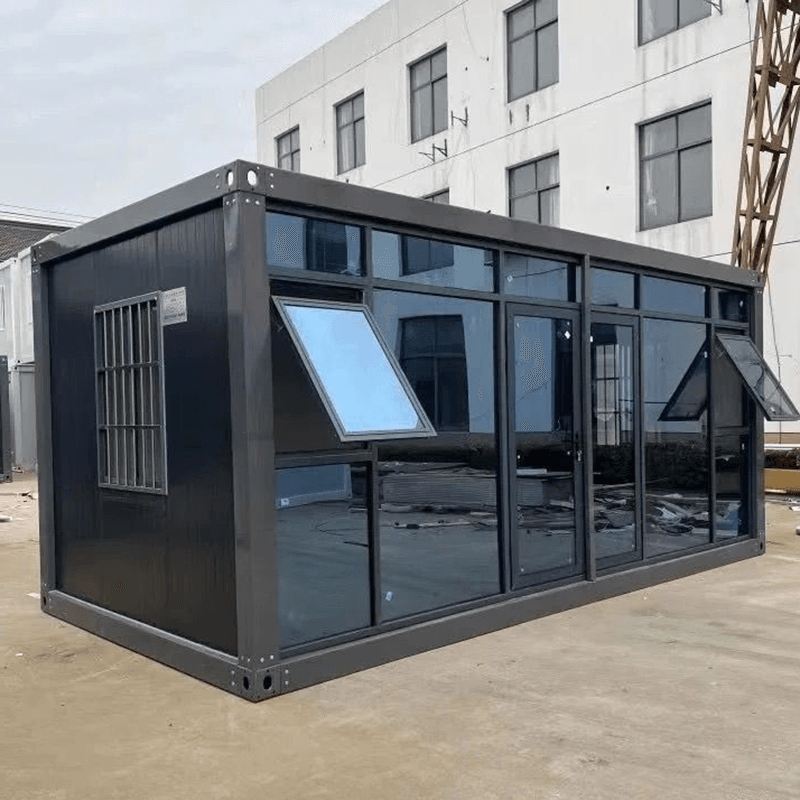
1. Special configurations in barrier-free/universal toilets
In barrier-free single-stall toilets in public places such as shopping malls and hospitals, a "composite" design is often adopted to meet the needs of different groups. For example, a single stall may be equipped with a toilet seat, handrails, and a urinal simultaneously: the toilet seat is for people with mobility impairments or those who need assistive devices (such as wheelchairs); the urinal is convenient for standing users, avoiding inconvenience due to space limitations. These toilets are usually independent of traditional male and female toilet areas, but if the signage is unclear or the location planning is unreasonable, it may cause confusion among users. For example, in some places, barrier-free toilets are combined with baby-changing rooms, and if the functions are not clearly labeled, it may lead to accidental entry.
2. Diverse designs in gender-friendly toilets
To respect the needs of diverse gender groups, some universities, cultural venues, and other places have transformed traditional male and female toilets into gender-neutral toilets (unisex toilets). The internal configurations of these toilets need to take into account different usage habits. A common design includes a combination of "urinals + stalls": the urinals meet the needs of standing urination, while the stalls provide private spaces for sitting on the toilet or changing clothes. Such designs need to clearly indicate their functions through signage (such as "Gender-Neutral Toilet" or "All Genders Welcome") to avoid misunderstandings among users due to traditional gender perceptions. For example, after a certain university transformed a former male toilet into a gender-neutral toilet, it retained some urinals and added stalls. By posting multilingual signs and illustrations, it effectively reduced usage conflicts.
3. Remaining issues from temporary renovations or planning oversights
During the renovation of old buildings, due to space limitations or design oversights, the facilities of the former male toilets may not be completely removed or covered. For example, in some places, when transforming a male toilet into a barrier-free toilet, only some urinals are removed, and the remaining facilities are not covered; or when transforming it into a gender-neutral toilet, the position of the urinals is not re-planned, resulting in them being too close to the stalls and affecting privacy. In such cases, it is necessary to promptly provide feedback to the management and request a re-adjustment of the facility layout or the addition of partitions to ensure compliance with barrier-free design specifications (such as the requirements for toilet facility spacing in the "Code for Design on Accessibility" GB 50763-2012).
Summary: The installation of urinals in mobile toilets requires clarifying the functional positioning according to the usage scenario and avoiding confusion through reasonable planning and signage. Barrier-free toilets should prioritize meeting the needs of special groups, gender-friendly toilets should take into account diverse habits, and renovation oversights should be promptly corrected through management intervention.
You may also like

Portable Toilet Eco-Friendly: MOQ, Samples & Quotation Guide
Read More
Top Portable Toilet Color Steel Manufacturers: How to Choose a Factory Partner
Read MorePortable Toilet Picture: Types, Features & Buying Tips
Read More