
Mobile Toilet with Fecal Tank
A mobile toilet with a fecal tank is a facility that does not require external water or electricity connections and comes with its own fecal and wastewater storage unit. It is suitable for places without septic tanks or for temporary needs, featuring a lightweight structure, diverse functions, and a wide range of application scenarios.
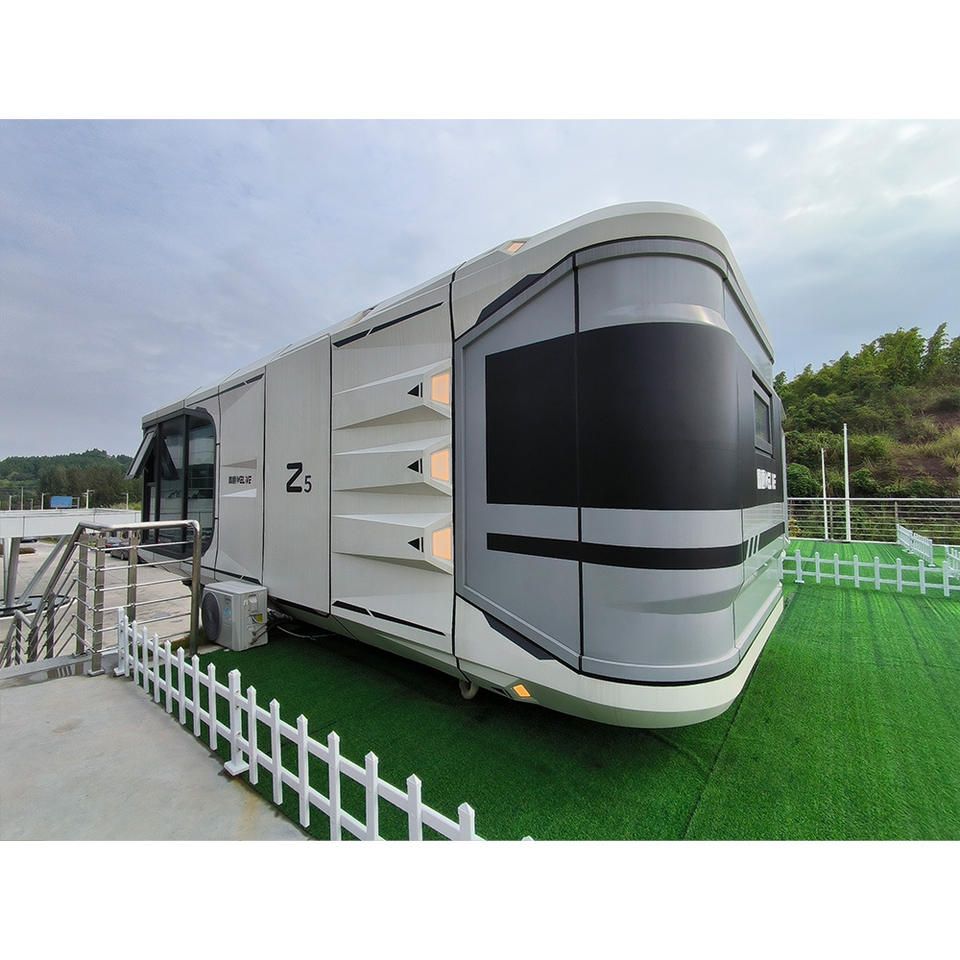
Structure and Materials
Mobile toilets with fecal tanks are typically assembled using lightweight and durable materials such as color-steel composite panels or fiberglass-reinforced plastic. They usually measure 1.1 meters in width and length, with a height of approximately 2.3-2.35 meters, facilitating easy transportation and installation. Internally, they are equipped with non-slip floors (such as embossed aluminum plates), ventilation fans, lighting fixtures, electrical outlets, and reserved discharge ports. Some models also feature ball-type door locks to ensure safety and privacy during use. These designs not only meet basic usage requirements but also consider durability and ease of maintenance.
Functions and Types
The core function of these toilets is to collect feces without connecting to a septic tank or water inlet system through their built-in fecal tanks. The disposal methods include dry packing (directly sealing the feces) and suction-type (regularly cleaning the fecal tank), catering to different scenario needs. Based on mobility, they can be classified as lifting-type (requiring lifting equipment for transportation) and trailer-type (towable for movement). In terms of wastewater treatment, they are divided into dry-flush types (relying on dry disposal methods) and circulating-water-flush types (reducing water usage through internal water circulation). This diversity enables them to flexibly adapt to scenarios such as temporary events and construction sites.
Application Scenarios
These facilities are widely used in stations, docks, tourist attractions, construction sites, villa areas, and temporary event venues, compensating for the inadequate layout of fixed public toilets. For example, during large-scale outdoor music festivals, trailer-type mobile toilets can be quickly deployed; construction sites often use lifting-type toilets to meet workers' needs. In household scenarios, they can serve as alternatives in areas without septic tanks, ready for immediate use upon placement, especially suitable for remote areas or temporary living situations.
Pricing and Examples
Some models on the market are priced around 750-800 yuan, including basic configurations such as fecal tanks and exhaust fans. Premium models may incorporate intelligent control systems or more durable materials, with corresponding price increases. Users can choose the appropriate type based on their budget and needs. For instance, for short-term events, an economical dry-flush model may be suitable, while for long-term use, a circulating-water-flush model is recommended to reduce cleaning frequency.
These mobile toilets, with their core advantages of “instant installation and use, environmental friendliness, and convenience”, effectively solve sanitation problems in temporary or long-term scenarios without infrastructure through modular design and diverse functions.



