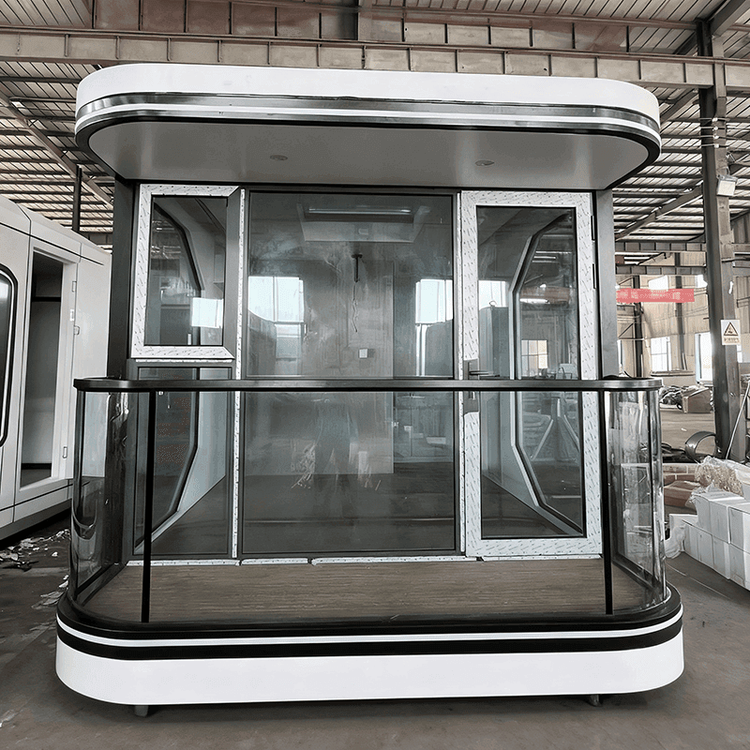
Mobile Toilet Wind Pressure Resistance Test
The wind pressure resistance test for mobile toilets is a crucial step in evaluating their structural stability under strong wind conditions and is a core part of wind and earthquake resistance testing.

Test Content
The primary goal of the wind pressure resistance test for mobile toilets is to verify their structural stability and the reliability of their supporting structures under strong wind conditions. The test covers three main aspects:
- Overall Structural Stability: Evaluate the deformation capacity of the mobile toilet's overall frame under wind forces to ensure it does not overturn or undergo severe deformation due to wind pressure.
- Material Strength: Test the mechanical properties, such as tensile strength and yield strength, of key components like steel structures and plastic materials to ensure they meet design requirements. For example, steel structure welds must undergo non-destructive testing to detect cracks or connection defects.
- Effectiveness of Protective Facilities: Check the integrity of fixing devices (such as ground anchors and expansion bolts) and reinforcing structures (such as diagonal braces and wind-resistant cables) to ensure they can effectively resist wind forces.
Test Methods
The test combines on-site measurements with theoretical analysis:
- Structural Verification: Use tools like laser distance meters and steel tapes to conduct sampling verification of wall distribution, door and window dimensions, axis dimensions, and height to ensure the actual structure matches the design drawings.
- Damage Detection: Focus on inspecting load-bearing components (such as steel beams and columns) for signs of aging, deformation, cracks, or loose connections to prevent local damage from causing overall instability.
- Safety Calculation: Based on the "Building Structural Load Code" (GB50009-2012), use PKPM software to input parameters such as wind load and earthquake effects to calculate whether the structural load-bearing capacity meets safety requirements.
- Material Performance Testing: Conduct ultrasonic or radiographic non-destructive testing on steel structure welds and sample test the tensile strength and yield strength of steel materials.
Test Standards and Procedures
The test must be carried out by a qualified third-party institution (such as Zhongxi Testing) and includes the following procedures:
- On-site Testing: Use inclinometers, level gauges, and other equipment to measure the tilt and settlement of the mobile toilet and record the distribution and width of cracks.
- Off-site Testing: Use core drilling methods to sample concrete components and test their compressive strength; conduct bending tests on steel materials to verify their ductility.
- Report Review: The test data must be reviewed by an authoritative institution to ensure the results are scientifically reliable, and a final test report that complies with national standards must be issued.
Significance of Testing
Through wind pressure resistance testing, potential safety hazards in the design or construction of mobile toilets, such as insufficient material strength or ineffective fixing devices, can be identified in advance, and targeted improvement suggestions can be proposed. This not only ensures their safe use under adverse weather conditions like typhoons and strong winds but also provides reliable sanitation facilities for outdoor events, temporary construction sites, and other scenarios.