Waterproofing Methods for Mobile Toilets
Waterproofing methods for mobile toilets should be comprehensively implemented from three aspects: material selection, waterproof design of key parts, and regular maintenance, as detailed below:

1. Select materials with excellent waterproof performance
The foundation of waterproofing for mobile toilets lies in the materials themselves. Priority should be given to specialized materials such as waterproof adhesives, waterproof coatings, waterproof rubber, and waterproof asphalt. These materials have low water absorption rates and high weather resistance, effectively blocking water penetration. For example, waterproof coatings can be applied to surfaces such as walls and floors to form a continuous waterproof layer; waterproof rubber can be used for joint sealing to prevent water from infiltrating through gaps. Additionally, some mobile toilets use integrated waterproof panels with a high-molecular waterproof membrane on the surface, further enhancing overall waterproof performance. Material selection should be adjusted according to the usage environment (such as humid or cold regions) to ensure long-term stability.
2. Strengthen waterproof design of key parts
- Door and window sealing: Doors and windows of the toilet should be equipped with sealing strips, preferably made of rubber or silicone, to ensure complete closure of gaps and prevent rainwater or flushing water from seeping in. Sealing strips should be regularly inspected to avoid leakage caused by aging and cracking.
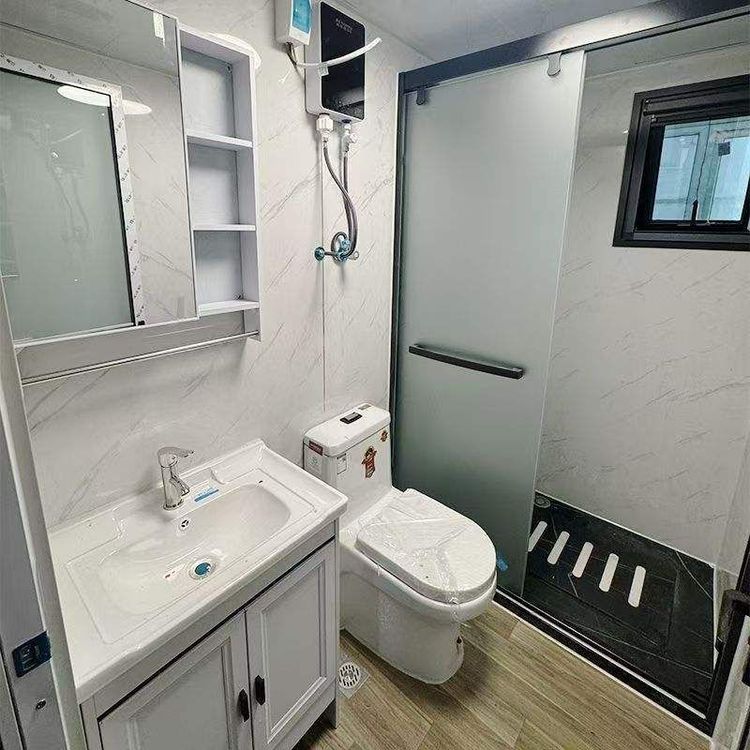
- Drain and pipe treatment: Drain openings and pipe connections are weak points for waterproofing and should be fitted with waterproof membranes or bags and secured with sealant. Pipe connections should be welded using hot-melt welding or secured with specialized clamps to ensure no leakage. Some designs incorporate an independent drainage system with slope design to guide sewage quickly out, reducing the risk of water accumulation.
- Joint and structural treatment: Drawing on the composite structure of efficient soundproofing materials, the joints between panels in mobile toilets can be filled with sealant and covered with a waterproof membrane for double protection. Joint widths should be controlled within 2-3mm to prevent cracking due to thermal expansion and contraction.
3. Regular maintenance and upkeep
Waterproofing effectiveness must be ensured through continuous maintenance. Internal sanitary facilities should be cleaned at least once a week to prevent blockage of drains by dirt; drainage pipes should be checked monthly for smooth flow and any debris removed. At the same time, check for aging of waterproof materials and promptly repair or replace any peeling coatings or damaged sealing strips. The ventilation system should be kept dry to prevent moisture accumulation and structural corrosion, extending the service life of the toilet.
Through the synergy of materials, design, and maintenance, mobile toilets can achieve efficient waterproofing and adapt to complex outdoor environments.