Waterproof Principle of Mobile Toilets
The waterproof principle of mobile toilets mainly relies on the synergistic effect of integrated waterproof panels, structural design, and special processes, achieving efficient waterproofing through material blocking, joint sealing, and rainwater diversion.

1. Blocking Effect of Integrated Waterproof Panels
The main panels of mobile toilets are covered with polymer waterproof membranes. These materials have low water absorption and high weather resistance, effectively blocking rainwater penetration. For example, polymers such as polyethylene (PE) or polyvinyl chloride (PVC) are combined with the panels through hot-melt or adhesive processes, forming a continuous waterproof layer. Some high-end models adopt a composite structure, embedding a waterproof interlayer within the panels to further enhance the blocking effect. This design ensures the basic waterproof performance of the toilet walls and roof, maintaining internal dryness even when exposed to outdoor environments for extended periods.
2. Sealing Treatment at Joints
The joints between panels are critical weak points for waterproofing. Mobile toilets strengthen sealing through two methods:
- Sealant Filling: Silicone or polyurethane sealants are used at panel joints, screw holes, and other positions. Their elasticity accommodates material expansion and contraction, preventing cracking;
- Structural Optimization: Mortise-and-tenon or snap-fit connections are adopted to reduce mechanical fastening points and lower leakage risks. For example, some models feature detachable roof panels that achieve both quick assembly and waterproofing through dedicated sealing strips.
3. Synergistic Rust Prevention and Waterproofing of the Main Frame
Some mobile toilets use galvanized steel sheets for their main frames, forming a dense zinc oxide layer on the steel surface through hot-dip galvanizing. This layer, typically 50-80μm thick, isolates moisture and oxygen contact, preventing steel rusting. Rusting is a common cause of structural deformation and waterproofing failure, so galvanizing indirectly extends the lifespan of the waterproofing system. Additionally, the welded joints of the frame undergo secondary rust prevention treatment, such as coating with epoxy zinc-rich primer, for further protection.
4. Rainwater Diversion Design with Gable Roof
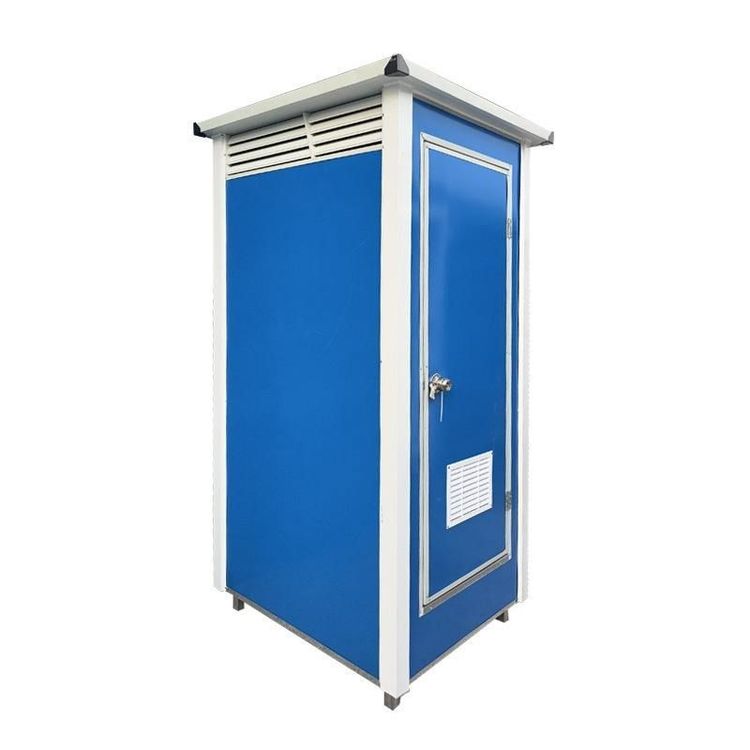
The roof adopts a gable or sloped design, using an inclination angle (usually ≥15°) to allow rainwater to slide off quickly, reducing the possibility of water accumulation. This structure not only lowers leakage risks but also avoids increased roof loads due to water accumulation. Some models feature gutters at the roof edges to direct rainwater to ground drainage systems, forming a complete drainage loop.