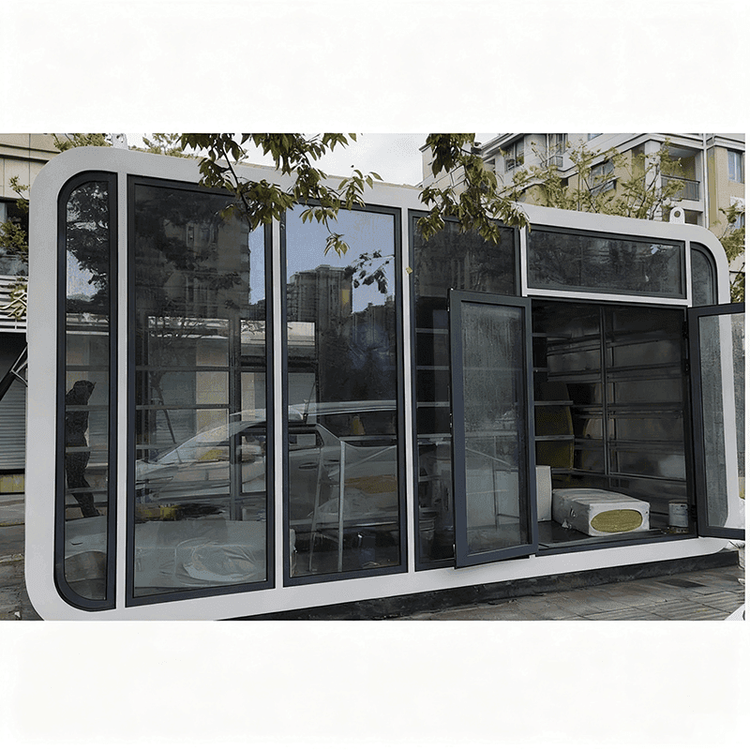
Mobile Toilet Water and Electricity Configuration
The water and electricity configuration of mobile toilets needs to be reasonably planned according to the usage scenario and requirements, with core points including voltage and power, power supply and drainage solutions, and prerequisites, as detailed below:

1. Voltage and Power
The power demand of mobile toilets is generally low, with a standard voltage of 220 volts and a power of 50 watts. This configuration can meet the operational needs of lighting, ventilation, and small appliances (such as smart sensing devices), eliminating the need for high-power electricity supply and reducing the construction costs and safety risks associated with temporary electricity use.
2. Power Supply Solutions
The power supply method should be selected based on the usage scenario:
- Mains Power Connection: Suitable for urban areas or regions with a stable power supply nearby, simply connect to the 220V mains power, ensuring the circuit meets safety standards.
- Solar Power System: For remote construction sites or areas without mains power coverage, a combination of solar panels and energy storage batteries can be configured. The solar system's capacity should be designed based on the average daily sunlight hours and the toilet's power consumption to ensure continuous power supply during rainy weather.
3. Drainage Solutions
The design of the drainage system should balance environmental protection and practicality:
- Biodegradable System: It is recommended to use a clog-resistant biodegradable technology that decomposes waste through microorganisms, reducing the frequency of pipeline cleaning and suitable for long-term use scenarios.
- Water Storage Tank Configuration: For projects with conditions, a water storage tank can be added, with its capacity designed according to the number of users and the frequency of water outages (e.g., 500-1000 liters) to cope with temporary water outages. The water storage tank should be regularly disinfected to avoid water contamination.
4. Prerequisites for Water and Electricity
Referring to the installation standards for smart toilets, the water and electricity connection for mobile toilets must meet the following conditions:
- Power Requirements: An AC220V three-hole socket with a leakage protection switch (rated current of 10A or above) is required. The socket should be at least 30 centimeters above the ground and equipped with an IP44-rated waterproof cover to prevent short circuits caused by water splashing.
- Water Pressure Requirements: The inlet water pressure should be controlled between 0.05 - 0.75MPa (i.e., 1.5 - 7.5 kilograms of water pressure). A cold water pipe must be reserved at the inlet, and hot water connection is prohibited to avoid damage to internal pipelines due to high temperatures or affecting the biodegradation effect.
5. Multi-Stall Configuration Example
Take a four-stall mobile toilet as an example, its water and electricity configuration has been integrated, with the water and electricity lines for the internal stalls pre-laid. It only needs to be connected to the external power supply and water source after being placed, eliminating the need for secondary wiring on-site and significantly shortening the deployment time.
Summary: The water and electricity configuration of mobile toilets should balance stability, safety, and environmental protection. Selecting the appropriate power supply method based on the usage scenario, optimizing the drainage system, and strictly adhering to water and electricity connection standards can ensure the long-term efficient operation of the equipment.