
Mobile Toilet Vehicle for Street Vendors
A mobile toilet vehicle for street vendors is a portable sanitation facility specifically designed for temporary locations, combining the functions of a mobile toilet and vehicle transportation. It is suitable for addressing toilet needs in scenarios such as street vending, markets, and tourist attractions.
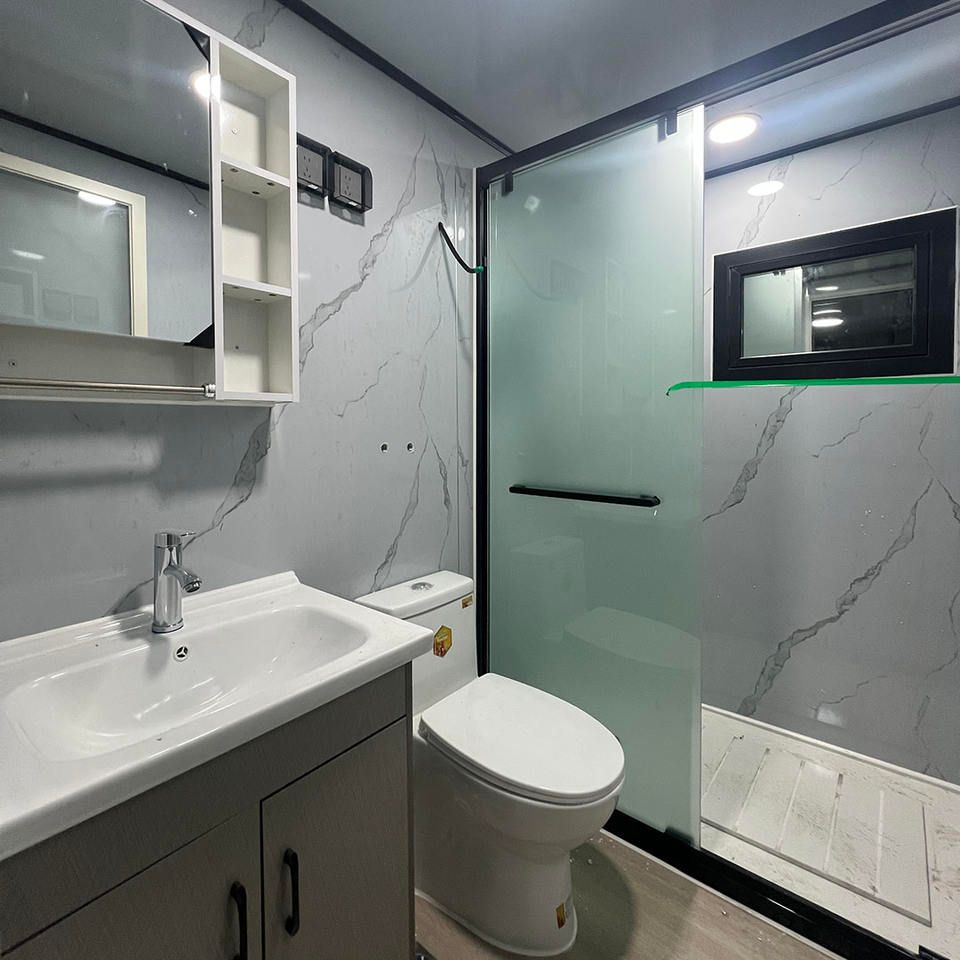
Functions and Uses
The mobile toilet vehicle for street vendors integrates a vacuum system, multiple toilet compartments (e.g., 8 compartments), sinks, hand dryers, and other facilities, enabling it to meet the toilet needs of over 1000 people. Its core functions include:
- Efficient sanitation treatment: The vacuum system can quickly suction away waste, reducing odors and water consumption, making it suitable for high-traffic scenarios.
- Multiple toilet compartments: A single vehicle can be equipped with multiple independent toilet compartments, alleviating toilet pressure in temporary locations and avoiding queues.
- Comprehensive supporting facilities: Equipped with sinks, hand dryers, lighting, etc., it enhances the user experience and complies with public health standards.
- Flexible deployment: The vehicle can be moved to designated locations and quickly put into use without the need for fixed infrastructure, adapting to dynamic scenarios such as street vending and markets.
Vehicle Types and Brands
The mainstream vehicle types on the market include trailer-type and van-type models:
- Trailer-type: Connected via a towing vehicle, it can be transported separately and is suitable for long-distance movement or long-term use at fixed locations.
- Van-type: Featuring an integrated design and independent driving capability, it offers more convenient deployment and is suitable for scenarios requiring frequent location changes.
In terms of brands, manufacturers such as Dongfeng, Chengli, and Sinotruk offer a diverse range of products, with price ranges covering from 5000 yuan to 890,000 yuan. The differences mainly lie in the number of toilet compartments, materials (e.g., stainless steel vs. plastic), automation level (e.g., intelligent monitoring systems), and customized services (e.g., exterior painting, function additions or reductions).
Structure and Characteristics
The mobile toilet vehicle for street vendors typically consists of the following modules:
- Waste storage device: Featuring a sealed tank design to prevent leakage, some models are equipped with sewage discharge ports that can be connected to municipal sewage networks or sewage suction trucks for cleaning.
- Sanitary ware: Utilizing odor-proof floor drains and water-saving flushing devices to reduce maintenance costs.
- Mobile device: The chassis adopts lightweight materials, balancing load-bearing capacity and fuel economy. Some models are equipped with four-wheel drive to adapt to complex terrains.
Its core advantages lie in portability and combinability: The vehicle can be used independently or multiple vehicles can be connected in series to expand service scale, meeting the needs of activities of different scales.
Suitable Scenarios
In addition to street vending, this type of vehicle is also widely used in:
- Temporary sanitation support for large-scale events (e.g., marathons, music festivals);
- Emergency toilet services during natural disasters or infrastructure construction periods;
- Crowd疏导 (crowd guidance) during peak periods at tourist attractions.
Through modular design, some products support rapid conversion into medical stations, rest rooms, etc., further expanding their uses.



