
Mobile Toilet Typhoon Prevention Measures
Mobile toilet typhoon prevention measures mainly include site selection and fixation, improvement of drainage systems, facility reinforcement, flood prevention preparations, and electrical safety inspections.
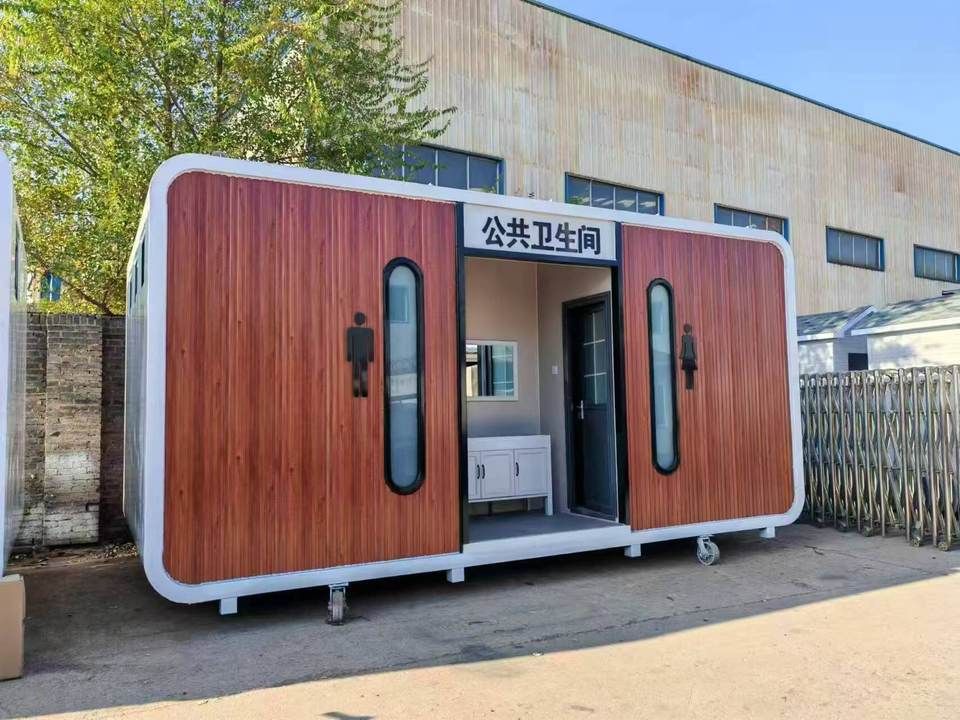
Site Selection and Fixation: The installation location of mobile toilets is crucial. They should be placed away from dusty areas and heavy machinery operation zones in construction sites to reduce the impact of dust and mechanical vibrations. Additionally, priority should be given to locations with higher elevation and smooth drainage to avoid installation in low-lying areas and prevent rainwater backflow. For the mobile toilets themselves, windproof fixation is necessary. It is recommended to use expansion bolts or counterweights to firmly connect the toilet base to the ground, or adopt ground anchors and sandbags for additional fixation measures to ensure that the toilets will not be blown over in strong winds.
Improvement of Drainage Systems: Outdoor mobile toilets should be equipped with independent drainage pipes or temporary collection buckets to promptly drain rainwater and prevent accumulation inside or around the toilets. In special environments such as mountain construction sites, shallow trenches can be dug to guide rainwater flow and prevent water accumulation around the toilets. Furthermore, advance site drainage work is required to ensure smooth drainage around the public toilets.
Facility Reinforcement: Before the arrival of a typhoon, outdoor facilities such as the exterior light boxes and barrier-free ramp guardrails of mobile toilets should be reinforced in advance to prevent them from falling and causing injuries due to strong winds. Reinforcement measures can include adding support structures and using fasteners for fixation.
Flood Prevention Preparations: For mobile toilets located in low-lying areas, flood prevention sandbags should be stacked in advance at the entrance to build a solid defense against rainwater backflow. The sandbags should be stacked neatly and tightly to form an effective barrier layer and prevent rainwater from entering the toilet interior.
Electrical Safety Inspections: During a typhoon, rainwater may infiltrate electrical equipment, causing short circuits or even fires. Therefore, before the arrival of a typhoon, a comprehensive inspection of the electrical equipment inside the mobile toilets should be conducted to ensure good waterproof performance and prevent rainwater infiltration. At the same time, unnecessary power sources should be cut off to reduce the risk of electrical fires.



