Types of Mobile Toilets
Mobile toilets can be classified in various ways, mainly including classification by material, structural form, mobility method, and sewage treatment method, as detailed below:

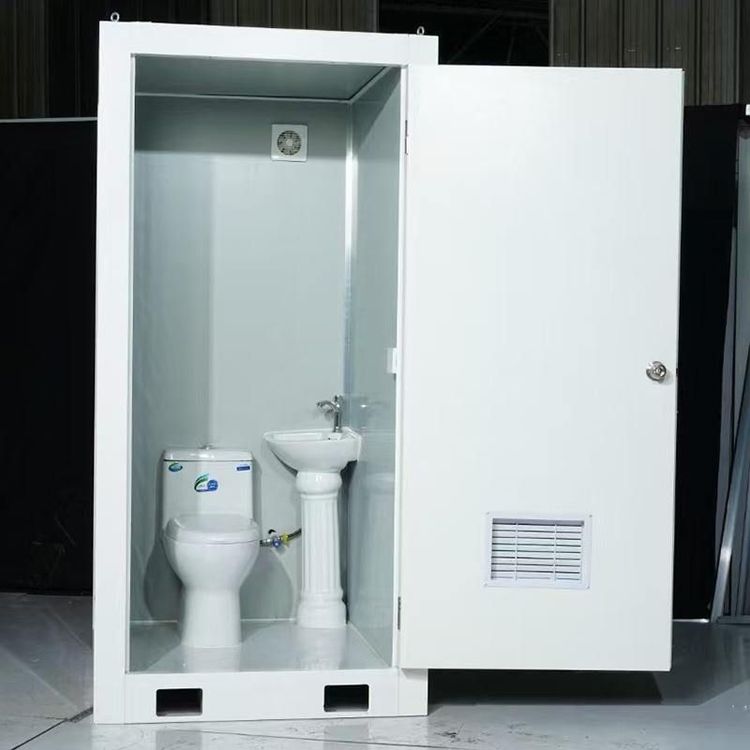
Classified by material, mobile toilets can be divided into plastic toilets, color-steel toilets, fiberglass-reinforced plastic toilets, and tent-style toilets, among others. Plastic toilets are typically made of high-strength plastic, featuring light weight, corrosion resistance, and ease of cleaning, suitable for temporary events or outdoor venues. Color-steel toilets use color-coated steel sheets as the primary material, offering a sturdy structure and an aesthetically pleasing appearance, commonly used at construction sites or large-scale events. Fiberglass-reinforced plastic toilets employ fiberglass-reinforced composite materials, providing acid and alkali resistance, anti-aging properties, and a long service life, suitable for long-term use. Tent-style toilets have a simple structure with a tent fabric shell, facilitating quick setup and dismantling, ideal for emergency rescue or temporary needs.
Classified by structural form, mobile toilets can be divided into single-unit mobile toilets and composite-structure mobile toilets. Single-unit mobile toilets are typically independent units with a small footprint, easy to move and install, suitable for venues with limited space. Composite-structure mobile toilets are composed of multiple units and can be expanded with functional areas such as management rooms and storage rooms according to needs, suitable for large-scale events or long-term use scenarios.
Classified by mobility method, mobile toilets can be divided into lifting and handling mobile toilets and powered and towed mobile toilets. Lifting and handling mobile toilets rely on lifting equipment or manual handling, suitable for short-distance movement or fixed-position use. Powered and towed mobile toilets are equipped with a power system or towing device, enabling long-distance movement via vehicle traction, offering greater flexibility.
Classified by sewage treatment method, mobile toilets can be divided into water-flush and non-water-flush suction mobile toilets, circulating water-flush mobile toilets, dry-packing mobile toilets, foam-sealing mobile toilets, and microbial degradation mobile toilets, among others. Water-flush and non-water-flush suction mobile toilets handle excreta through water flushing or suction, requiring regular cleaning of the sewage tank. Circulating water-flush mobile toilets use a water circulation system, conserving water and suitable for areas with water scarcity. Dry-packing mobile toilets package excreta for disposal, requiring no water, offering environmental friendliness and convenience. Foam-sealing mobile toilets use foam to cover excreta, reducing odors and bacterial growth. Microbial degradation mobile toilets decompose excreta through microorganisms, achieving harmless treatment and representing a more advanced and environmentally friendly type of toilet.