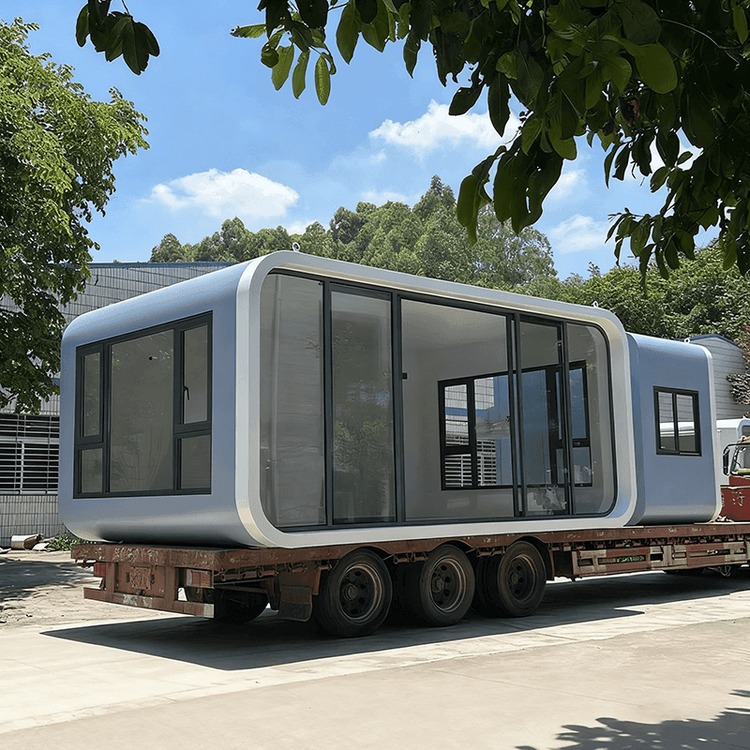
Treatment Methods for Mobile Toilets
The treatment methods for mobile toilets vary depending on their types, with common types and corresponding treatment methods as follows:

1. Water-flush and Waterless Suction-type Mobile Toilets
These toilets transfer waste to an external storage tank through water flushing or vacuum suction. During treatment, a specialized suction truck is required to connect to the 110 sewage pipe at the back of the toilet and transport the waste from the storage tank to a municipal sewage treatment plant or designated treatment site. For waterless suction-type toilets, it is necessary to regularly inspect the operating status of the vacuum pump to ensure stable suction pressure and prevent pipe blockages caused by residues. After treatment, the inside of the sewage pipe should be flushed with clean water to prevent odor retention.
2. Recirculating Water-flush Mobile Toilets
This type achieves sewage recycling through biodegradation or chemical treatment technologies. After waste enters a closed treatment tank, it is decomposed by microorganisms or disinfected and purified by adding chemicals, transforming it into clean water that can be used again for flushing. During the treatment process, water quality indicators (such as COD and ammonia nitrogen content) need to be regularly monitored. If the purification effect declines, biological agents need to be supplemented or the chemical dosage ratio adjusted. Additionally, a small amount of clean water needs to be added through the 25 water inlet pipe to maintain system balance, and the sediment in the treatment tank should be thoroughly cleaned every 3-6 months.
3. Dry-pack Mobile Toilets
These toilets use biodegradable plastic bags or biodegradable films to collect waste, achieving “zero discharge.” During treatment, the sealed device at the back of the toilet needs to be opened, the filled packing bag removed, and the bag tightly sealed before being classified and disposed of as medical waste or household garbage. If biodegradable materials are used, they can be directly buried or composted; if ordinary plastic bags are used, they need to be handed over to the sanitation department for unified incineration. After replacing with a new packing bag, the integrity of the sealing strip should be checked to prevent leakage.
General Maintenance Points
- Sewage Pipe Connection: When installed on the ground, ensure that the 110 sewage pipe is tightly connected to the municipal sewer network or storage tank, using rubber sealing rings to prevent leakage.
- Water Inlet Pipe Management: The 25 water inlet pipe should be kept unobstructed, and insulation measures should be taken in winter to prevent freezing and cracking.
- Regular Inspections: Check the sewage outlet and water inlet pipe connections weekly for looseness, and clean residual waste inside the toilet quarterly to extend the service life of the equipment.