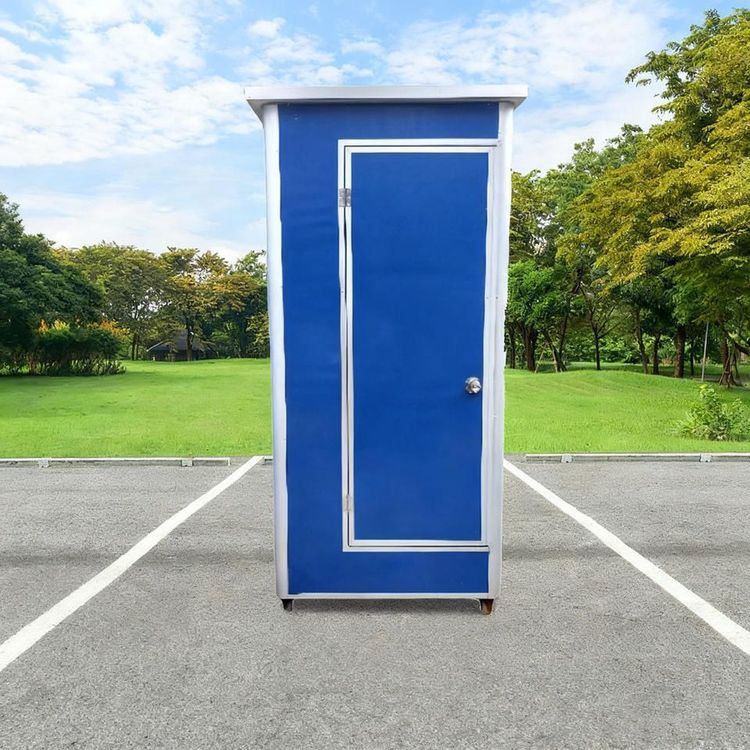
Mobile Toilet Transported to Other Places
It is feasible to transport mobile toilets to other places, and the transportation method should be selected based on a comprehensive consideration of the type, size, weight, and transportation distance. Common methods include road transportation, rail transportation, water transportation, as well as hoisting and manual handling in special scenarios.

Road transportation is the most commonly used method, suitable for short-distance or medium-to-long-distance land transportation, with a wide coverage and high flexibility. Flatbed truck transportation is suitable for small single-unit mobile toilets, which can be directly fixed on flatbed trucks. This method has low transportation costs and is suitable for delivery within cities or surrounding areas. Enclosed van transportation is suitable for multi-stall combined or high-end customized mobile toilets, providing enclosed space to protect the toilets from wind and rain damage, and is suitable for long-distance or cross-province transportation. Specialized transportation rack transportation is suitable for large or irregularly shaped mobile toilets. Customized transportation racks can disperse pressure, reduce the risk of deformation during transportation, and provide door-to-door service. However, the cost of long-distance transportation is relatively high and is subject to road conditions.
Rail transportation is suitable for long-distance, large-scale transportation, with lower costs than road transportation. Container transportation involves disassembling the mobile toilets into modules and loading them into standard containers, which are then transported by rail to stations near the destination and transferred to road delivery. Full-train transportation involves directly loading complete mobile toilets onto rail flatbed cars, suitable for non-disassemblable models. Rail transportation has low freight rates and is suitable for cross-province or cross-border transportation. However, it requires transshipment, has a longer transportation time, and requires prior coordination with the railway department.
Water transportation is suitable for cross-border or cross-sea transportation, such as exporting to overseas or coastal islands. Full container transportation involves loading mobile toilets into containers and transporting them by cargo ships, suitable for bulk exports. Bulk cargo transportation involves directly fixing large mobile toilets on the decks of cargo ships, requiring additional reinforcement. Water transportation has the lowest freight rates and is suitable for large-scale or heavy equipment. However, it has the longest transportation time and is greatly affected by weather and port conditions.
Special scenario transportation methods include hoisting transportation, suitable for large mobile toilets that cannot be transported by conventional vehicles. A crane is used to hoist the toilets onto transportation vehicles or directly to the installation location. Manual handling is suitable for ultra-small mobile toilets or narrow sites where vehicles cannot enter, and the toilets are moved to the designated location by human or small equipment.