
Mobile Toilet
A mobile toilet is a facility that can be moved as a whole and placed in fixed or temporary locations to provide public restroom services.
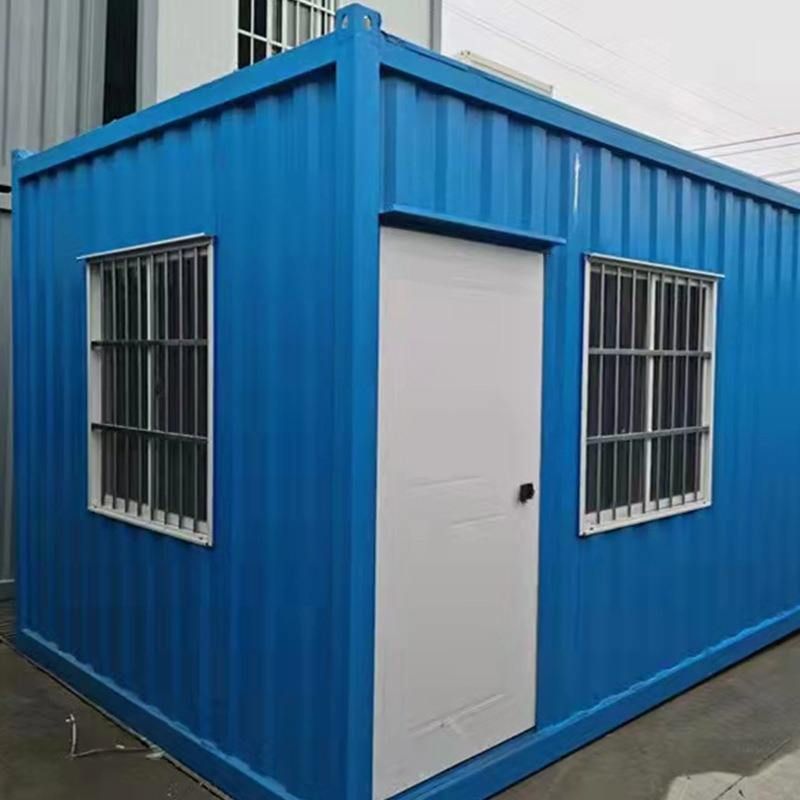
I. Basic Composition Mobile toilets generally consist of fecal sewage storage tanks (or disposal units), floor slabs, sanitary ware, walls, washing equipment, water tanks, roofs, and mobile devices. Early models used materials like wood, with simple structures and functions that easily absorbed odors. Later, they gradually evolved to use materials such as fiberglass-reinforced plastic and polyethylene, improving durability and odor resistance.
II. Classification Methods
- By structural form: They are divided into single-unit mobile toilets (independent units) and composite-structure mobile toilets (multi-unit combinations).
- By mobility method: They include lifting and handling types (requiring external equipment for movement) and powered towing types (with built-in power or towable for transportation).
- By sewage treatment method:
- Water-flush and waterless-flush suction types: Water-flush types rely on a water source for flushing, with sewage treated by suction equipment; waterless-flush types reduce water usage through chemical agents or vacuum suction.
- Recirculating water-flush types: Equipped with a water circulation system, they filter and disinfect sewage for reuse, conserving water resources.
- Dry-pack types: Feces are directly collected in replaceable sealed bags or containers without flushing, suitable for water-scarce areas.
III. Core Features
- Mobility: They can be quickly deployed to locations such as stations, docks, tourist attractions, and construction sites to meet temporary or long-term needs.
- Combinability: Through modular design, multiple units can be拼接 (connected) to accommodate different crowd sizes.
- Convenient transportation: Some models (such as foldable toilets) have a collapsed height of only 90 centimeters and can be transported by pickup trucks or vans, making them suitable for event sites and remote areas.
IV. Innovative Applications
- Foldable toilets: Compact when collapsed and easy to transport, they can be used immediately after unfolding, solving restroom problems in temporary locations.
- DIY mobile restrooms: Made from materials like buckets and wooden boards, they achieve basic functions by installing components such as universal wheels and drainage pipes. They are cost-effective and highly flexible, suitable for households or small events.
V. Applicable Scenarios Mobile toilets are widely used in densely populated public places (such as squares and commercial streets), transportation hubs (stations and docks), tourist attractions, new residential areas, and large construction sites, providing sanitation for temporary or long-term needs.



