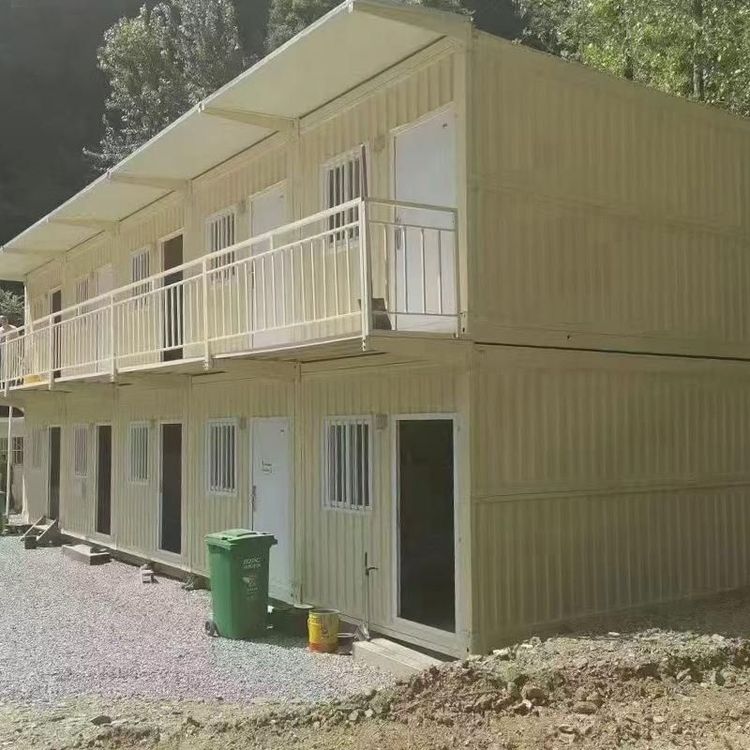
Mobile Toilet
A mobile toilet, also known as a portable toilet, is a facility that can be moved as a whole to provide public toilet services.

Composition of Mobile Toilets
Mobile toilets are generally composed of fecal sewage storage tanks (or fecal sewage treatment devices), floor slabs, sanitary ware, walls, washing equipment, water tanks, roofs, and mobile devices. Initially, they were made of materials such as wood, with simple structures and functions, and were prone to absorbing odors. Later, they gradually evolved to use materials such as fiberglass and polyethylene, which are more durable and can reduce odors.
Classification of Mobile Toilets
- By structural form: They can be divided into single-structure mobile toilets and composite-structure mobile toilets. Single-structure toilets are relatively independent and simple, while composite-structure toilets are more complex and may have more functions or a more stable structure.
- By mobility method: There are lifting and handling-type mobile toilets, which mainly rely on lifting equipment or manual handling for movement; and powered and towed-type mobile toilets. Powered toilets can provide their own moving power, while towed toilets require the assistance of other vehicles for towing.
- By sewage treatment method: They are divided into water-flush and waterless suction-type mobile toilets. Water-flush toilets are cleaned by water flow, while waterless suction-type toilets use suction devices to treat feces. Recirculating water-flush mobile toilets can recycle the flushing water to save water resources. Dry-packing mobile toilets dry-pack the feces without the need for water flushing.
Suitable Places for Mobile Toilets
They are suitable for stations, docks, tourist attractions, villa areas, newly built residential areas, large construction sites, squares, densely populated public places, and bustling commercial streets. For example, for temporary projects lasting a few months, mobile toilets welded with 100*100 galvanized square steel can meet temporary usage needs. A young man once made a portable toilet using a water storage tank and a pallet, which was convenient and practical, demonstrating their flexible application in different scenarios.
Design Principles of Mobile Toilets
They should follow the principles of being mobile and convenient, economical and durable; environmentally friendly and beneficial to the environment; improving efficiency and promoting humanity. The overall structure should be lightweight, using lightweight and durable materials as much as possible while ensuring structural firmness. The height and width of the toilet should also be controlled during design, and the mobile device should be fully considered for completeness and rationality to ensure that it can be easily transported to any place where a toilet needs to be installed and can be used repeatedly.