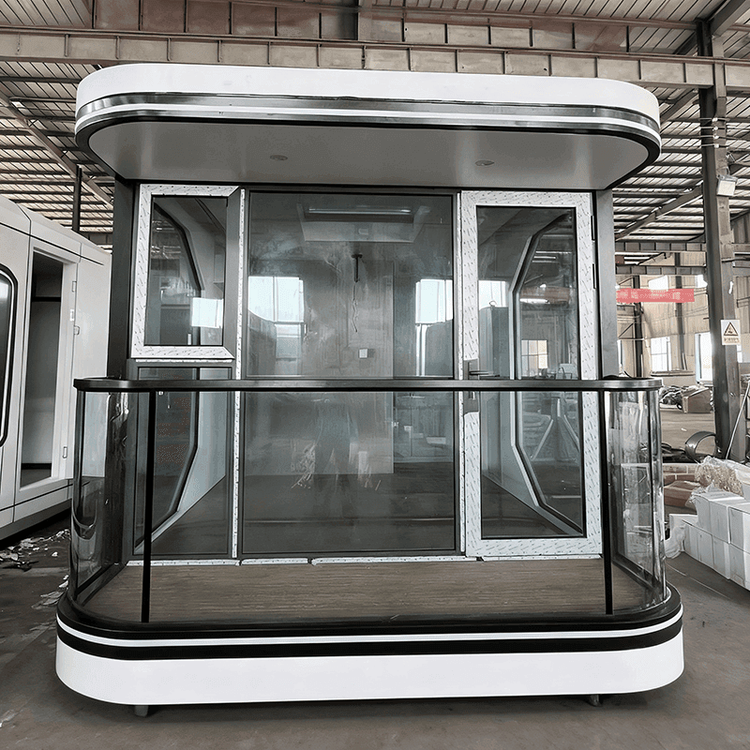
Storage Principle of Mobile Toilet Tent
Currently, no publicly available information on the storage principle of mobile toilet tents has been found. The following is supplementary background knowledge:

The storage principle of mobile toilet tents is generally similar to that of ordinary tents, but it requires targeted design in combination with its special functions (such as a toilet waste collector and a sealing structure). Since existing public information mainly focuses on the working principle of the toilet waste collector in toilet tents, its storage mechanism has not been thoroughly documented or made public. However, reasonable speculation can be made based on the general design logic of tent products.
1. Structural Disassembly and Folding Design
The core of storing a mobile toilet tent lies in modular disassembly. The main frame (such as an aluminum alloy or fiberglass frame) usually adopts a foldable joint design, enabling quick disassembly by pressing buttons or rotating connectors. The tent fabric (mostly waterproof nylon or polyester fiber) is fixed to the frame with elastic cords or Velcro. When storing, the fabric should be detached first and then folded into a compact shape. Some high-end models may use pre-creased fabric, which reduces volume through a specific folding path.
2. Handling of the Toilet Waste Collector and Sealing System
As a core functional module, the storage of the toilet waste collector needs to balance hygiene and space optimization. The roll of biodegradable plastic film is usually placed above the waste storage tank. When storing, ensure that the film roll is fixed in a dedicated slot to prevent it from coming loose during transportation. The foot-operated mechanical device (such as a gear set or linkage structure) may adopt a detachable design, allowing it to be disassembled into small components by loosening the fixing screws and placed in the storage bag along with other parts of the frame. The waste storage tank should be emptied and disinfected, and then sealed with a rotating cover to prevent the leakage of residual odors.
3. Space Allocation in the Storage Bag
The storage bag for a mobile toilet tent is usually divided into multiple compartments:
- Main compartment: Stores the folded tent frame and fabric;
- Sub-compartment: Places the components of the toilet waste collector (such as the waste storage tank, film roll, and foot-operated device);
- Accessory pocket: Holds the instruction manual, cleaning tools, or spare film. Some designs may use a hard-shell storage case, which fixes the components with foam liners to enhance transportation stability.
4. Trend of Simplified Operation Procedures
Modern mobile toilet tents tend to reduce the usage threshold through one-click storage or tool-free assembly and disassembly designs. For example, the frame joints may have built-in springs that automatically retract when folding; the connection points between the fabric and the frame may use magnetic or quick-release buckles to reduce manual operation steps. However, such designs need to balance structural strength and storage efficiency and have not yet become mainstream.
Summary: There is no standardized solution for the storage principle of mobile toilet tents, but they generally follow the logic of "modular disassembly - folding and compression - dedicated storage". Actual products may have detail adjustments due to differences in brand, material, or function. It is recommended to refer to the instruction manual of the specific product or contact the manufacturer for accurate information.