
Special Doors for Mobile Toilets
The special doors for mobile toilets mainly include types such as aluminum alloy profiles with hollow tempered glass doors and specially designed movable signboards or lockable sliding doors.
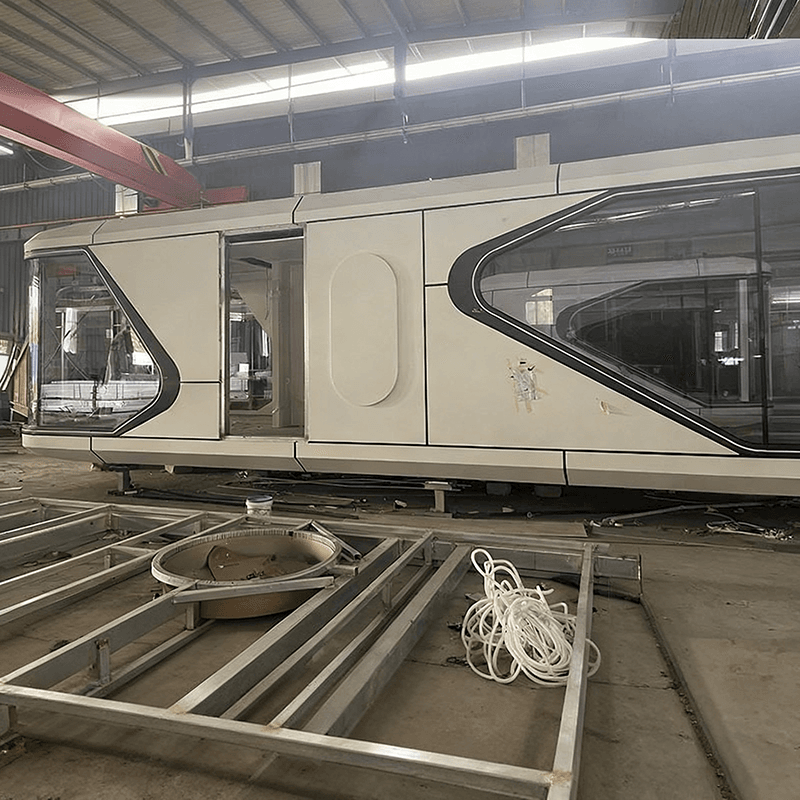
Aluminum alloy profiles with hollow tempered glass doors: This is a relatively common type of door and window for mobile toilets. Aluminum alloy profiles have many advantages. They are strong and can withstand a certain amount of external impact, ensuring the stability of the door during long-term use and making it less prone to deformation and damage. At the same time, aluminum alloy is highly corrosion-resistant. In the relatively humid environment of a toilet, it is less likely to rust, which can extend the service life of the door. The application of hollow tempered glass is a major highlight. The hollow structure has good thermal insulation and sound insulation properties, effectively reducing the transfer of heat and the spread of sound between the inside and outside of the toilet, enhancing the user experience. Tempered glass itself is strong and safe. Even if it breaks under external force, it will form granular fragments, reducing the harm to the human body. This type of glass also has good light transmittance, allowing natural light to enter the interior of the toilet, making it brighter inside and reducing the use of artificial lighting, which is both energy-saving and environmentally friendly.
Specially designed movable signboards or lockable sliding doors: In some innovatively designed mobile toilets, such as "tide toilets," this type of special door is used. "Tide toilets" set up a number of "gender-neutral general-purpose toilet stalls" to cope with differences in the flow of people of different genders at different times. Movable signboards or lockable sliding doors can dynamically adjust usage permissions according to real-time traffic. When the number of users of a certain gender is relatively large, some of the "gender-neutral general-purpose toilet stalls" can be adjusted for use by that gender by moving the signboards or operating the lockable sliding doors. This design improves the efficiency of toilet use, avoids resource waste caused by an imbalance in the flow of people due to gender differences, and better meets people's toilet needs in public places.



