
Anti-slip Design for Mobile Toilet Shower Rooms
The anti-slip design of mobile toilet shower rooms should be comprehensively ensured from three aspects: flooring, materials, and supporting measures to reduce the risk of slipping in wet environments.
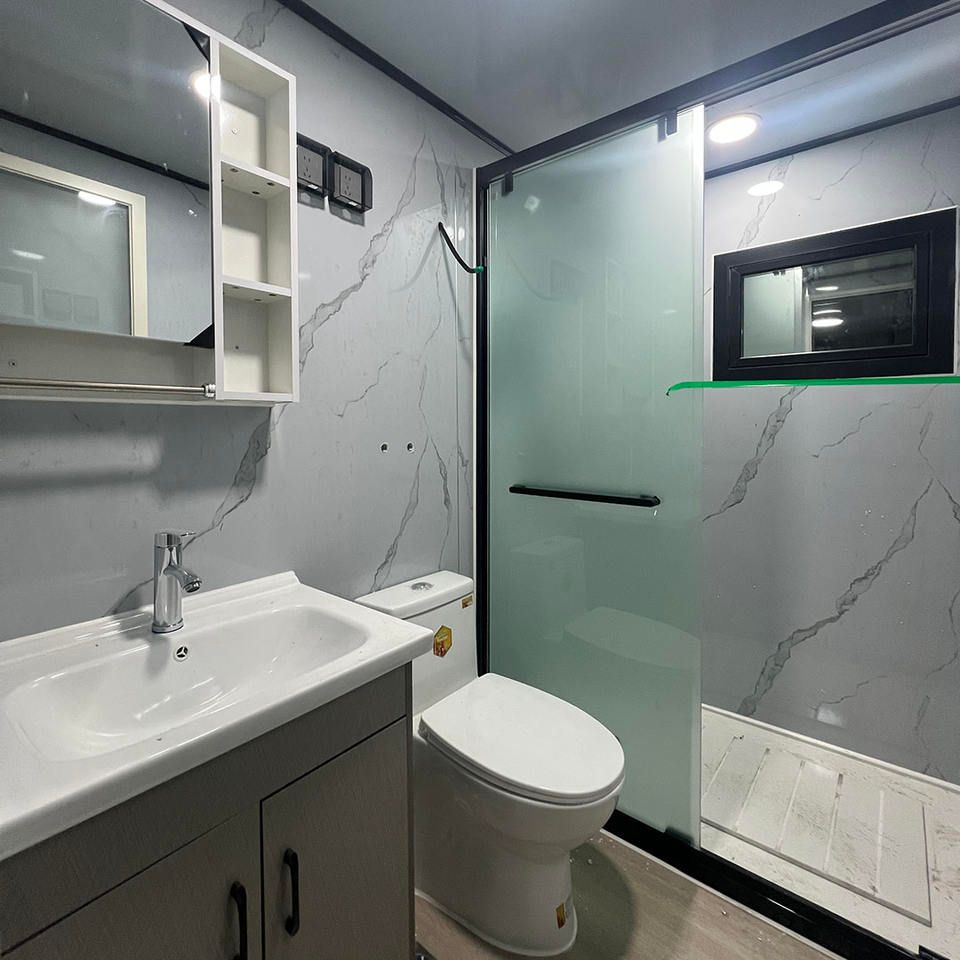
1. Anti-slip Flooring and Ground Design
The flooring of mobile toilet shower rooms should use specialized anti-slip materials, typically achieved through two methods:
- Anti-slip Patterns: The ground is designed with concave-convex patterns or granular structures to increase friction between the shoe soles and the floor. For example, outdoor mobile toilet shower rooms often use anti-slip tiles or rubber flooring, whose surface textures effectively disperse accumulated water and reduce the probability of slipping.
- Anti-slip Mat Assistance: Removable anti-slip mats are placed inside the shower room, especially for vulnerable groups such as the elderly and children who are prone to slipping. The mats should be selected for their strong water absorption, soft material, and fixed edges to prevent tripping caused by mat movement.
2. Material Selection and Tactile Optimization
The materials for family-version mobile shower rooms should balance anti-slip properties and safety:
- Environmentally Friendly PVC Material: Thick PVC material is not only odorless but also has a skin-friendly feel, preventing users from instinctively retracting their feet due to cold material in winter, which could lead to imbalance. Its surface smoothness should be controlled within a safe range to avoid excessive slipperiness, while its stability is enhanced through material thickness (e.g., thickened to 3-5mm).
- Waterproof Craftsmanship: The connection between the floor and walls should be rounded to prevent water accumulation; material seams should be filled with sealant to prevent water from seeping into the base layer and causing a slippery floor.
3. Supporting Measures to Reduce Humidity
The core cause of slippery environments is accumulated water, so supporting designs are needed to reduce floor moisture:
- Forced Ventilation System: An exhaust fan or ventilation device is installed inside the shower room to accelerate air circulation and reduce internal humidity. For example, outdoor mobile toilet shower rooms are often equipped with top exhaust fans to quickly remove water vapor after use.
- Dry-Wet Separation Design: Glass partitions or shower curtains are used to separate the shower area from the toilet area, preventing water splashes from reaching other areas. If space is limited, a water guide groove can be set on the floor to direct accumulated water to the drainage outlet.
- Timely Cleaning and Maintenance: After use, a squeegee should be used to clean accumulated water on the floor, and the drainage outlet should be regularly checked for blockages to ensure smooth water flow.
Through the above designs, mobile toilet shower rooms can significantly improve their anti-slip performance. However, users should still wear anti-slip slippers and avoid rapid movements to further reduce risks.



