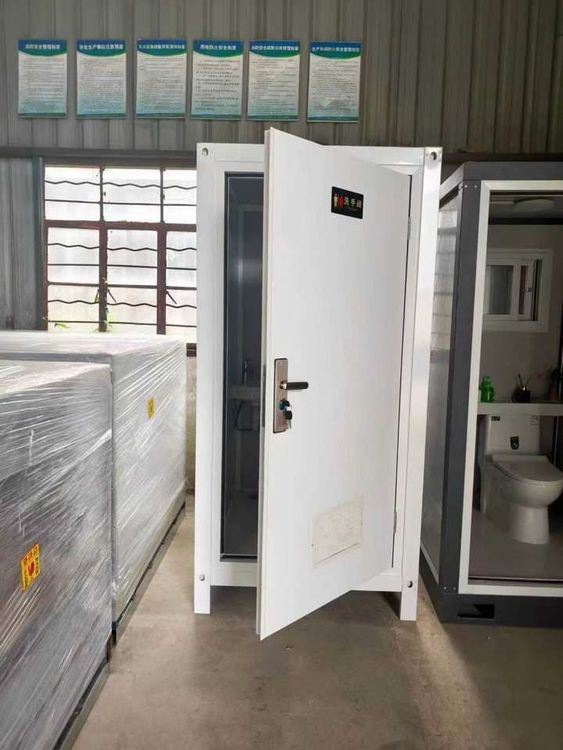
Mobile Toilet Sewerage
The sewerage design of mobile toilets is usually integrated into the overall structure, with treatment achieved through fecal sewage storage tanks or disposal units, and is equipped with a complete drainage system. The core of its sewerage function lies in the collection, treatment, and discharge of fecal sewage. The specific design logic varies by type, but all follow the basic process of 'collection - treatment - discharge'.

Core Components of the Sewerage System
The sewerage function of mobile toilets is primarily undertaken by fecal sewage storage tanks or disposal units, which are the core components of their drainage systems. Storage tanks typically adopt a sealed design to prevent sewage overflow or odor diffusion, and some high-end models are equipped with anti-corrosion coatings to extend service life. Additionally, the floor must be slip-resistant, easy to clean, and have a drainage slope to ensure smooth flow of sewage into the storage unit; the drainage outlets of sanitary fixtures (such as toilets and urinals) are directly connected to the storage tank, forming a closed sewage collection path. The roof and walls must ensure structural sealing to prevent rainwater infiltration from interfering with the sewerage system.
Sewerage Treatment Logic for Different Types of Mobile Toilets
Flush and Non-flush Suction Types
Flush-type toilets use water from a tank to flush fixtures, with sewage flowing directly into the storage tank, requiring regular pumping and cleaning; non-flush suction-type toilets use vacuum or negative pressure technology to suction feces into the storage tank, reducing water consumption but also requiring regular removal. Both types of sewerage treatment rely on the capacity of the storage tank and are suitable for short-term use scenarios.Recirculating Flush Type
This type is equipped with a sewage treatment unit that purifies sewage through physical (such as sedimentation and filtration) or chemical (such as disinfection and decomposition) methods, enabling water resource recycling. The sewerage system in such toilets must integrate a purification module, and the treated clean water can be reused for flushing, significantly reducing water consumption and suitable for scenarios with scarce water resources or long-term use.Dry Packing Type
Dry packing-type toilets use biodegradable bags to collect feces, requiring no water for flushing and thus having no traditional sewerage system. Their 'sewerage' function is achieved through regular replacement of the packing bags, with extremely low sewage generation, suitable for scenarios without drainage conditions or with strict environmental requirements, such as field operations and temporary facilities for large-scale events.
Maintenance Points for the Sewerage System
The sewerage system of mobile toilets requires regular maintenance to ensure normal operation. The storage tank must be emptied according to its capacity and frequency of use to prevent overflow; the purification module of recirculating flush-type toilets must have its filter media regularly replaced or disinfectants added; the packing bags of dry packing-type toilets must be promptly replaced and properly disposed of. Additionally, drainage pipes must be regularly inspected to prevent blockages or damage.