
Mobile Toilet Sewage Structure
The sewage structures of mobile toilets mainly include direct discharge and fecal tanks, fecal sewage storage tanks (or disposal devices), conventional water-flushing types, vacuum sewage systems, water-storage sewage systems, foam-blocking types, and bagging types, among others.
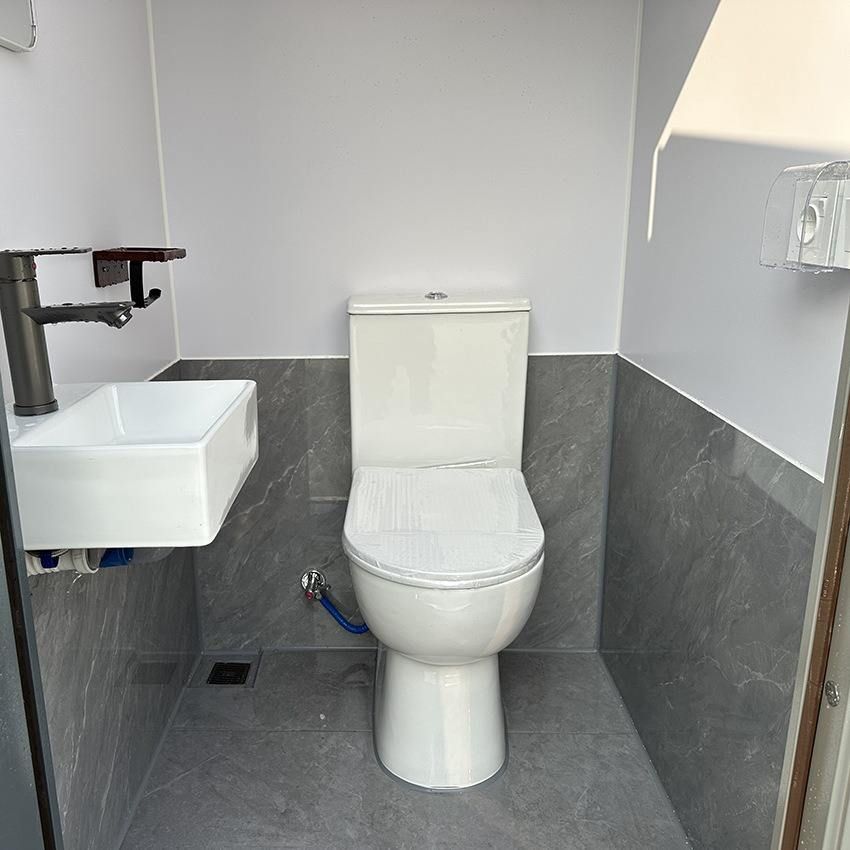
Direct discharge and fecal tanks are relatively common sewage disposal methods. Mobile toilets are made of color-coated steel sheets and are equipped with squatting pans, washbasins, and exhaust fans. Their sewage disposal is mainly achieved through direct discharge and fecal tanks. Direct discharge is generally suitable for places with appropriate discharge conditions, while fecal tanks are used to collect feces, which are then cleaned up after accumulating to a certain amount.
The fecal sewage storage tank (or disposal device) is an important part of mobile toilets. It usually forms a complete mobile toilet system together with the floor, sanitary ware, walls, washing equipment, water tanks, roofs, and mobile devices. The fecal sewage storage tank is responsible for collecting and storing fecal sewage, and some also have preliminary treatment functions to reduce odors and pollution.
Conventional water-flushing mobile toilets need to be connected to water supply and drainage pipes. They discharge sewage to septic tanks or municipal sewage networks through manual or automatic induction. This method is suitable for environments with water supply, has relatively low construction costs, and offers a user experience similar to that of ordinary toilets.
The vacuum sewage system uses the principle of negative pressure to suck sewage and waste into a collection container through a vacuum pump. This sewage disposal method is efficient and uses less water, effectively preventing leakage and the spread of odors. It is suitable for places with high hygiene requirements.
The water-storage sewage system discharges waste into a storage tank through water flushing. When the storage tank is full, it needs to be cleaned and replaced. This method is suitable for places with sufficient water supply and easy cleaning, such as some large-scale event sites or temporary construction sites.
Foam-blocking mobile toilets reduce water consumption and suppress odors through chemicals, making them suitable for areas with limited drainage. The principle is to form a layer of foam in the toilet bowl, blocking the waste below the foam, thereby reducing odor emission and water consumption.
Bagging mobile toilets are completely independent of water and electricity supply, easy to install but require frequent cleaning. They collect feces in biodegradable plastic bags and clean them up uniformly after a certain period of use. They are suitable for remote areas without water and electricity supply or temporary emergency situations.



