
Mobile Toilet Sewage
There are various sewage discharge methods for mobile toilets, mainly including conventional water-flushing, vacuum sewage systems, water-storage sewage systems, microbial degradation sewage systems, waterless packaging sewage systems, foam-blocking sewage systems, and vacuum self-priming sewage systems. The appropriate method should be selected based on actual needs, and maintenance and management should be strengthened.
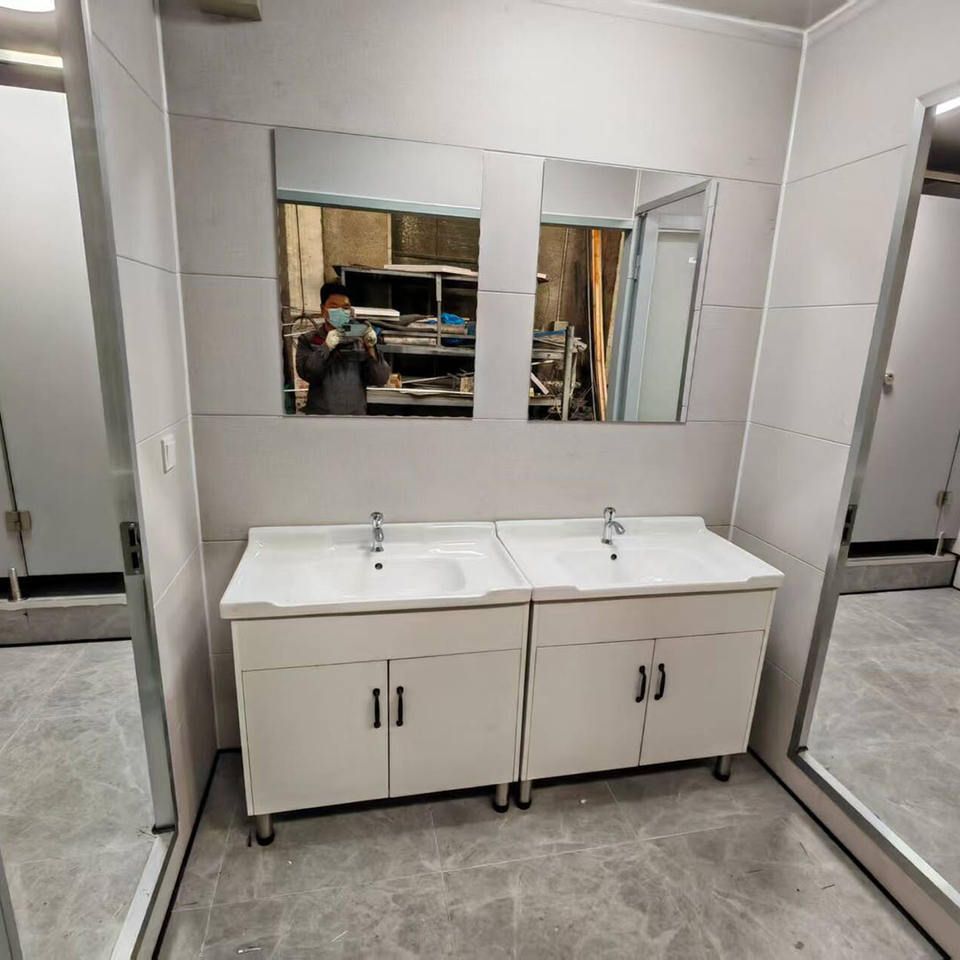
Conventional Water-Flushing: This method involves connecting to upper and lower water pipes and using manual or automatic induction for sewage discharge, with the sewage directly discharged into septic tanks or municipal sewage networks. It is suitable for various water-rich environments, such as city parks and commercial districts, with relatively low construction costs. However, it relies on the municipal sewage system, and blockages or improper maintenance of the pipes may lead to sewage overflow.
Vacuum Sewage System: Utilizing the principle of negative pressure, a vacuum pump sucks sewage and waste into a collection container. When the sewage reaches a preset water level, the vacuum pump automatically starts, offering high efficiency and minimal water usage, effectively preventing leaks and odor diffusion. This method is suitable for places with high hygiene requirements, such as airports and high-speed rail stations, but the equipment cost is relatively high, and regular maintenance of the vacuum pump and pipes is required.
Water-Storage Sewage System: This method uses water flushing to discharge waste into a storage tank, which requires manual cleaning and replacement when full. It is suitable for places with sufficient water sources and easy cleaning, such as temporary construction sites or large event venues, but the storage tank needs frequent cleaning to prevent odors or bacterial growth.
Microbial Degradation Sewage System: This method utilizes microbial strains to decompose excrement, converting feces into fertilizer raw materials and treating urine for recycling in toilet flushing. It is suitable for regions with high environmental protection requirements and no sewage pipe networks, such as ecological scenic spots or remote areas, but requires regular supplementation of microbial strains, and the decomposition efficiency is affected by environmental factors such as temperature and humidity.
Waterless Packaging Sewage System: This method uses biodegradable environmental protection packaging bags to automatically seal excrement, which is then collected in a fecal storage tank for unified treatment. It is suitable for water-scarce or sewage-free areas, such as field construction or temporary events, but requires regular replacement of packaging bags and timely cleaning of the fecal storage tank to avoid affecting the user experience.
Foam-Blocking Sewage System: This method generates foam through a foaming agent to cover the toilet fixtures, replacing water flushing for lubrication, toilet cleaning, and odor prevention. It is suitable for water-scarce or highly water-efficient areas, such as scenic spots in arid regions or long-distance transportation vehicles, but requires regular supplementation of the foaming agent, and the foam may decrease due to high usage frequency, affecting odor prevention effects.
Vacuum Self-Priming Sewage System: This method uses a vacuum pump to generate negative pressure, sucking excrement into a sewage tank with a water usage of only one-tenth of that of traditional toilets. It is suitable for scenarios with extremely high water-saving requirements and efficient sewage discharge, such as ocean-going vessels or airplane toilets, but the equipment is complex, with high maintenance costs, requiring professional operation.



