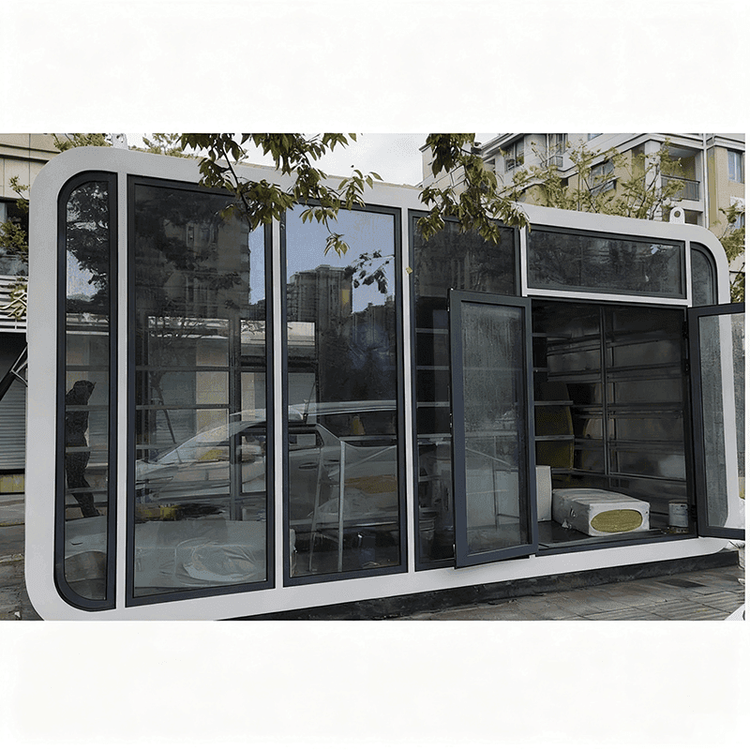
Mobile Toilet Septic Tank Installation Diagram
There is no direct installation diagram for mobile toilet septic tanks, but standardized operations can be carried out according to the installation process, as follows:

Preliminary Preparation
Before installing a mobile toilet septic tank, it is necessary to first determine the installation location. Generally, choose a place near the toilet with relatively low terrain and convenient for sewage discharge. At the same time, consider the surrounding environment to avoid pollution and odor impact on living areas. Prepare the required tools, such as shovels, spirit levels, pipes, fittings, etc., as well as a septic tank that meets the specifications. For a simple three-chamber septic tank, ensure its quality is qualified and it is well-sealed.
Foundation Construction
If using a simple three-chamber septic tank, first build a squatting toilet in the house or backyard and connect a sewage pipe at the bottom of the toilet. Then, dig a soil pit in the selected open space outside the toilet. The size of the soil pit should be determined according to the size of the septic tank, and the depth should ensure that the septic tank can be half-buried in the soil after installation, while leaving a certain amount of operating space. After digging the pit, use a spirit level to check whether the bottom of the pit is flat. If it is not flat, it needs to be trimmed to ensure the stability of the septic tank installation.
Septic Tank Installation and Connection
Place the ready-made three-chamber septic tank into the dug soil pit, adjust its position and angle to make it level. Accurately connect the sewage pipe at the bottom of the toilet to the inlet of the septic tank to ensure a tight connection and prevent sewage leakage. For a three-chamber septic tank, which consists of three interconnected sealed chambers, install the fecal transfer pipes correctly. There are specific requirements for the height of the inlet of the fecal transfer pipe from the bottom of the chamber between the first and second chambers and between the second and third chambers. The height of the inlet of the fecal transfer pipe from the first chamber to the second chamber should be one-third of the effective volume, and the height of the inlet of the fecal transfer pipe from the second chamber to the third chamber should be one-half of the effective volume. This ensures that feces can undergo fermentation, decomposition, and sedimentation in the septic tank according to a reasonable process.
Backfilling and Finishing
After the septic tank is installed and connected, carry out backfilling work. Backfill in layers, and compact each layer with tools to prevent the septic tank from shifting or being damaged due to soil settlement. After backfilling to an appropriate height, level and harden the surrounding ground for daily use and maintenance.