
Mobile Toilet Row House
"Mobile toilet row house" is not a standard term, and there is currently no directly corresponding exact definition or fixed product type. However, its possible design direction can be inferred based on the common structures and functional characteristics of mobile toilets.
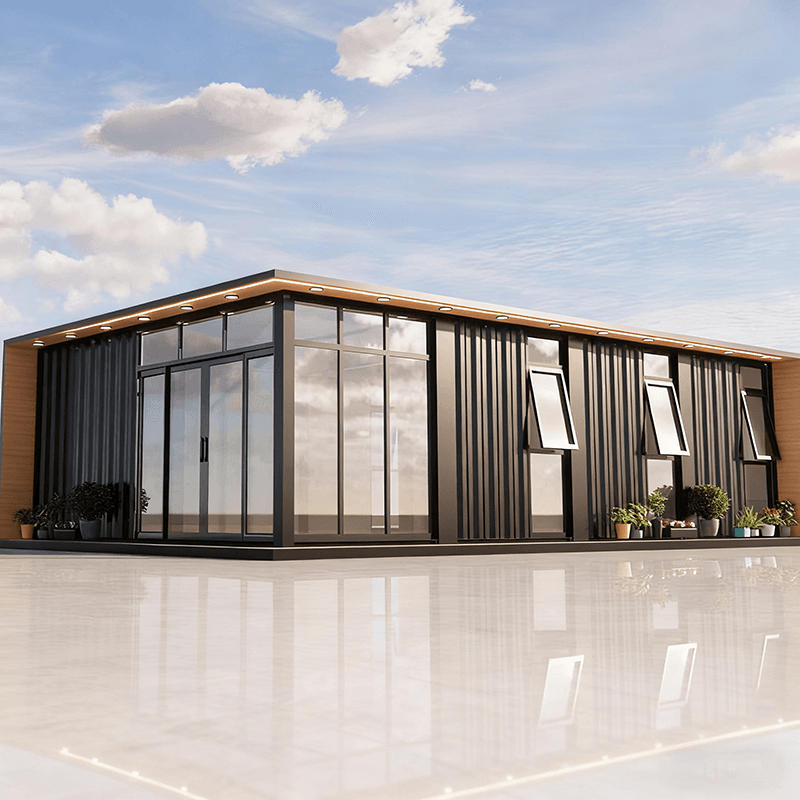
Basic Composition and Classification of Mobile Toilets
Mobile toilets typically consist of modules such as fecal wastewater storage tanks (or disposal devices), floor slabs, sanitary fixtures, walls, washing equipment, water tanks, roofs, and mobile devices. Their core function is to meet sanitation needs in temporary or mobile scenarios, so their design must balance portability, durability, and functionality. They can be classified by structural form into single-unit structures (independent units) and composite structures (multi-unit combinations); and by mobility into hoisting/handling types (relying on external equipment for movement) and powered/trailer types (with built-in power or capable of being towed for transportation).
Possible Extensions of the "Row House" Concept
If "row house" refers to a building form with multiple units arranged side by side, a mobile toilet row house may refer to connecting multiple independent toilet units side by side through modular design to form a layout similar to a row house. This design is commonly seen in large-scale events, construction sites, or temporary communities and needs to meet the following characteristics:
- Modular Assembly: Each unit is quickly assembled through standardized interfaces (such as bolts and buckles), allowing for flexible addition or reduction of units to adapt to different scale requirements.
- Functional Zoning: It may include separate areas for men and women, barrier-free facilities, management rooms, etc. Some customized models use steel structure frame welding to ensure structural stability.
- Integrated Design: Some products integrate toilet, shower, and washing functions, such as detachable mobile toilets in container houses, improving space utilization through integrated design.
Typical Application Scenarios and Advantages
- Temporary Use at Construction Sites: Modular row houses can be quickly deployed to meet the concentrated toilet needs of workers and are convenient for later dismantling or relocation.
- Support for Large-Scale Events: For music festivals, sports events, etc., multi-unit combinations can handle peak人流 (pedestrian flow), avoiding queue congestion.
- Emergency Rescue Scenarios: After earthquakes, floods, and other disasters, temporary sanitation facilities can be quickly set up to ensure the basic needs of affected people.
Precautions
Currently, there is no unified standard for "mobile toilet row houses" in the market. When purchasing, it is necessary to clarify requirements such as the number of units, functional configurations (such as whether they include showers), mobility (hoisting/trailer), and materials (steel structures/lightweight materials), and refer to relevant industry standards (such as environmental protection emission requirements) to ensure compliance.



