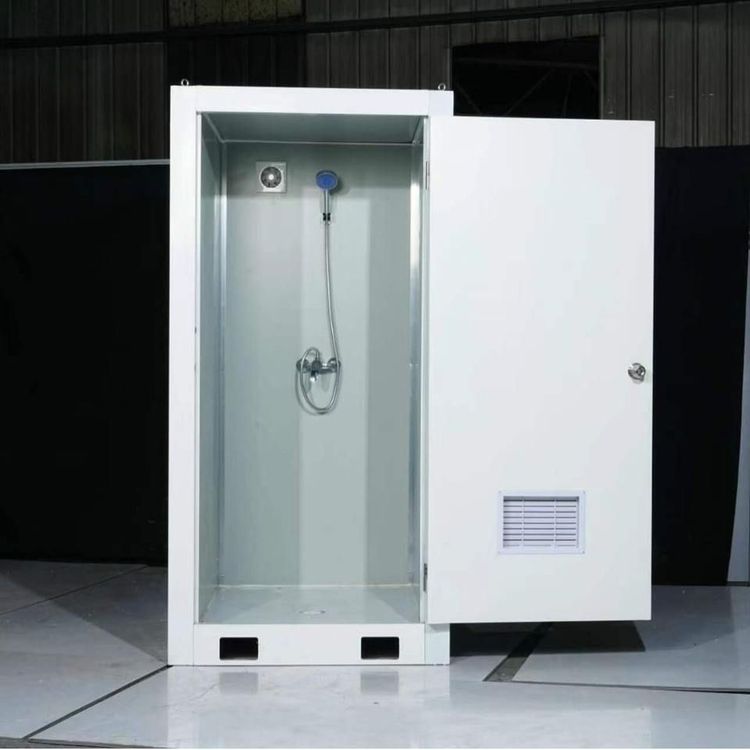
Mobile Toilet Residential Design
Mobile toilet residential design requires comprehensive consideration of functions, structures, mobility methods, and sewage treatment methods, and incorporates advanced bathroom design concepts to enhance the user experience.

I. Basic Composition and Classification of Mobile Toilets
Mobile toilets typically consist of fecal sewage storage tanks (or disposal units), floor slabs, sanitary fixtures, walls, washing equipment, water tanks, roofs, and mobility devices. Based on structural form, they can be classified into single-unit structures (independent units) and composite structures (multi-module combinations). According to mobility methods, they are divided into lifting/handling types (requiring mechanical assistance) and powered/trailer types (with built-in power or towable). In terms of sewage treatment methods, they include flush and non-flush suction types (relying on external sewage removal), recirculating flush types (with sewage purification and reuse), and dry packing types (with fecal collection and centralized treatment). In residential scenarios, the type should be selected based on space, usage frequency, and environmental requirements. For example, small households may prioritize dry packing types to reduce sewage discharge.
II. Functional Optimization Design in Residential Scenarios
Dry-Wet Separation and Space Reorganization
Drawing on advanced bathroom design, the sink can be moved outside the bathroom door, leaving only the shower and toilet functions inside. This layout prevents洗漱 (washing) steam from affecting the toilet area, reduces cross-contamination, and improves multi-user efficiency. For example, in a mobile bathroom unit case, the sink and mirror are placed outside, with dry-wet separation achieved through a glass door inside. A space of 2 meters in width and 3 meters in length can meet basic needs.Integration of Smart Devices
Installing a smart toilet enhances comfort and hygiene. Its automatic flushing, heated seat, drying, and odor removal functions reduce the frequency of manual cleaning, while remote control via a mobile app (such as adjusting temperature and switching on/off) is suitable for the elderly or those with mobility issues. A wall-mounted embedded trash can design can be hidden beside the toilet, saving space and facilitating easy disposal of garbage to keep the floor clean.Innovative Cleaning Tools
A fixed spray gun can be installed beside the toilet to quickly clean stains using high-pressure water flow, particularly suitable for local maintenance of non-flush suction or dry packing mobile toilets. The spray gun retracts after use, occupying no space and avoiding the problem of traditional cleaning tools harboring dirt and grime.
III. Key Points for Structure and Material Selection
Residential mobile toilets need to balance lightweight design with durability. Walls can adopt light steel frames paired with waterproof panels, and roofs can use UV-resistant materials (such as aluminum alloy or PVC) to extend lifespan. Floor slabs should be slip-resistant and easy to clean, such as those made of integrated resin. For powered/trailer types, ensure that mobility devices (such as wheels and towing frames) comply with road transportation standards to avoid safety hazards caused by overweight or unstable structures.