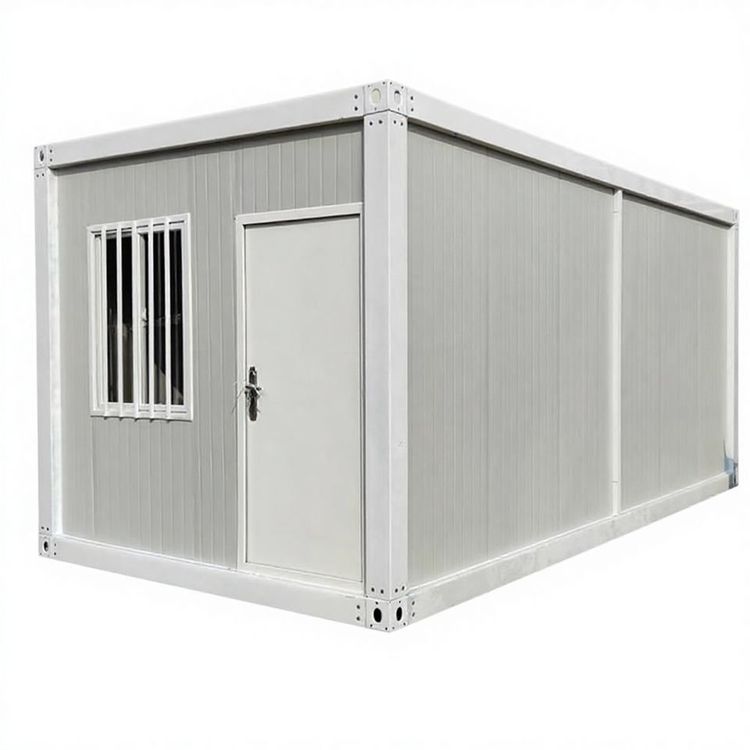
Research Status of Mobile Toilets
The research status of mobile toilets is primarily reflected in aspects such as diversified applications, technological evolution, industry status, and development trends.

Diversified Applications: The application scenarios of mobile toilets have expanded from initially being limited to construction sites and temporary event venues to a broader range of public areas, including urban neighborhoods, tourist attractions, and large-scale public events. Their functionality relies on modular design, allowing individual units to be flexibly combined according to actual needs, such as adding or removing toilet stalls, sinks, or barrier-free facilities to meet the demands of different carrying scenarios. This design approach significantly enhances the adaptability and practicality of mobile toilets.
Technological Evolution: Traditional mobile toilets primarily rely on chemical agents to decompose waste or centralized collection and disposal. In contrast, new technologies have introduced biological degradation and physical separation methods. Biological degradation technology accelerates fecal decomposition through specific microbial communities, reducing odors and pollution. Physical separation technology converts feces into solid matter, facilitating transportation and subsequent treatment. Additionally, cutting-edge research is exploring the potential for resource recovery, such as extracting nitrogen and phosphorus nutrients from urine for agricultural use, although this remains in the experimental stage and has not yet been widely applied.
Industry Status: With economic development and the flourishing tourism industry, the market demand for mobile toilets continues to grow. Their mobility, modularity, and ease of transportation make them a preferred solution for municipal construction and public services. The government's increasing emphasis on mobile toilets has accelerated funding and technological innovation, driving improvements in product appearance (such as lightweight structures and reasonable color schemes) and functional upgrades (such as water-saving designs and intelligent management).
Development Trends: Future research and development of mobile toilets will focus on two main directions: First, technological breakthroughs under resource constraints, such as promoting waterless or low-water consumption technologies in water-scarce regions; Second, the integration of smart technologies, enabling real-time monitoring and precise management of facility status through IoT sensors. Meanwhile, advances in materials science will enhance the durability, thermal insulation, and reduce the transportation weight of the toilet units; design will place greater emphasis on universality to meet the barrier-free usage needs of people of different ages and mobility levels.