
Mobile Toilet Research
In 2026, the mobile toilet market will exhibit characteristics of rapid expansion, technological upgrades, diversified scenarios, and regional differentiation, with the industry developing deeply in the directions of intelligence, environmental protection, and modularization.
I. Continuous Expansion of Market Size with Significant Regional Demand Differentiation
The national market, relying on demands such as aging population, outdoor economy, and emergency disaster relief, has formed four core sectors: elderly care, outdoor cultural tourism, emergency disaster relief, and engineering infrastructure, with the overall market size expanding rapidly. In the regional market, the market size of mobile toilets in Xining was approximately 8 million yuan in 2024 and is expected to exceed 12 million yuan by 2026, mainly driven by large-scale events, scenic area development, and urban construction. Xinjiang plans to build 47 new mobile toilets in 2026, bringing the total number of tourist toilets across the region to 4,335, with a focus on layouts in self-drive routes and scenic area rest stops. Additionally, the "Three-Year Action Plan for Improving the Quality of Tourist Toilets (2026-2028)" will promote the evaluation of Class I toilets and the popularization of water-saving and energy-saving technologies.
II. Parallel Development of Product Stratification and Technological Upgrades
Domestically, mainstream product categories form a price gradient: simple models (PE plastic one-piece molding, relying on disposable waste bags), packaged models, and self-contained freshwater and wastewater models; overseas high-end segments include vehicle-mounted pull-out models, elderly care barrier-free models, and biodegradable environmentally friendly models. Technological upgrades focus on three major directions:
- Intelligence: Trends include sensor-based flushing, deodorization systems, and IoT monitoring of usage status. The Nanchong region requires the installation of edge computing gateways to support multi-dimensional environmental sensing and linkage for gases such as ammonia and hydrogen sulfide.
- Environmental Protection: Widespread application of biodegradable toilet fixtures, water-saving equipment (e.g., foam sealing with water consumption as low as 0.13L per person), and vacuum negative pressure adsorption systems (with vacuum levels ranging from -55kPa to -70kPa).
- Modularization: High-strength galvanized steel frames or weather-resistant aluminum alloy bodies with seismic resistance up to intensity 8 or higher, supporting rapid hoisting and relocation.
III. Application Scenarios Extending from Traditional to Emerging
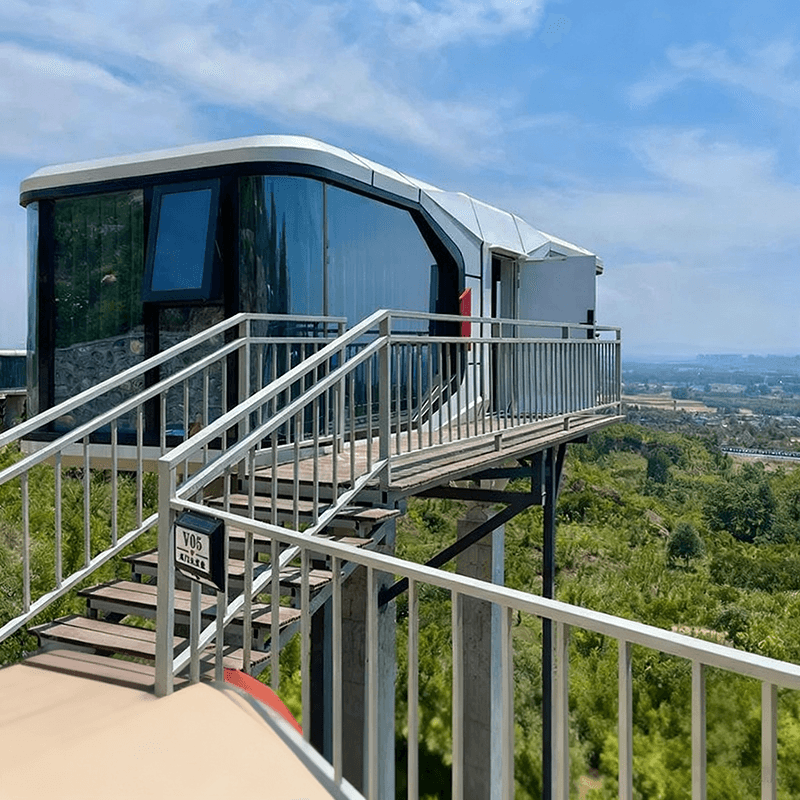
Traditional scenarios include large-scale events, scenic areas, and emergency disaster relief. For example, 12 exhibitions in Xining in the first half of 2025 each required 10-20 mobile toilets. Emerging scenarios cover urban construction (subway construction, road renovation), commercial real estate (nighttime promotional rentals in shopping malls), cultural tourism customization (antique/special-shaped exterior designs to match natural landscapes), and smart rest stops (integrating unmanned retail, WiFi coverage, and other functions).
IV. Regional Development Cases Highlighting Differentiated Paths
The Xining market is developing towards standardized and customized services, with intelligence and the application of environmentally friendly materials becoming new directions. In Nanchong, there is a surge in demand for prefabricated mobile toilets, with a focus on examining biodegradable technologies, sensor interaction capabilities, and material durability. Xinjiang is improving operational and maintenance service quality through measures such as a "dedicated person for dedicated cleaning duties" system and evaluation standards for "odor-free, water-free, and stain-free" conditions, supplemented by equipment such as sewage suction trucks and garbage compression vehicles.



