
Mobile Toilet Requirements
Mobile toilets need to meet requirements such as reasonable spatial layout, sturdy material structure, hygienic and environmentally friendly conditions, complete facility configuration, and compliance with industry standards. Details are as follows:
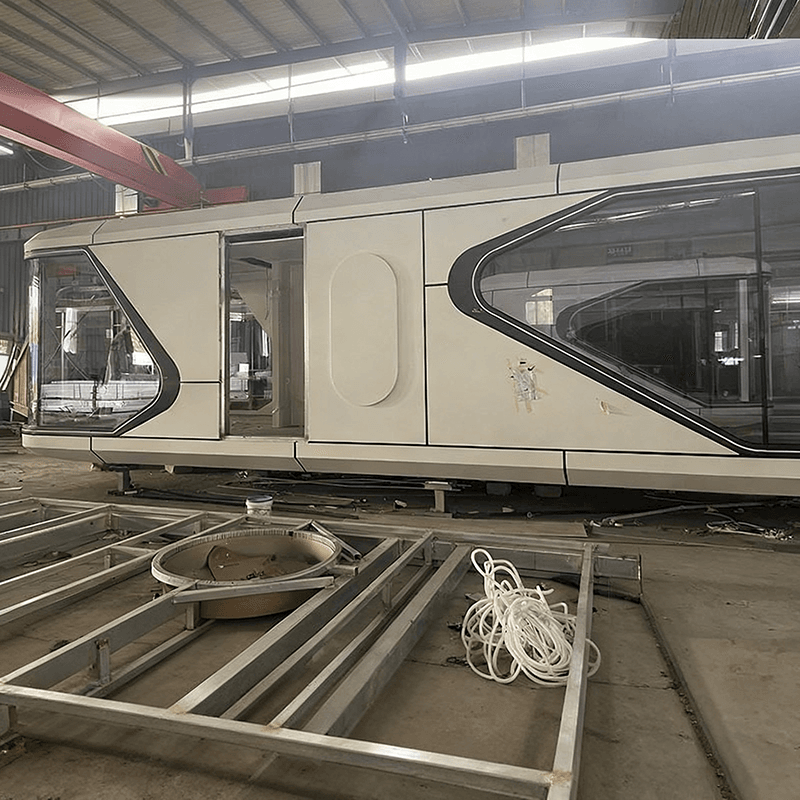
1. Spatial Layout and Dimensions
The interior space should conform to ergonomic principles, with common dimensions ranging from 1.1 to 1.5 meters in length, 0.8 to 1.2 meters in width, and 2.3 to 2.7 meters in height, ensuring comfortable use for individuals of different body types. Consideration should be given to the convenience of barrier-free facilities (such as handrails and wheelchair turning space) and children's facilities (such as low-level sinks and safety seats). Sinks and mirrors should be designed ergonomically to avoid inconvenience in use.
2. Material Selection and Structural Stability
The exterior shell, interior walls, and floor should be made of durable, weather-resistant, and environmentally friendly materials, such as stainless steel or fiberglass-reinforced plastic, to extend service life and ensure safety. The structural design should be robust and stable, meeting the stability requirements for transportation, installation, and daily use. The interior construction should facilitate easy cleaning and maintenance, and the floor should incorporate anti-slip measures (such as anti-slip flooring or fiberglass grating) to reduce the risk of slipping.
3. Hygiene Conditions and Environmentally Friendly Design
The ventilation system is crucial and should be equipped with powerful exhaust fans (with a power range of 20-50 watts). Some products adopt a dual exhaust design (at the top or side walls) to ensure smooth air circulation and reduce odors. In cold regions, insulation materials, electric heaters, or small warm air blowers can be installed; in hot regions, ventilation skylights or small air conditioners can be added to enhance comfort.
4. Internal Facility Configuration
- Core Sanitary Fixtures: Toilets are primarily ceramic squat toilets or sit-down toilets, with high-end products using stainless steel materials and equipped with foot-operated or sensor-operated flush valves (with water tank capacities of 5-10 liters). The handwashing system includes sinks (ceramic or stainless steel, with a width of 30-40 centimeters), push-button or sensor-operated faucets, as well as mirrors, coat hooks, storage shelves, toilet paper holders, and trash cans. High-specification toilets are also equipped with child safety seats or toilet seat covers.
- Environmental Control Systems: Lighting uses LED energy-saving lamps (with a power range of 5-15 watts), and some products are equipped with emergency lights.
- Water Supply and Drainage, and Power Systems: The water supply system is divided into self-contained tank types (with a freshwater tank capacity of 100-300 liters) and external water source types; the sewage system traditionally uses a sewage tank (with a capacity of 200-500 liters), while modern environmentally friendly types adopt foam sealing or microbial degradation technology; the power system supports 220V mains power access or is powered by built-in batteries (such as 12V/100Ah) and solar panels.
- Structure and Accessories: The interior is equipped with safety door locks, and the exterior is equipped with 'occupied/unoccupied' indicator locks or LED displays; wall panels are made of high-density polyethylene (HDPE), fiberglass-reinforced plastic, or colored steel plates.
5. Industry Standards and Precautions
Production should refer to national standards such as 'GB/T 26963-2011 Mobile Toilets', with a focus on sealing performance, odor control, insulation effects, and the brands of core components (such as water pumps and sanitary fixtures). The richer the configuration (such as air conditioners, water heaters, sensor devices), the higher the price and later maintenance costs will be, so it is necessary to weigh the actual needs.



