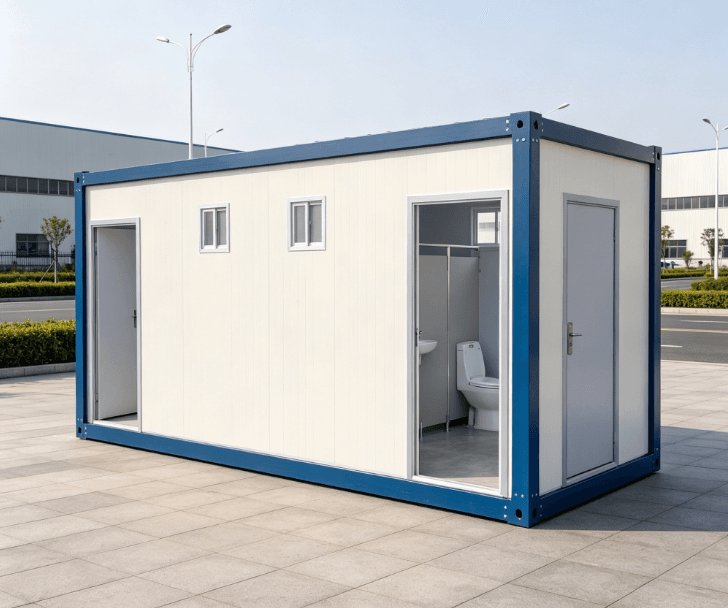
How to Repair Mobile Toilets
The repair of mobile toilets should be carried out according to the specific damaged parts and the type of problem. Here are some common repair methods:
I. Overall Structure and Appearance Repair
Deformation or cracking of the tank body
- Small cracks can be repaired with special plastic welding materials, ensuring compatibility with the tank body material. If the deformation is severe or the cracking range is large, the entire tank body or the damaged parts need to be replaced, with costs typically ranging from several hundred to over a thousand yuan.
- Before repair, drain the accumulated water from the tank body and keep the surface dry and free of oil stains.
Door lock and hinge failures
- Regularly apply lubricating oil (such as WD-40) to the hinges to prevent rusting. If the lock spring fails or the internal structure is damaged, it is recommended to replace the entire lock set directly to avoid repeated failures caused by partial repairs.
Blocked ventilation openings
- Clean leaves, dust, or insect nests from the ventilation openings to ensure air circulation. If the ventilation opening design is unreasonable (e.g., too low a position prone to water accumulation), a rain cover or filter screen can be installed.
II. Sanitary System and Flushing Device Repair
Manual/foot-operated flushing valve failures
- After closing the water inlet valve, disassemble the valve and clean the internal scale. Replace aging sealing rings or springs. If the valve body is broken, it needs to be replaced entirely, paying attention to selecting matching accessories with the original model.
Automatic induction flushing device problems
- Check the power supply (e.g., whether the battery is fully charged) and whether the infrared sensing window is blocked. If the problem is not resolved, it may be a failure of the control motherboard or solenoid valve, requiring professional repair to avoid secondary damage caused by self-disassembly.
Leakage from the water storage tank and pipes
- Minor leaks can be repaired with waterproof sealing tape or special glue. If the tank has large cracks, it is recommended to replace it with a new one. If the pipe connection is loose, it needs to be retightened and coated with sealing glue to enhance the seal.
III. Waste Collection and Disposal System Repair
Packing toilet failures
- If the packing is incomplete or cannot be packed, check whether the biodegradable film is exhausted or whether the mechanical device (e.g., gears, motors) is functioning properly. If the film is used up, it needs to be replaced in a timely manner. For mechanical failures, contact the manufacturer for repair.
IV. Special Leakage Repair
Locating the leak point
- Check whether the pipe connections are loose, whether the sealing glue is aging, or whether the tank body welds are damaged. The leak point can be determined through water injection tests or by observing water stains.
Repair operations
- For interface leakage or small cracks: Wrap with waterproof sealing tape or cover with liquid leak stopper.
- For aging sealing glue: Remove the old glue and reapply silicone structural sealing glue.
- For tank body weld cracks or holes: For metal materials, use argon arc welding for repair and apply anti-rust paint. For plastic or fiberglass materials, use AB glue combined with fiberglass cloth for reinforcement.
Curing and testing
- After repair, let it stand for several hours to a day until the material is fully cured. Then conduct a water injection test to confirm no leakage before putting it back into use.
Before repair, cut off the water supply and drain the accumulated water to ensure a dry and oil-free construction surface. Regular inspection and maintenance (e.g., cleaning the ventilation openings once a month and checking the door locks once a quarter) can extend the service life of mobile toilets.