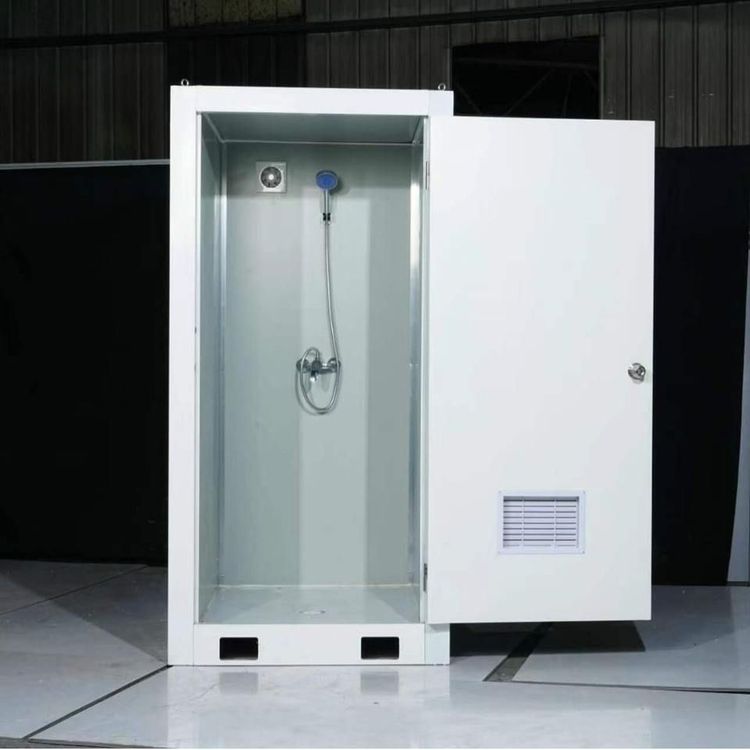
Mobile Toilet Repair
Mobile toilet repair should be carried out comprehensively from multiple aspects, including functional maintenance, system balance restoration, and frame fault handling.

I. Functional Maintenance Repair common faults in the flushing system, sewage pipes, door locks, lighting, etc. For flushing system failures, check the water pump pressure, solenoid valve sensitivity, and sensor errors. For example, insufficient water pump pressure can be resolved by adjusting the pressure valve or replacing the pump. For blocked sewage pipes, use professional unclogging equipment to clean them, avoiding the use of hard objects that may cause pipe damage. For damaged door locks, replace the lock core or adjust the closing torque according to the model. For lighting system failures, check the circuit connections and bulb lifespan; replacing LED fixtures can enhance durability. For box structure deformation, use a level to check the verticality, repair cracked welds, and tighten hinges, bolts, and other connections with a torque wrench.
II. System Balance Restoration Maintenance should follow a three-layer logic of 'phenomenon intervention - state reset - performance adjustment'. For example, after unclogging pipes, recalibrate the water tank level float to ensure the flushing cycle matches the water tank capacity. After replacing a door lock, adjust the closing torque to avoid affecting usage due to being too tight or too loose. After repairing the lighting circuit, check the voltage stability to prevent frequent bulb failures. This process requires using circuit testing instruments, pressure gauges, and other tools to verify the coordinated state of each system, ensuring no interference with adjacent modules after repair.
III. Frame Fault Handling For structural integrity diagnosis, use tools such as levels and torque testers, focusing on inspecting welds, hinges, and bolt connections. When replacing damaged components, strictly verify dimensions and materials. For example, aluminum alloy components should use anti-electrochemical corrosion gaskets, and bearings should be lubricated with lithium grease before installation. For structural cracks, first use an angle grinder to create a V-shaped groove, fill with epoxy resin composite material, and then reinforce with stainless steel plates. For frequently loosening connection points, add spring washers; for load-bearing columns, weld cross-bracing rods to enhance stability.
IV. Preventive Maintenance and Tool Management Establish a monthly inspection system, focusing on monitoring the coating condition of corrosion-prone areas. Apply anti-rust paint before the rainy season and clear snow in winter. Store in a well-ventilated and dry environment to prevent metal oxidation caused by organic matter attachment. Maintenance tools should include pipe unclogging equipment, circuit testing instruments, and structural alignment tools. Spare parts inventory should consider compatibility with different brands. Maintenance personnel should master water and circuit principles, box structure characteristics, and environmental protection treatment techniques to ensure operational standardization and safety.