
Back to blog
Article
Mobile Toilet Rental Application
Admin September 24, 2026
The mobile toilet rental application should follow the following procedures and key points:
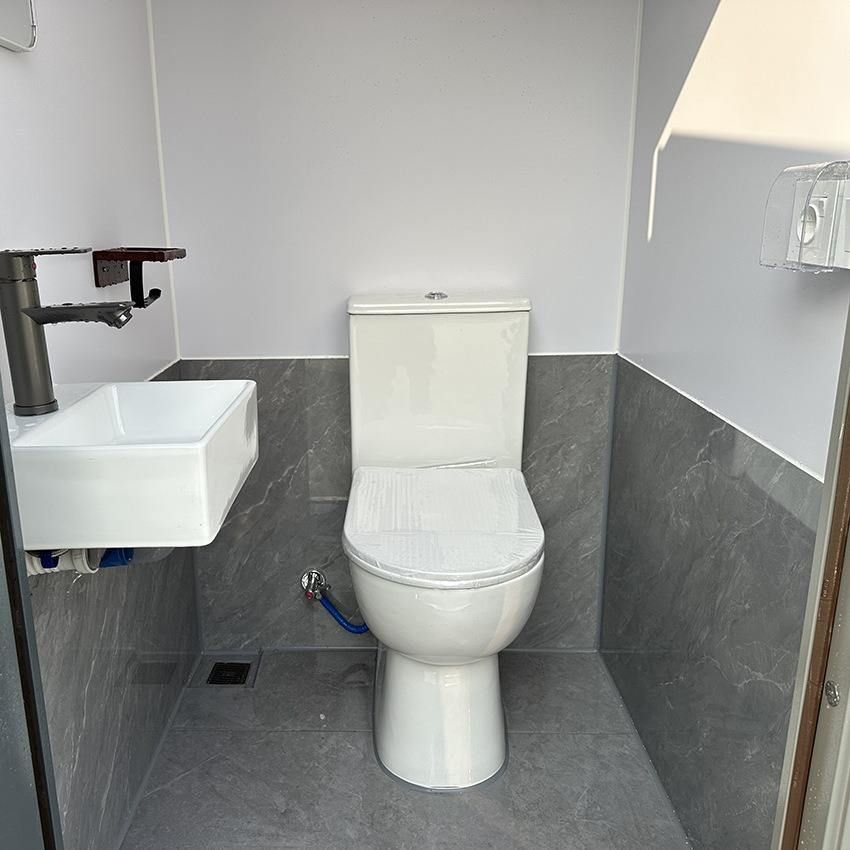
I. Pre-application Preparation
- Policy Familiarization: It is necessary to understand in advance the local policy requirements for the installation of mobile toilets, including site selection restrictions (such as avoiding low-lying flood-prone areas, being at least 5 meters away from dining areas, and at least 15 meters away from residential buildings), maximum quantity limits, and maintenance standards, which are usually formulated by urban management or environmental sanitation departments.
- Site Assessment: Confirm that the site's load-bearing capacity is at least 1.5 tons per toilet. Hard surfaces are preferred. Plan the water and electricity access routes (such as independent circuits and reflective markings) and sewage disposal plans (such as septic tanks or connections to municipal sewage networks) to ensure compliance with safety and environmental protection requirements.
II. Submission of Application Materials
- Basic Information: Clearly specify the installation location, expected duration of use (such as the event period or long-term rental), toilet type (single or connected units), and specifications (such as the number of toilet stalls).
- Purpose Explanation: Explain the necessity of installation, such as solving the toilet problems of surrounding residents/tourists and improving the support level for large-scale events. Provide data support based on specific scenarios (such as a surge in tourist numbers during holidays and the aging needs of the community).
- Supporting Plans:
- Cleaning and Maintenance: Develop a plan for daily disinfection and garbage removal, clearly defining the responsible party and frequency.
- Safety Measures: Equip with independent circuits, non-slip floors, and reflective markings. In hot weather, sunshades should be installed.
- Emergency Plan: Develop a rapid response mechanism for equipment failures and extreme weather conditions, such as a plan for deploying backup toilets.
- Approval Documents: Submit a site plan indicating the toilet location, a facility parameter table (such as dimensions and materials), and for large-scale events (with at least 500 participants), report to the public security department simultaneously.
III. Application Process
- Submission of Application: Submit the materials to the local urban management department or a professional service provider. Some cities (such as Nanchang) require submission 7 working days in advance.
- Review and Inspection: The management department may verify the site's suitability (such as ventilation devices and insulation layer configuration) and facility compliance. The review period is usually 3-5 working days.
- Installation and Use: After approval, install as instructed. Comply with regulations regarding usage time (such as avoiding construction noise at night), methods (such as prohibiting alternative uses), and conduct regular maintenance (such as weekly inspections of sewage pipes).
IV. Precautions
- Special Scenario Adaptation: For holiday events, it is recommended to use modular toilets that can be quickly removed. In summer, choose models with ventilation systems.
- Commitment Items: A written commitment is required not to change the facility's purpose, pay rent on time, and keep the surrounding environment clean. Violations may result in fines or forced removal.
Tip: You can inquire about the qualifications of local service providers and policy details through the municipal government service website to ensure a compliant and efficient application process.



