
Mobile Toilet Real-Scene Case Images
Currently, it is not possible to directly provide real-scene case images of mobile toilets, but their common types and scenario applications can be described in text to help understand their design features and actual effects.
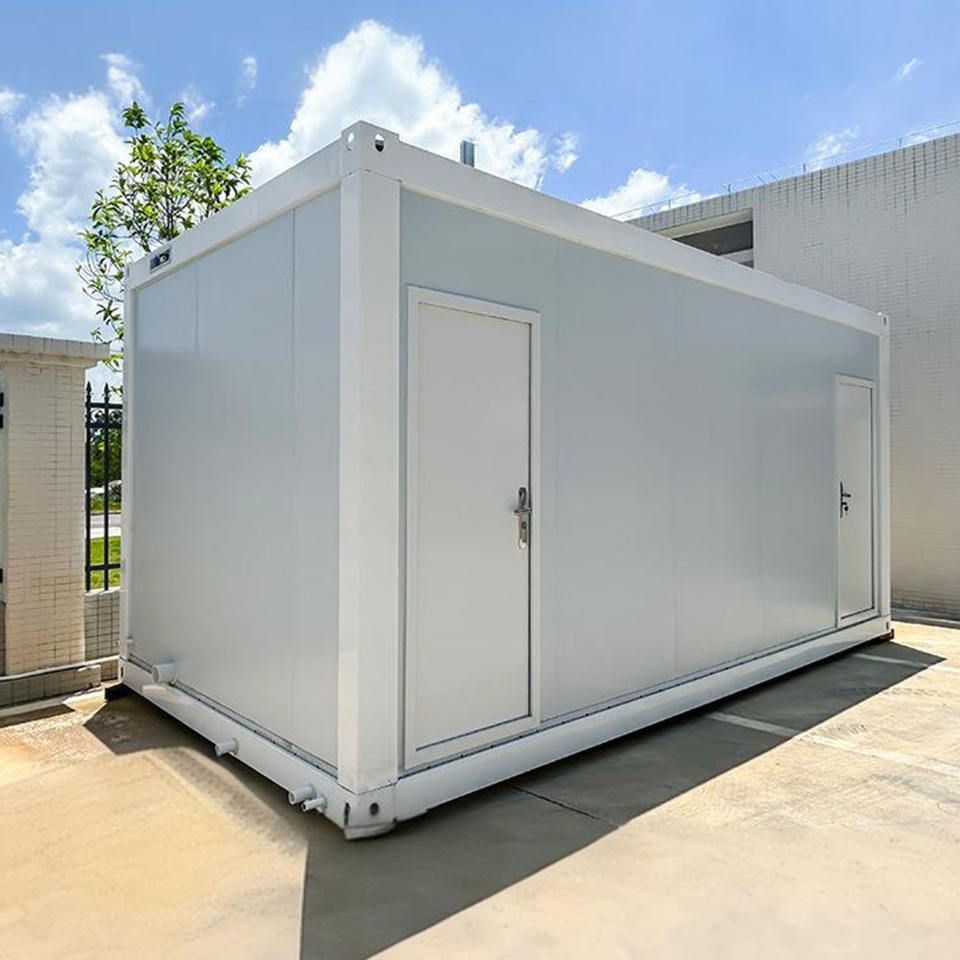
Mobile toilets can be classified into various types based on usage scenarios and technical characteristics. The most common type is the single-unit mobile toilet, typically constructed using lightweight materials such as fiberglass-reinforced plastic or metal frames. It has a simple appearance, a compact size, and is suitable for temporary events, construction sites, or scenic spots. For example, at outdoor music festivals, single-unit mobile toilets often feature white or gray as the primary colors, with ventilation openings on the top. They are equipped with basic facilities such as toilets, sinks, and lighting, and some high-end models even include air conditioning or deodorization systems. Their advantages lie in easy installation, rapid deployment, and the ability to be transported to designated locations via trailers or manual handling.
Another type is the container-type mobile toilet, which is modified from standard shipping containers. It has a more stable structure and higher space utilization. These toilets are commonly found at long-term construction projects or large-scale event venues. They resemble ordinary shipping containers in appearance but are internally divided into multiple independent restrooms by partitions. Some designs also include barrier-free access or baby-changing rooms. The modular design of container-type mobile toilets makes them easy to expand; for example, multiple containers can be joined together to form a toilet cluster to meet high foot traffic demands.
Eco-friendly mobile toilets place greater emphasis on environmental protection and resource recycling and are commonly found in nature reserves or remote areas. Their core designs include fecal harmless treatment systems (such as microbial degradation or composting treatment) and rainwater collection devices, with some models even using solar power. For example, on mountain hiking trails, eco-friendly mobile toilets may adopt a wooden appearance to blend in with the surrounding environment. Internally, they use biodegradation technology to reduce sewage discharge while utilizing natural light for illumination to reduce energy consumption.
In practical applications, the layout of mobile toilets needs to be combined with site conditions. For example, in narrow streets or crowded event venues, single-unit toilets may be arranged along the edges to leave space for passage; in open areas, container-type toilets can be arranged to form a semi-open area, protecting privacy while facilitating management. Additionally, the frequency of cleaning and maintenance of mobile toilets directly affects the user experience. High-end models are usually equipped with automatic flushing and disinfection systems to reduce the need for manual intervention.



