
Mobile Toilet Production Line
The mobile toilet production line encompasses multiple standardized processes, including structural design, material cutting and forming, assembly, and final assembly.
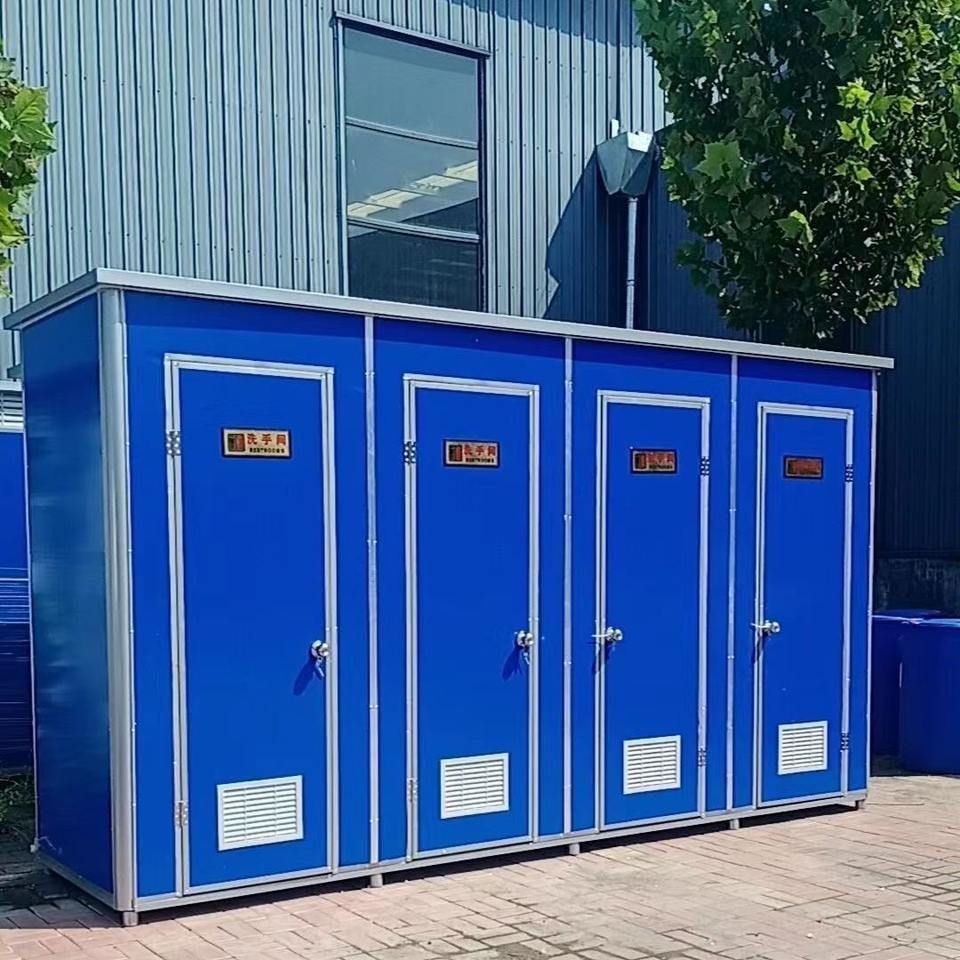
Structural design is the initial step in the production line, accomplished with the aid of computer-aided design software. Designers take into account various factors such as usage scenarios (e.g., tourist attractions, construction sites, temporary event venues), load-bearing requirements (e.g., whether it needs to support multiple users simultaneously or special equipment), climatic conditions (e.g., high-temperature, high-humidity, or cold regions), and transportation constraints (e.g., size and weight limitations for transportation) to plan the dimensions, internal layout, and load-bearing scheme of the toilet. Typically, a modular structural design is adopted, utilizing high-strength steel or composite materials as the main framework. This design ensures structural stability while facilitating subsequent production, transportation, and installation.
During the material cutting and forming stage, appropriate processes are employed for different materials. For metal sheets, cutting and welding operations are performed, with the main structure completed using automated cutting and welding equipment to ensure dimensional accuracy and structural strength. For interior and exterior wall panels, materials such as SMC (Sheet Molding Compound) or FRP (Fiberglass Reinforced Plastic) are commonly used. These materials possess properties such as water resistance, mold resistance, and ease of cleaning, and are formed into the desired shapes through processes like injection molding.
In the assembly process, prefabricated wall panels, floor panels, roof panels, and internal fittings (such as toilets, sinks, and flushing systems) are joined together. During assembly, sealing tests are conducted to ensure there are no leaks in the toilet. Simultaneously, the electrical system is installed to ensure the safety and compliance of water and electrical lines with relevant standards and regulations.
The final assembly stage involves integrating sanitary ware, ventilation systems, and control systems, followed by comprehensive functional testing. Waterproof tests are performed to check the toilet's water resistance, electrical system inspections are carried out to ensure electrical safety, and appearance quality checks are conducted to ensure the product meets aesthetic requirements. Additionally, companies like Kunming Rongdong Trading Co., Ltd. have mature processes in their production lines, ranging from fiberglass hand lay-up forming to prefabricated steel structure welding. The entire production process emphasizes modular production, ensuring product consistency and facilitating subsequent transportation and on-site installation.
You may also like

Portable Toilet Eco-Friendly: MOQ, Samples & Quotation Guide
Read More
Top Portable Toilet Color Steel Manufacturers: How to Choose a Factory Partner
Read MorePortable Toilet Picture: Types, Features & Buying Tips
Read More