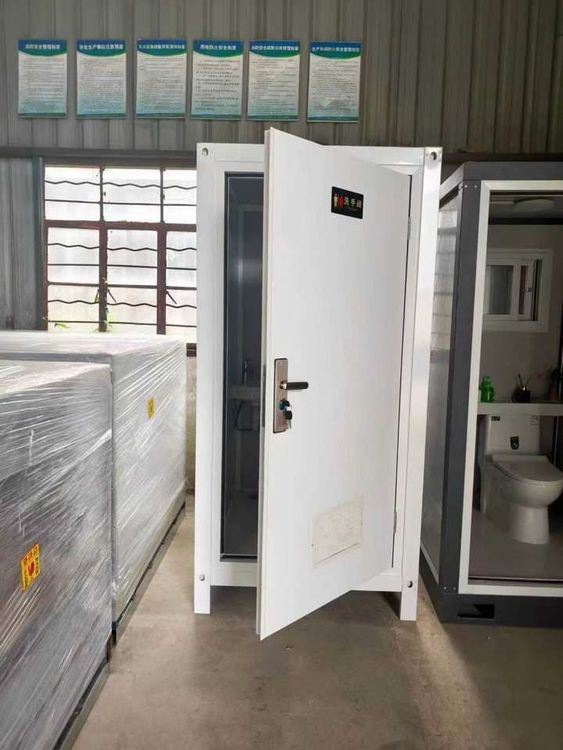
Mobile Toilet Product Standards
Mobile toilet product standards cover multiple aspects including structural forms, mobility methods, sewage treatment methods, material and structural characteristics, configuration standards, performance standards, environmental standards, and relevant standards they comply with.

In terms of structural forms, mobile toilets are divided into single-unit structures and composite structures. Single-unit structures are independent and complete, while composite structures may be composed of multiple functional modules.
There are various mobility methods. Lifting and handling types rely on external equipment for position movement; powered and towed types have their own power or can be towed by vehicles, adapting to different scenarios.
Sewage treatment methods are diverse, with water-flush and waterless suction types, circulating water-flush types, and dry-packing types each having their own characteristics. Circulating water-flush types accelerate fecal decomposition through biofilm technology to achieve water recycling; dry-packing types use biodegradable plastic bags to receive excrement, automatically change bags, and conduct centralized treatment.
Regarding material and structural characteristics, exterior wall materials can be selected from various options such as color steel plates and metal carved plates. The main structure is welded using national standard light steel keels to meet overall lifting requirements. The main frame commonly uses materials like stainless steel and galvanized steel, balancing strength and corrosion resistance, with anti-slip fixing devices designed at the bottom. The wall thickness is 1.5mm, and the shapes are diverse.
Configuration standards are divided into standard configurations and optional configurations. Standard configurations include basic facilities such as toilet bowls and coat hooks; optional configurations include air conditioners (both heating and cooling) and air purifiers to enhance user comfort. The voltage adopts the 220V civilian standard.
In terms of performance standards, intelligent water-saving ecological environmental toilets and mobile environmental public toilets can achieve low-water-volume flushing effects. They have a wide applicable temperature range, ensuring normal use in extreme weather through thermal insulation materials and sealing processes; the sound insulation system adopts a multi-layer composite structure to reduce internal noise propagation.
Regarding environmental standards, some models are equipped with feces-urine separation devices to reduce sewage discharge; metal outer shells can be recycled, reducing waste generation.
In addition, mobile environmental public toilets comply with the GBLT18091-92 standard.