
Mobile Toilet Process
There are mainly two common methods for making mobile toilets:
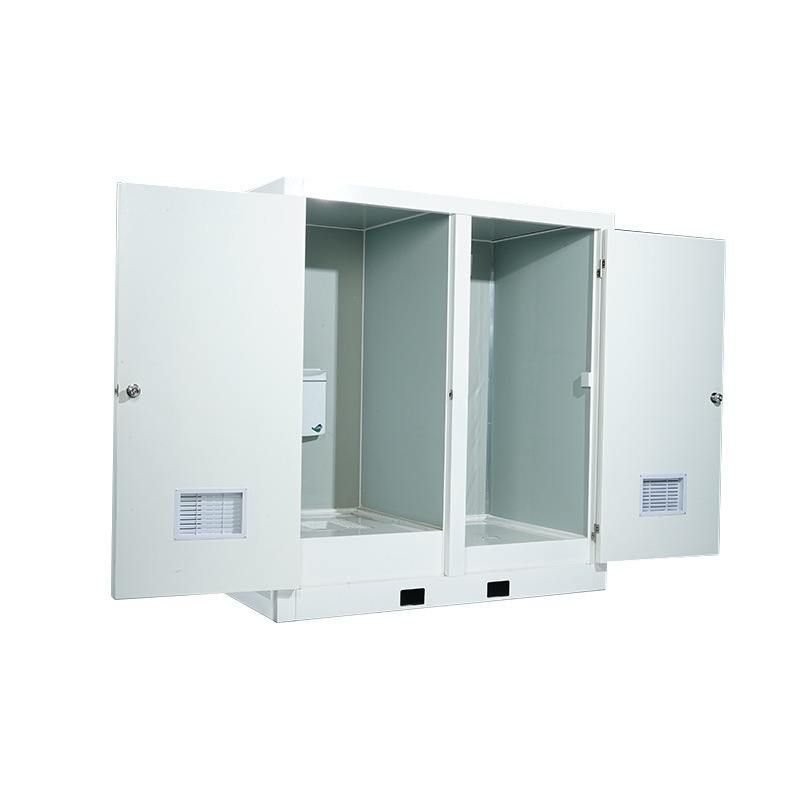
I. Using a water storage tank
- Tank modification: Use an angle grinder to split the water storage tank vertically in the middle, creating two semi-circular tank bodies. This step requires ensuring that the cutting surface is flat to avoid gaps during subsequent assembly.
- Bottom structure reinforcement: Fix universal wheels at the four corners of a wooden board for easy movement; increase the support height at the bottom of the tank body with wooden strips and self-tapping screws to enhance stability.
- Door frame and wall installation: Cut a rectangular opening on the side of the water storage tank as the doorway, and install a sponge strip along the edge of the opening to cushion the door frame; insert a plastic soft board as an elevated wall, with the upper half of the tank body serving directly as the roof to form an enclosed space.
- Drainage system design: Drill a hole at the center of the tank bottom to install a drain pipe, forming a floor drain; drill a hole on the side to connect a direct joint for connecting to external drainage pipes or water storage devices.
- Sanitary facility installation: Install a toilet (either flush or dry type), water tank, bathroom heater, showerhead, and sink according to needs, ensuring a reasonable layout of water and electricity lines.
II. Using a water storage tank and a pallet
- Mobile base construction: Fix universal wheels at the four corners of the bottom of a plastic pallet to provide a mobile base for the overall structure.
- Water storage tank treatment: Place the water storage tank and cut the top to form an open tank body; stack two water storage tanks and fix the outer frame with self-tapping screws to enhance structural strength.
- Entrance design: Cut a rectangular opening on the side of the water storage tank as the doorway, ensuring that the opening size meets ergonomic requirements.
- Internal drainage system: Drill a hole in the internal floor to install a drainage elbow and pipe, connecting to the water storage tank or an external drain to prevent sewage accumulation.
- Sanitary facility fixation: Fix the toilet and install a water tank, faucet, sink, and showerhead, paying attention to the spacing between equipment to conform to usage habits.
Additional information: Mobile toilets can be classified by structural form into single-unit structures (independent units) and composite structures (multi-unit combinations); by mobility into hoisting and handling types (requiring lifting equipment) and powered towing types (connectable to vehicles for towing); and by sewage treatment method into flush types (requiring a water source), non-flush suction types (relying on vacuum suction), and circulating flush types (with sewage purification and reuse). When making mobile toilets, choose the appropriate type according to actual needs and ensure compliance with environmental protection and hygiene standards.



