Power Load of Mobile Toilets
The power load of mobile toilets varies significantly depending on their type and function, which can be categorized as follows:

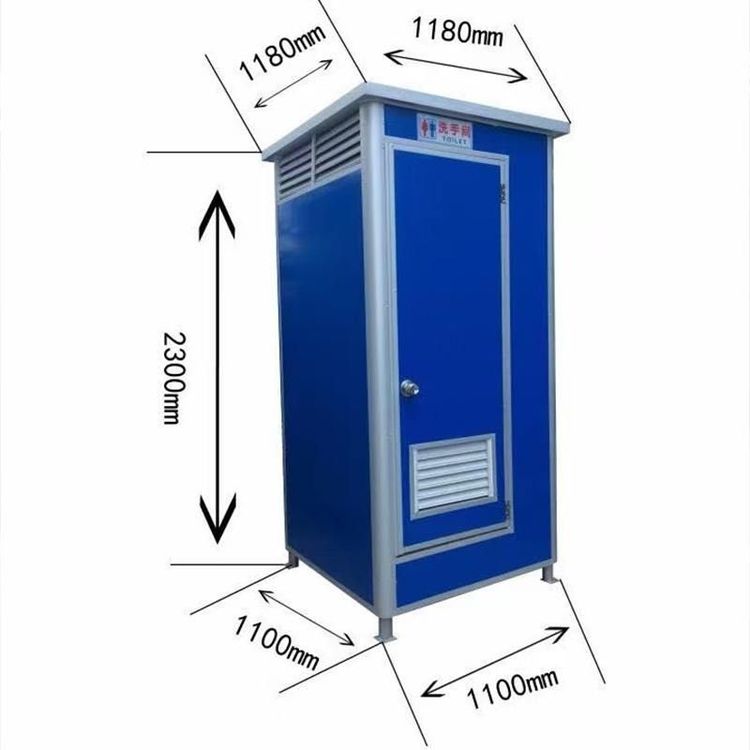
1. Modular Mobile Public Toilets This type uses a 380V three-phase five-wire power supply, with a design load rating of Level III and a total calculated load of 12kW. Its power demand primarily comes from winter heating equipment (such as electric tracing devices), requiring additional power capacity to meet operational needs in low-temperature environments. These toilets typically serve high-traffic scenarios, necessitating power configurations that balance stability and redundancy.
2. Energy-Efficient/Standard Mobile Toilets Calculated per toilet unit, the rated power of a single unit is usually ≤5W, with an average daily power consumption of 0.5kWh/unit/day. In winter, to prevent pipe freezing, an anti-freeze mode is activated, potentially increasing power consumption to 1.5kWh/unit/day. These toilets are suitable for temporary events or low-frequency usage scenarios, with power demands mainly focused on basic lighting and ventilation.
3. Microbial Degradation Mobile Toilets Based on the usage of a six-person household, the average daily power consumption is approximately 0.8 kWh. The core electrical equipment is the microbial treatment system, which reduces water consumption through biodegradation technology. Power demand is concentrated on maintaining microbial activity and environmental control, making these toilets suitable for long-term use in areas without municipal sewage networks.
4. Foam Sealing Mobile Toilets Some products have an average daily power consumption as low as 0.5 kWh, increasing to 1.5 kWh in winter anti-freeze mode. This type uses foam to seal odors and reduce flushing volume, with power mainly used for foam generation devices and minimal lighting. They offer significant energy-saving advantages and are commonly used in ecologically sensitive areas or temporary exhibitions.
5. Water-Flush Mobile Toilets (Equipped with Energy-Saving Technology) By optimizing the flushing system (such as sensor-activated water-saving valves) and low-power water pumps, some products can control average daily power consumption between 0.3-0.5 kWh. These toilets balance hygiene and water conservation, making them suitable for public places with high environmental standards.
6. Smart Toilet Mobile Toilets The average daily power consumption of a standard smart toilet is 0.2-0.5 kWh, depending on functional configurations (such as heated seats, warm air drying) and usage frequency. High-end models may see increased power consumption due to additional features (such as automatic lid opening, deodorization systems), requiring configuration selection based on actual needs.
Summary: The power load of mobile toilets must be comprehensively evaluated based on type, usage scenario, and seasonal factors. Modular public toilets require large-capacity power interfaces, while low-power types such as energy-efficient and microbial degradation models can be powered by solar energy or small generators, further reducing operational costs.