
Mobile Toilet Portable Restroom
A mobile toilet, also known as a portable restroom, is a facility that can be moved as a whole and provides toilet services to the public.
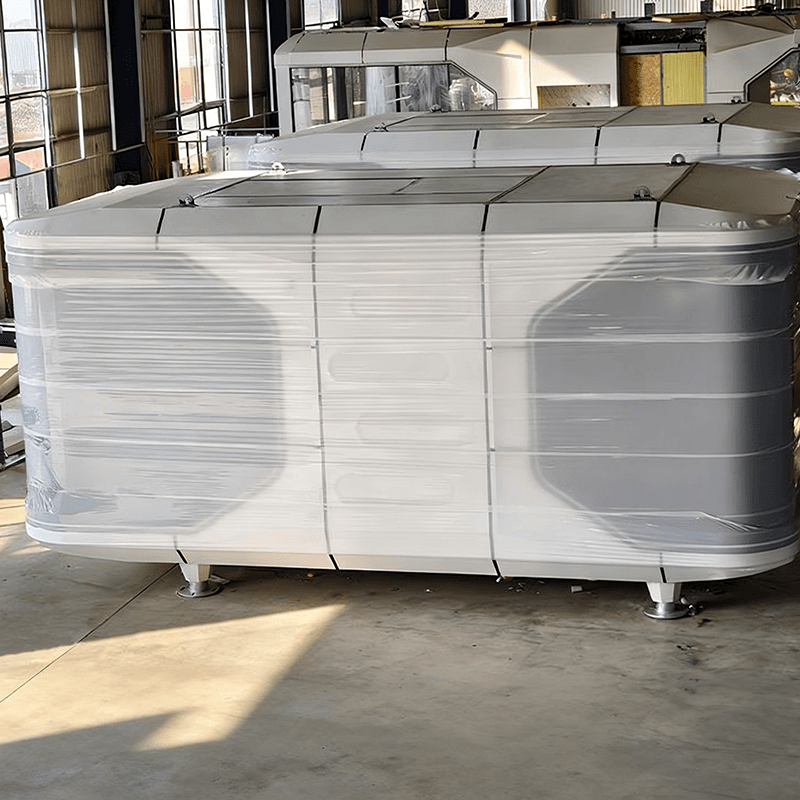
Suitable Venues
It is suitable for stations, docks, tourist attractions, villa areas, newly built residential communities, large construction sites, squares, densely populated public places, and bustling commercial streets. These venues have a large flow of people, and the demand for toilet facilities is either temporary or fixed. Mobile restrooms can well meet these needs.
Composition Structure
It generally consists of a fecal sewage storage tank (or fecal sewage treatment device), floor slab, sanitary ware, walls, washing equipment, water tank, roof, and mobile device. These components work together to provide users with a complete toilet environment.
Production Methods
- Bucket Construction: Some young men have built portable restrooms using several buckets. They take a wooden board, install universal wheels on it as a base, place the cut buckets on top, fix them to the bucket bodies with wooden strips, cut the buckets to create entrances and exits, extend and heighten them with aluminum-plastic panels and then install bucket lids, process wooden boards to make wooden doors, connect elbow drain pipes at the bottom and install floor drains, install water pipe connectors on green buckets, and use PVC pipes to splice and make shower heads.
- Water Storage Tank and Pallet Construction: Some young men also use water storage tanks and pallets for construction. They fix universal wheels at the bottom of the pallet, place the water storage tank, cut the water storage tank to form an open tank body, stack and fix two water storage tanks, cut out a doorway, drill holes in the internal floor to install drainage devices, fix toilets, install faucets, washbasins, shower heads, etc., and finally install doors.
Development History and Classification
Initially, mobile toilets were made of materials such as wood, with simple structures and functions, and were prone to absorbing odors. Later, they gradually developed to use materials such as fiberglass-reinforced plastics and polyethylene. According to the structural form, they can be divided into single-structure mobile toilets and composite-structure mobile toilets; according to the moving method, they can be divided into hoisting and handling mobile toilets, powered and towed mobile toilets; according to the sewage treatment method, they can be divided into water-flushing and non-water-flushing suction mobile toilets, circulating water-flushing mobile toilets, and dry-packing mobile toilets.
Characteristics and Design Principles
It has the advantages of being easily transported to any place where toilets need to be set up and can be used repeatedly. It is mobile, combinable, and easy to transport. The design should follow the principles of being mobile and convenient, economical and durable; being environmentally friendly and beneficial to the environment; improving efficiency and promoting humanity. The overall structure should be lightweight, using lightweight and durable materials as much as possible. The structure should be sturdy. When designing, the height and width of the toilet should also be controlled, and the mobile device should be fully considered for completeness and rationality.



