
Mobile Toilet or Civil Engineering Toilet: Which is Better?
Both mobile toilets and civil engineering toilets have their own advantages and disadvantages, and the specific choice should be made based on a comprehensive assessment of the usage scenario and requirements.
Construction Period and Flexibility
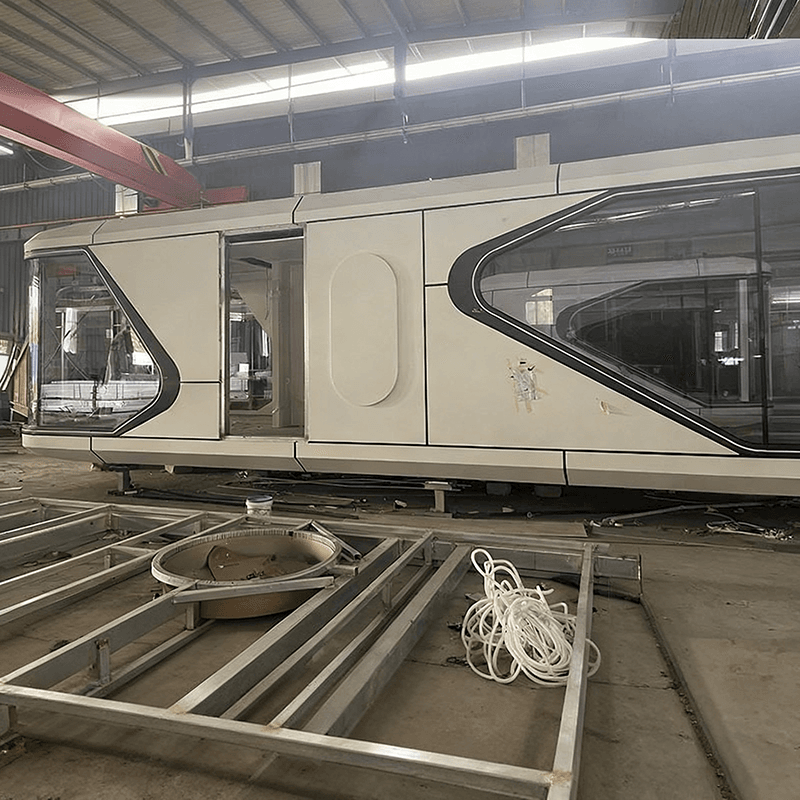
Mobile toilets adopt factory-prefabricated modular designs, enabling convenient on-site installation and a short construction period. For example, an integrated mobile restroom can be put into use on the same day of installation. Moreover, after construction, they can be hoisted and transported as a whole according to needs, offering high flexibility. They are suitable for temporary or highly mobile locations, such as tourist attractions, construction sites, camping bases, and large-scale event venues. Civil engineering toilets require complex procedures such as foundation hardening and wall masonry, taking a relatively long time (usually more than ten days or even longer). Once built, their positions are fixed, making it difficult to relocate or adjust them. They are more suitable for long-term fixed-use scenarios, such as residential areas, schools, and hospitals.
Cost and Resource Consumption
Mobile toilets do not require large-scale civil engineering work and can be reused, reducing resource waste. They are particularly suitable for temporary construction sites and seasonal campsites. Civil engineering toilets require ground excavation and pipeline network laying, and subsequent renovation or demolition will incur additional costs and generate construction waste. In addition, mobile toilets often adopt water-saving technologies or biological sewage treatment systems, making them more environmentally friendly, while the pipeline network laying and maintenance costs of civil engineering toilets are relatively high.
Durability and Maintenance
The waterproof performance of civil engineering toilets depends on on-site construction skills. After long-term use, problems such as water seepage and wall mildew are prone to occur, resulting in high maintenance costs. Mobile toilets are produced in a standardized manner in factories, with a box structure that is resistant to seepage and floors paved with anti-slip tiles. With normal maintenance, they can be used for more than twenty years, but they may require additional maintenance under extreme weather conditions.
Functionality and Aesthetics
Mobile toilets can be customized in terms of size and internal layout to meet different environmental requirements, and they have a unified and aesthetically pleasing appearance. Civil engineering toilets require separate material procurement and coordination with multiple parties, which involves cumbersome communication, and it is difficult to make layout changes.
Summary: If quick implementation, flexible adjustment, or use in temporary scenarios are required, mobile toilets are a better choice. If they are to serve as long-term fixed facilities and the site conditions permit, civil engineering toilets are more suitable. If there is no water supply or drainage on the site, or if the site is in an area undergoing urban planning and renovation, mobile toilets have greater advantages.



