
Mobile Toilet On-site Sewage Discharge Equipment
Mobile toilet on-site sewage discharge equipment mainly includes three types: water-flush direct discharge systems, waterless packing systems, and eco-friendly systems, along with their core equipment and applicable scenarios as follows:
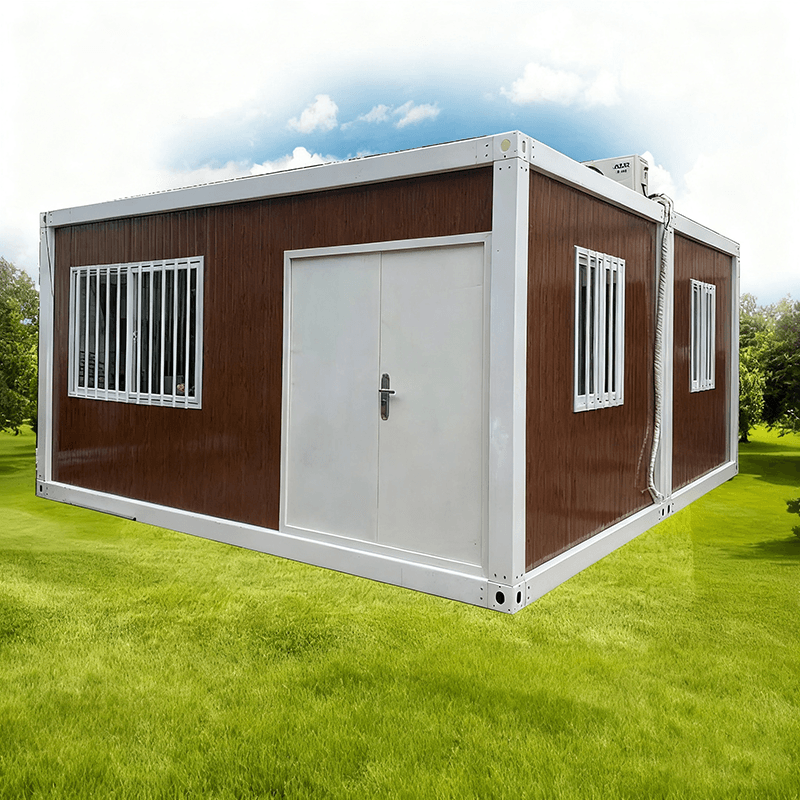
The water-flush direct discharge system provides flushing power through a water tank or external water source, with sewage directly discharged into a collection tank or septic tank via pipes. Its key equipment includes a water tank, flushing devices (such as foot pedals or sensor flushers), and a well-sealed collection tank or septic tank. This system relies on a stable water supply and requires regular sewage removal, making it suitable for construction sites, large events, or temporary camps with fixed removal cycles. For example, the 'Mobile Public Toilet' by Sichuan Haoyuanju Integrated Housing Co., Ltd. uses a 110mm diameter sewage pipe, effectively reducing blockage risks and improving discharge efficiency.
The waterless packing system automatically packs feces into biodegradable plastic bags and seals them using mechanical devices, eliminating the need for flushing. Its core equipment consists of a packing device (including a sealing mechanism) and specialized biodegradable plastic bags, with waste collected and handled by professional agencies. This system is completely independent of water sources and reduces environmental pollution through bag degradation, making it ideal for water-scarce areas, scenarios with stringent environmental requirements (such as deserts or plateaus), or emergency sites requiring frequent relocation.
The eco-friendly system achieves harmless waste treatment using microbial degradation or wet-dry separation technologies. Microbial degradation tanks break down organic matter through specific bacterial strains, ultimately converting it into organic fertilizer usable in agriculture; wet-dry separation devices physically separate feces and urine, reducing volume and odor. Such systems require auxiliary equipment like temperature control and ventilation to maintain microbial activity, making them suitable for long-term camps, scenic spots, or ecological reserves, enabling resource recycling and reducing removal costs.
Additionally, the sewage discharge interface design of mobile toilets must be compatible with transportation vehicles. Some products feature a bottom collection tank structure, allowing rapid transfer via truck lifting or sewage suction truck connection, as seen in the 'Second-hand Color Steel Mobile Toilet' by Changsha Jinshengzhuo Environmental Protection Technology Co., Ltd. The diameter, material (such as PVC or stainless steel), and anti-corrosion treatment of sewage pipes also directly impact system stability, necessitating appropriate specifications based on usage scenarios.



