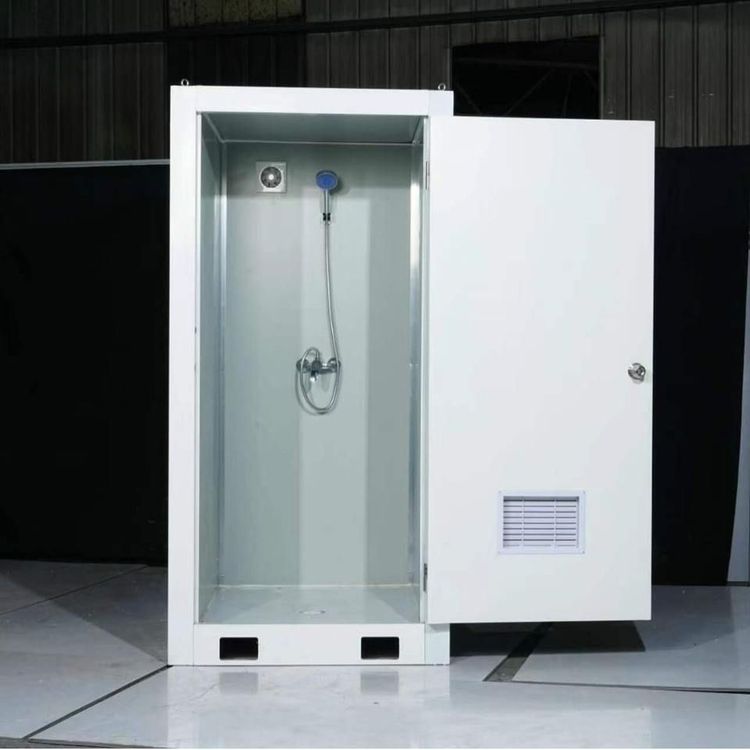
Mobile Toilet Odor Not Discharged
The issue of mobile toilet odor not being discharged can be resolved by optimizing ventilation, strengthening cleaning and disinfection, using deodorants, and improving equipment design. Details are as follows:

Optimizing the ventilation system: For natural ventilation, adjustable louvered air inlets can be installed at the bottom or sides of the toilet to accelerate odor discharge through air convection. A top exhaust design can be adopted, with exhaust fans or ventilation hoods installed on the roof to create a negative pressure environment that guides odors out through the top. The toilet should be placed in an open and well-ventilated location, avoiding proximity to walls or obstacles that may block airflow. For mechanical ventilation, low-noise, high-air-volume exhaust fans should be installed, with power calculated based on the toilet volume (approximately 10 - 15 cubic meters of air per hour per cubic meter of toilet volume). The exhaust fans can be set to operate automatically, such as running for 5 minutes after every 10 uses or being activated by infrared sensors when someone is present. One-way valves or rain hoods should be installed at the exhaust outlets to prevent rainwater or odors from flowing back.
Strengthening cleaning and disinfection: During daily cleaning, the toilet bowl should be rinsed with clean water after each use to prevent residue from fermenting. For septic tank toilets, the excreta should be regularly pumped out and the inner walls of the septic tank cleaned. Neutral detergents should be used to wipe the toilet bowl, floor, and walls, and stubborn stains should be soaked and scrubbed with a mixture of baking soda and white vinegar. For in-depth disinfection, chlorine-based disinfectants should be sprayed weekly on high-frequency contact areas inside the toilet. Biological enzyme preparations or bleaching powder should be added to the septic tank to decompose organic matter and inhibit bacterial growth. Special cleaning tools should be classified and used separately to avoid cross-contamination and should be dried in a well-ventilated area after cleaning.
Using deodorants: For chemical deodorants, spray types can be directly sprayed inside the toilet to quickly mask odors; solid types can be placed beside the toilet bowl for continuous deodorization; liquid types can be poured into the septic tank or urinal to decompose odor molecules and inhibit bacteria. For natural deodorization methods, activated carbon bags can be placed in the corners of the toilet to adsorb odor gases; shade-tolerant plants can be placed to absorb some odors through photosynthesis; a small amount of baking soda can be sprinkled in the toilet bowl to neutralize acidic odors.
Improving equipment design: Choose mobile toilet types with reasonable design and good sealing performance, adopting advanced sealing designs to isolate feces from the outside air. Use degradation and cleaning solutions in conjunction to accelerate feces decomposition and keep the toilet bowl clean and hygienic. Active carbon filters can also be installed, and antibacterial materials can be used to manufacture the internal structure to prevent odor diffusion.