
Moisture-Proof Performance of Mobile Toilets
The overall moisture-proof performance of mobile toilets is good, but there are differences influenced by materials, structure, and usage environment. Its moisture-proof design is mainly reflected in three aspects: material selection, structural optimization, and adaptation to applicable scenarios, as detailed below:
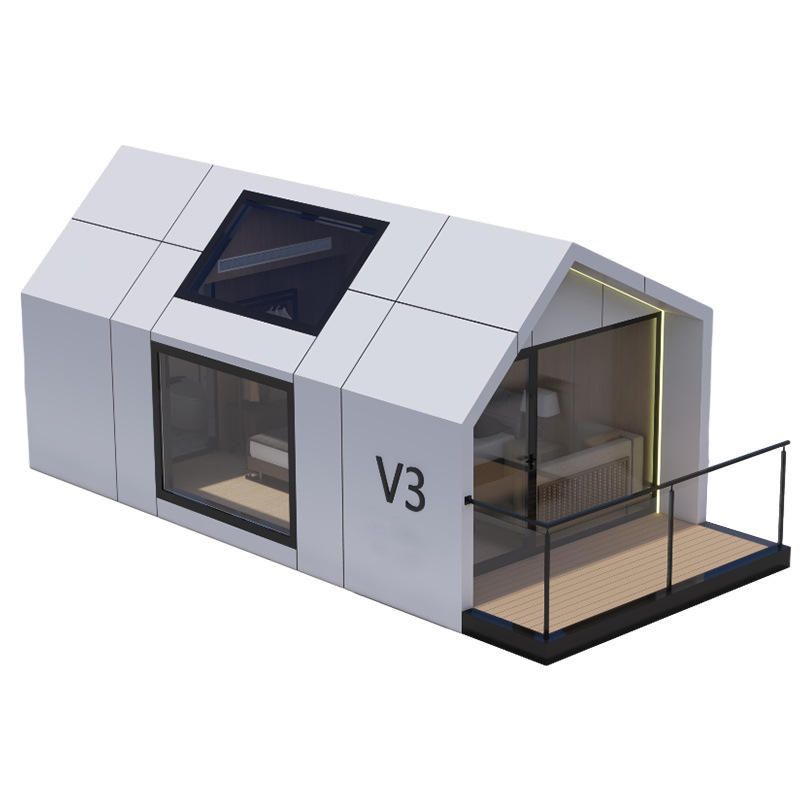
Material selection is the foundation of moisture-proof performance. The outer shell materials are mainly plastic-steel and color-coated steel plates. Among them, plastic-steel, due to its light weight and excellent waterproof performance, becomes the core moisture-proof barrier. The internal partitions mostly use high-density panels, which, after moisture-proof treatment on the surface, can effectively resist water vapor erosion and extend the service life. As a key component, the moisture-proof mechanism of fire-resistant panels is achieved through the composite of the base material and the facing. The base materials (such as magnesium oxide boards, cement fiber boards, or calcium silicate boards) themselves have moisture resistance. After being compounded with fire-resistant coatings or melamine facings on the surface, they can further block water vapor penetration. Under normal humidity conditions (60%-80%), the panels are not prone to deformation, blistering, or mildew. However, if exposed to extremely humid environments for a long time (humidity continuously exceeding 90% or direct contact with accumulated water), water vapor may infiltrate from the edges or seams, causing the panel edges to swell, the surface layer to peel off, or mildew to grow.
Structural design enhances the reliability of moisture-proofing. The outer shell uses high-strength waterproof materials (such as high-quality plastics or metals) and undergoes special sealing treatment to ensure tight connections between components and prevent water seepage through gaps. Waterproof structures and sealing strips are installed in key internal areas (such as around the toilet bowl and below the sink) to form double protection. The drainage system is optimally designed so that even if a small amount of water enters, it can be quickly drained to prevent internal water accumulation. These designs enable mobile toilets to adapt to complex outdoor environments such as rainy areas and near water sources. At the same time, for humid and rainy regions, the floor is reinforced with anti-slip treatment to take into account both safety and moisture-proof requirements.
Targeted design for applicable scenarios improves the practicality of moisture-proofing. Mobile toilets with high-level waterproof performance can be widely deployed in humid environments, but attention should be paid to usage boundaries: in short-term humid conditions (such as during the rainy season) or with good ventilation, the moisture-proof performance remains stable. In long-term extremely humid conditions (such as continuous heavy rain or immersion in accumulated water) or with poor ventilation, regular inspection and maintenance are required. Accumulated water should be promptly cleared, and sealing strips should be repaired to prevent water vapor infiltration and structural damage.



