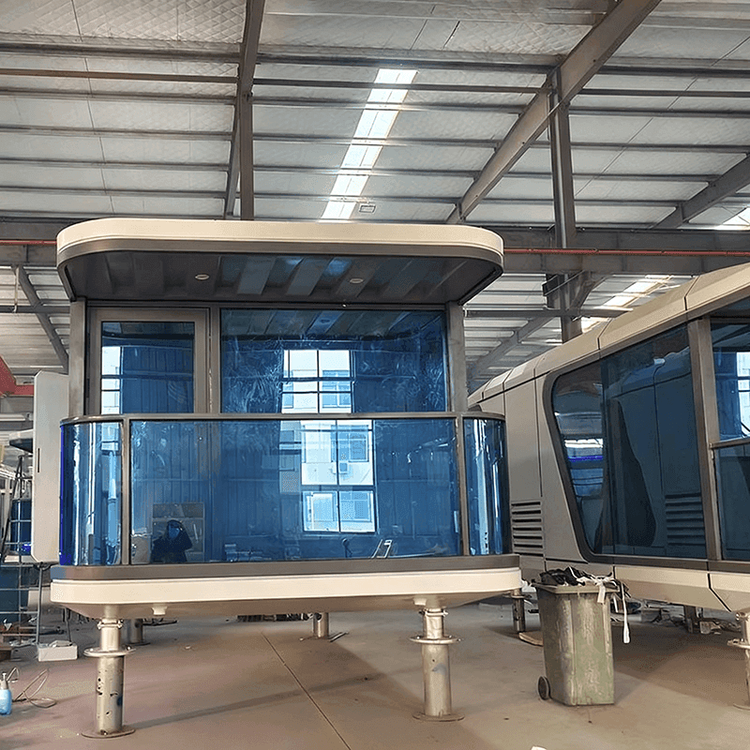
Recommended Material List for Mobile Toilets
The following is a recommended material list for mobile toilets:

Metal materials are the core guarantee for the structural stability of mobile toilets. Aluminum alloy, being lightweight, highly corrosion-resistant, and easy to process and shape, is commonly used for skeletons and frames. Surface oxidation treatment or fluorocarbon spraying can further enhance its anti-rust effect. Stainless steel, with extremely strong corrosion resistance, is suitable for coastal or high-humidity environments and is often used for internal hardware (such as water tanks and water pipes), door hinges, and exterior finishes. Galvanized steel sheet, with a galvanized layer to prevent mold growth, combines corrosion resistance with high hardness and is suitable as a metal frame material.
Plastic/composite materials excel in waterproofing and durability. PVC board is waterproof, moisture-proof, and easy to clean, with a printable surface pattern, and is commonly used for internal partitions, wall panels, and ceiling panels. Fiberglass-reinforced plastic (FRP), composed of resin and glass fibers, has strength close to that of steel but is lighter in weight, corrosion-resistant, and aging-resistant, making it suitable for shells or overall structures. HPL high-pressure laminate is wear-resistant, stain-resistant, with a smooth and easy-to-clean surface, and diverse design styles, suitable for partitions in high-traffic public toilets. Phenolic resin high-pressure board is molded in one piece without the need for edge finishing, is moisture-proof and stain-resistant, and has optional thicknesses (12mm or 18mm). High-density polyethylene (HDPE) board has high strength, impact resistance, and UV resistance, and is commonly used for the bottom and exterior decoration.
Wood materials should be selected with caution based on the environment. Preservative-treated wood, after pressure treatment, can be used for interior decoration or exterior frames, with a natural texture but requiring regular application of preservative coatings, and may deform in high-humidity environments. Eco-wood, composed of wood powder and plastic, has better waterproof and insect-resistant properties than natural wood but poorer heat resistance, making it suitable for dry or temperate environments.
Other materials can meet special functional requirements. Rock wool sandwich panel, filled with high-density rock wool (≥80kg/m³) inside, has significant sound insulation and heat insulation effects, with a fire rating of Class A, suitable for densely populated areas. Color-coated steel sheet, composed of color-coated steel and foam/rock wool core materials, is lightweight, easy to install, and cost-effective, suitable for temporary event venues or construction sites. Antibacterial composite material reduces odor residue by inhibiting bacterial growth, suitable as an interior panel to enhance hygiene levels.