
Back to blog
Article
Mobile Toilet Manufacturing Process
Admin September 21, 2026
The manufacturing process of mobile toilets varies depending on the type, mainly divided into two modes: homemade and factory-prefabricated. The following elaborates on the processes, characteristics, and applicable scenarios of two typical cases:
I. Homemade Portable Restroom (Based on Water Storage Barrel/Tank Modification)
1. Basic Structure Construction
- Tank Modification: Horizontally cut a water storage barrel or tank in the middle to form a larger opening as the main body for sewage and water storage.
- Mobile Device Installation: Fix universal wheels at the bottom of a wooden board or pallet to ensure the toilet can move freely; use wooden strips or metal frames to increase the height of the tank and install door frames and walls (such as plastic soft boards or cut parts of the tank).
2. Functional System Installation - Drainage System: Drill holes at the bottom of the tank, install drainage pipes and floor drains, and connect them to the toilet's sewage outlet to ensure smooth discharge of waste into the tank.
- Water Supply System: Install a water storage device (such as a small water tank) on the top or side of the tank, connect water pipes, faucets, showers, and sinks to meet basic water needs.
- Fixing and Sealing: Use self-tapping screws to fix various components and seal the interfaces of the toilet and sink with glass glue to prevent water leakage or odor leakage.
3. Detail Refinement - Apply waterproof paint to enhance aesthetics, install door panels, hinges, and door handles to improve practicality and privacy.
Characteristics: Low cost and simple production, but poor durability, suitable for temporary or low-cost needs (such as camping and temporary use on construction sites).
II. Factory-Prefabricated Mobile Toilet (Standardized Production)
1. Frame Welding
- Use channel steel, I-beams, or square steel to weld the bottom frame and columns to form a liftable structure, ensuring overall stability and wind resistance.
2. Wall Installation - Install wall materials such as color-coated steel plates, fiberglass, or stainless steel on the frame, balancing lightweight and durability. Some high-end models adopt double-layer wall design to enhance thermal insulation.
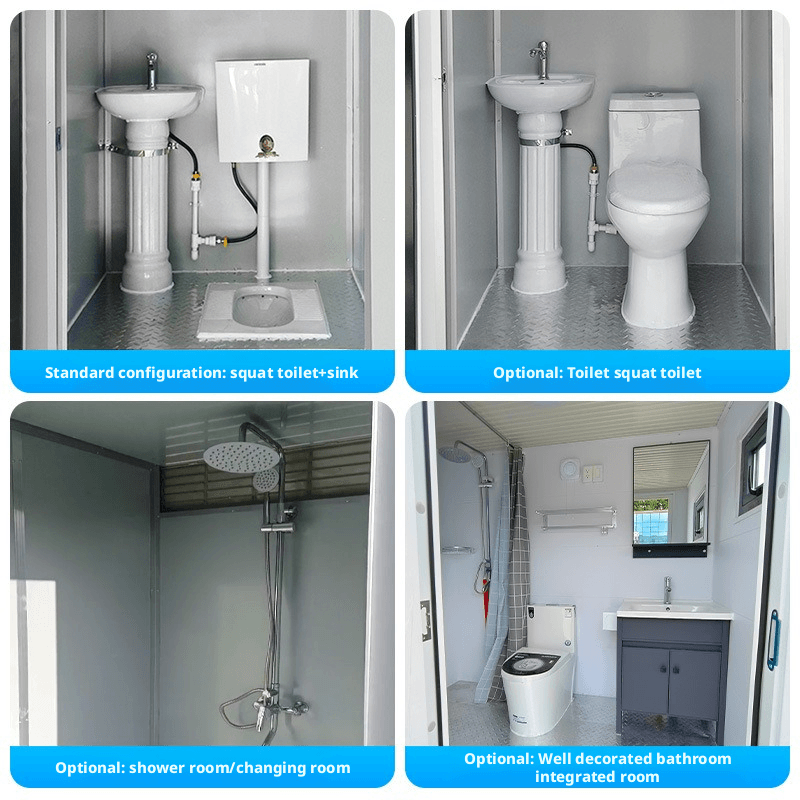
3. Internal Configuration - Integrate toilets (some use water-saving or vacuum suction types), sinks, lighting, ventilation systems (such as exhaust fans or fresh air systems), with configurations higher than those of ordinary fixed toilets. Some models are also equipped with air conditioners and deodorization devices.
Characteristics: High standardization and strong durability, suitable for long-term use in public places (such as scenic spots, stations, and large event venues), but with high costs and requiring professional transportation and installation.
Summary: The homemade process is flexible but has limited functions, while the factory-prefabricated process is professional and has complete functions. When choosing, it is necessary to comprehensively consider the usage scenario, budget, and maintenance needs.



