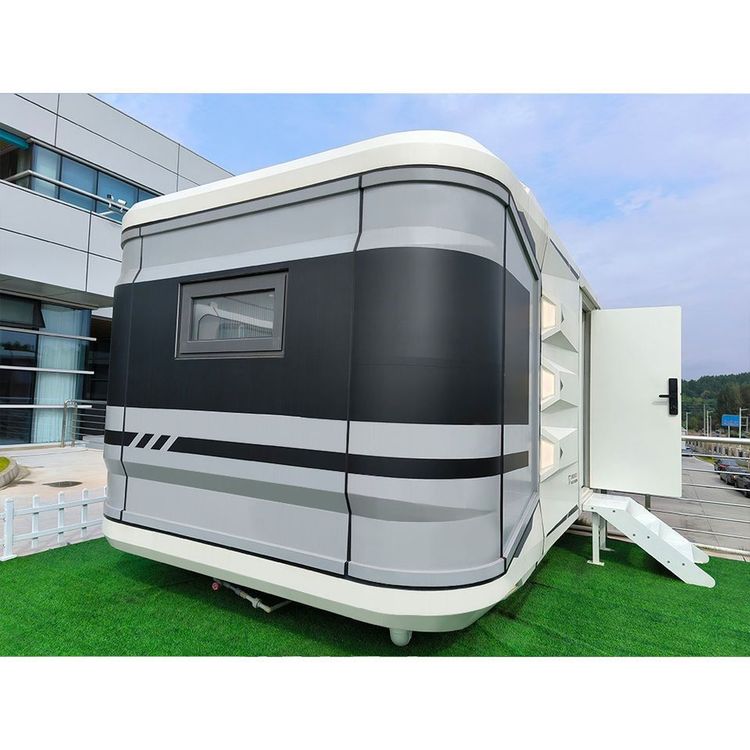
Mobile Toilet Maintenance and Renovation
The maintenance and renovation of mobile toilets cover two core aspects: maintenance and innovation, requiring a combination of technical means and standardized processes to achieve efficient management.

I. Maintenance Operations: Systematic Repair for Wear and Faults
The maintenance needs of mobile toilets primarily stem from the natural aging of facility components (such as pipe corrosion and seal failure) and external environmental impacts (such as material embrittlement caused by extreme temperatures and rusting triggered by humid environments). The maintenance process typically consists of three steps:
- Fault Diagnosis and Assessment: Identify problems through visual inspection, pressure testing, or sensor data (such as water level and power monitoring). For example, pipe blockages require the use of pipe-clearing machines to detect blockage points, while circuit faults necessitate troubleshooting of wiring connections or component damage.
- Component Repair or Replacement: Select appropriate materials for damaged components. For instance, in low-temperature environments, low-temperature silicone sealants should be used to prevent cracking, while in high-humidity areas, fasteners with higher rust resistance should be employed to avoid rusting. Specialized tools such as portable welding equipment and sealant guns can enhance maintenance precision.
- Functional Testing: After maintenance, simulate usage scenarios to test facility performance. For example, check whether the water output of water-saving flushing systems meets standards and whether the decomposition efficiency of biological treatment units remains stable, ensuring that maintenance results comply with design specifications.
Standardized maintenance can extend the lifespan of facilities by 30%-50% and reduce resource waste (such as minimizing water loss due to leaks).
II. Renovation and Upgrading: Functional Innovation Driven by Modular Technology
The renovation of mobile toilets centers on modular construction, enabling flexible configuration and efficient maintenance through standardized design:
- Prefabrication of Core Modules: Water supply, sewage, ventilation, and electrical systems are prefabricated as independent modules. After assembly and testing in factories, they are transported to the site as a whole. Standardized interfaces (such as quick-connect water and power connectors) ensure that modules can be connected within a few hours, shortening construction periods.
- Independent Resource Recycling Systems: Built-in closed-loop treatment devices, such as water-saving flushing systems that reduce water consumption through circulation and filtration, and biological treatment units that utilize microorganisms to decompose waste, achieve zero sewage discharge, making them suitable for water-scarce areas or ecologically sensitive zones.
- Optimization of Cleaning and Maintenance Modes: Modular design supports the return of entire units to maintenance centers for deep cleaning, avoiding secondary environmental pollution caused by on-site disassembly while improving maintenance efficiency through centralized processing (such as batch replacement of filters or disinfection components).
III. Regionalized Services: Standardized Operations and Maintenance Ensure Renovation Effects
Taking the Liaoning region as an example, enterprises ensure the timeliness and reliability of maintenance and renovation through a full-chain service system (such as 24-hour response to requests and 48-hour on-site maintenance) and standardized operations and maintenance processes (such as regular inspections and spare parts inventory management). For instance, in response to low-temperature environments in winter, enterprises proactively stock cold-resistant materials and train maintenance personnel in low-temperature operation techniques to prevent secondary failures caused by material failure.